
A fire pick tool is a pointed hand tool used for probing, pulling, and limited material removal during firefighting and overhaul operations; it is not a forcible entry tool and should not be used as a substitute for a Halligan bar or axe in structural entry scenarios.
On the fireground, the term fire pick is often applied loosely to a range of pointed or prying implements, which creates confusion in training, tool selection, and procurement—especially for departments operating across structural and wildland response roles. This misunderstanding has real consequences. Using a fire pick outside its intended role can lead to ineffective entry attempts, reduced operational efficiency, and increased injury risk due to tool slippage, loss of control, or improper load application.
This page defines the intended function of a fire pick, clearly distinguishes what it is not designed to do, and positions the fire pick tool relative to other common firefighting hand tools. The purpose is to establish firm operational boundaries and correct use, not to provide a general overview of hand tools or historical background.
Fire Pick Definition
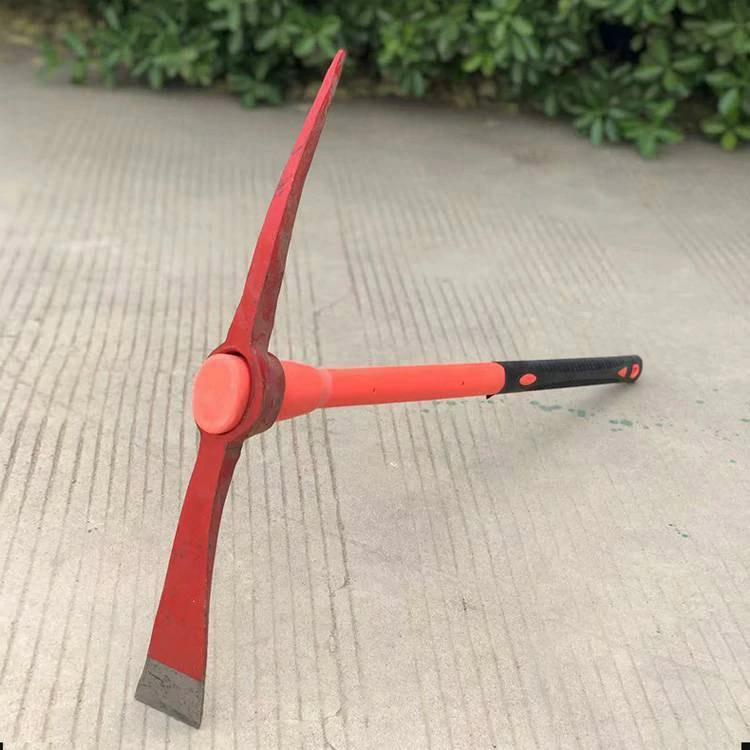
A fire pick tool is a pointed hand tool used for probing, pulling, and limited material removal during firefighting and overhaul operations. It is designed to test stability, expose concealed fire, and manipulate light debris; it is not intended for forcible entry or heavy prying under load. Within professional fireground use, the fire pick occupies a narrow but critical role focused on control and assessment rather than structural breach.
This definition is reinforced by U.S. fire service practice and training that separates probing and overhaul tools from entry tools such as Halligan bars and axes. A fire pick tool is used after knockdown to check void spaces, pull light ceiling or wall finishes, and locate hidden embers without transferring high force into the tool or the user. Misapplying a fire pick for forcible entry creates predictable failure modes, including tip slippage, uncontrolled leverage, and loss of balance when the tool is loaded beyond its design intent.
What a Fire Pick Is Designed to Do
A fire pick tool is designed to probe, pull, and expose material during firefighting and overhaul, where controlled force and precision matter more than leverage. Its role is to assess conditions, locate concealed fire, and manipulate light debris; it is not designed for forcible entry, heavy prying, or breaching load-bearing assemblies. The pointed profile and narrow working end define clear operational boundaries centered on control, not penetration by force.
In U.S. fireground practice, a fire pick is used after knockdown to check void spaces, lift ceiling or wall finishes, and pull small sections of lath, drywall, or insulation to confirm extinguishment. These tasks rely on tip control and tactile feedback rather than applied leverage. Training guidance consistently separates probing and overhaul tools from forcible entry tools because misapplication leads to predictable failure modes—tip slip, loss of balance, and uncontrolled load transfer. When used as intended, the fire pick supports safer overhaul, faster verification of fire extension, and clearer task assignment alongside Halligan bars, pike poles, and axes.
What a Fire Pick Is NOT Designed For
A fire pick tool is not designed for forcible entry, heavy prying, or breaching structural components. It is a firefighting hand tool, not a fire pit, heating device, or consumer fire product used for open burning or heat generation. It cannot replace Halligan bars, axes, or other entry tools intended to withstand high leverage, impact loading, or controlled force transfer.
In U.S. fireground practice, forcible entry tasks involve doors, windows, locks, frames, and structural assemblies that require tools rated for bending stress, shock loading, and sustained leverage. A fire pick lacks the mass, shaft geometry, and reinforced striking surfaces needed for these conditions. Misuse scenarios—such as prying a door, forcing a window, or levering against studs—result in tip slip, shaft deflection, loss of balance, or uncontrolled release under load, increasing injury risk at critical moments.
The fire pick is also not intended for cutting, striking, load-bearing applications, or any non-fireground use involving open flames or surface heating. Assigning it to tasks outside probing and light material manipulation undermines tool discipline, training clarity, and safe task sequencing on the fireground.
Fire Pick vs Fire Hook vs Pike Pole
In U.S. fire service usage, a fire pick tool is not the same as a fire hook or roof hook, even though the terms are frequently confused online. A fire pick refers to a straight, pointed hand tool used for probing, light pulling, and precision work during overhaul; it is not designed for forcible entry. Tools commonly labeled as “fire pick” in non-professional sources are often fire hooks, which serve a different mechanical role.
The distinction is structural and load-based. A fire pick transmits force axially through a narrow tip and lighter shaft, favoring control and tactile feedback over leverage. A fire hook uses a curved, load-capturing head and reinforced shaft to tolerate higher tensile forces during aggressive pull-down of tougher assemblies such as lath and plaster. A pike pole emphasizes reach and standoff distance—typically 6–12 ft—allowing overhead pull-down with lower force concentration.
| Dimension | Fire Pick Tool | Fire Hook (Roof Hook) | Pike Pole |
| Primary Design Purpose | Probing, light pulling, material testing | Aggressive pull-down, controlled tearing | Reach, pull-down, inspection from distance |
| Head Geometry | Straight, pointed tip | Curved hook (often sharpened), sometimes with chisel/spike | Straight spike or blunt point |
| Shaft Construction | Straight shaft, lighter cross-section | Reinforced shaft, designed for higher tensile loads | Long, relatively slender shaft |
| Load Path | Axial load through tip and shaft | Curved load path designed to capture and pull material | Axial pull with leverage from reach |
| Force Tolerance | Low to moderate, control-focused | Moderate to high pulling force | Low to moderate |
| Typical Use Phase | Overhaul, post-knockdown inspection | Overhaul, ventilation support | Overhaul, ceiling/wall pull-down |
| Material Suitability | Drywall, insulation, light finishes | Lath & plaster, OSB, heavier ceiling assemblies | Drywall, ceiling tiles, light debris |
| Forcible Entry Capability | Not designed for forcible entry | Limited prying/pulling only; not a Halligan replacement | Not designed for forcible entry |
| Primary Risk if Misused | Tip slip, loss of control under leverage | Overloading beyond hook engagement | Shaft flex, loss of control at distance |
| Operational Role | Assessment and precision control | Aggressive removal with capture | Distance work and overhead safety |
Common Fireground Misuse and Associated Risks
A fire pick tool is frequently misused when it is treated as a forcible entry device or a general-purpose pry or striking tool. These actions fall outside its design envelope and introduce predictable safety failures. The fire pick is built for controlled probing and light pulling; it cannot safely absorb high leverage, impact loading, or improvised striking forces.
Common misuse scenarios include:
Using a fire pick for door forcible entry, where leverage and shock loads exceed shaft and tip design limits.
Loading the tip as a pry bar, which redirects force laterally and defeats axial load control.
Improvised striking applications, where the tool lacks a hardened striking surface or mass distribution.
These misuses produce consistent consequences documented in fireground safety doctrine, including tool slippage, loss of control, and increased injury risk to hands, wrists, and lower body. Overloading also leads to tool deformation or failure, compromising subsequent operations. NFPA 1500 emphasizes matching tools to task hazards to reduce injury exposure; misapplying a fire pick violates that principle. Correct tool selection is not preference—it is a safety control that limits failure modes during interior operations.
Operational and Procurement Implications
A fire pick tool belongs in the overhaul and inspection category, not in the forcible entry tool set. It supports probing, light pulling, and material assessment after knockdown, and it should not be specified or issued as a primary entry or prying device. Treating it as such misaligns tool capability with task risk.
From a policy standpoint, department SOPs and training curricula should define the fire pick by task boundary, not by name alone. NFPA 1500 requires departments to match tools to operational hazards and to control injury exposure through training and equipment selection. Listing a fire pick under forcible entry, or omitting explicit limitations, undermines that requirement. Training evolutions should reinforce when the tool is appropriate and when it must be replaced by a Halligan or other entry-rated implement.
Procurement errors carry downstream risk. Specifying fire picks as substitutes for entry tools increases injury potential, accelerates tool failure, and exposes departments to preventable liability claims tied to improper equipment selection and documented misuse during interior operations.
A fire pick tool is an auxiliary hand tool, not a primary means of structural breaching or forcible entry. Its value lies in controlled probing, light pulling, and material assessment during overhaul and inspection, where precision and feedback matter more than leverage. Assigning it tasks outside that boundary increases failure modes—tool slippage, loss of control, and injury risk—without improving outcomes. When departments define the fire pick clearly in SOPs, pair it correctly with entry-rated tools, and train to those limits, operations become more efficient and predictable. Proper role alignment reduces unnecessary exposure, preserves tool integrity, and supports defensible procurement and training decisions.