
Firefighters extinguish fires with hose streams, foam, dry chemical extinguishers, and specialized agents matched to the fire’s class and fuel. Water—often combined with foam or wetting agents—controls most Class A fires, while Class B and electrical fires rely on foam blankets, CO₂, or dry powder agents that interrupt the combustion cycle rather than cool the fuel. More than 75% of reported U.S. structure fires are suppressed using attack lines equipped with adjustable nozzles for straight-stream or fog patterns.
This overview focuses on tools used by municipal fire departments, industrial brigades, and airport crash-rescue teams. It covers frontline fire suppression methods only. It does not address fire investigation or passive fire protection systems, and it frames each extinguishing agent by where it works, where it fails, and why firefighters operate under SCBA in IDLH conditions.
What Do Firemen Use To Put Out Fires?
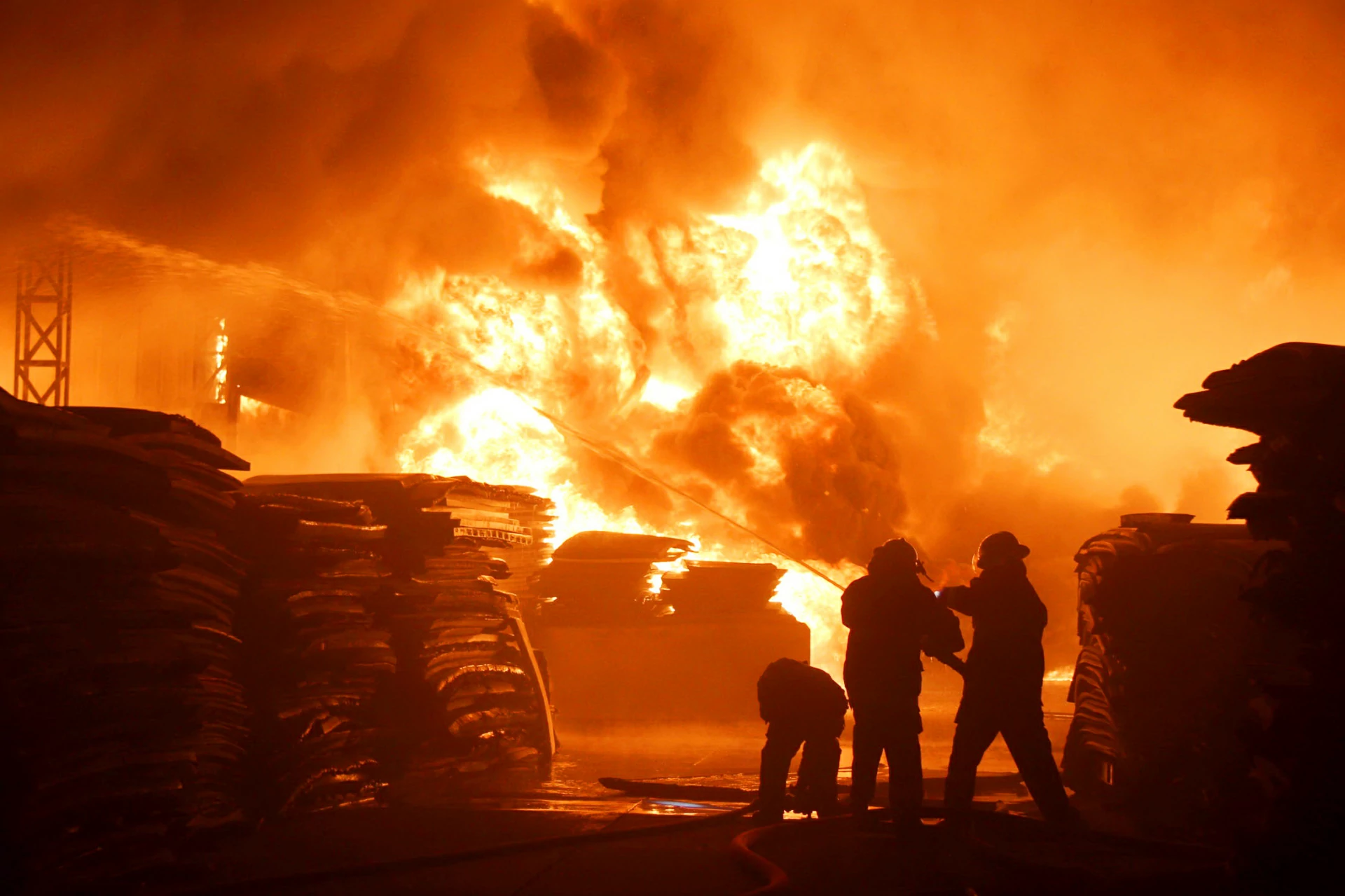
Firefighters put out fires with hose streams, foam systems, dry chemical extinguishers, and clean agents, selecting each tool based on fuel type and operating environment. Water delivered through attack lines remains the primary extinguishing agent for Class A fires such as residential structure fires; NFPA incident data show that most reported structure fires are controlled with properly placed interior hose streams. When crews advance a 1¾-inch line up a stairwell or down a hallway, adjustable nozzles let them switch between straight-stream reach for seat-of-the-fire knockdown and fog patterns for heat shielding and smoke banking.
For other hazards, different tools take over:
Foam systems: Applied as foam blankets on flammable liquids during spills, vehicle fires, and industrial incidents.
Fire extinguishers: CO₂, dry powder, and clean-agent units used where hose lines cannot be quickly advanced, such as machinery spaces or electrical fires.
Fire suppression systems: Gaseous agents deployed around sensitive equipment, data rooms, and control panels where water would cause damage.
Fire Triangle
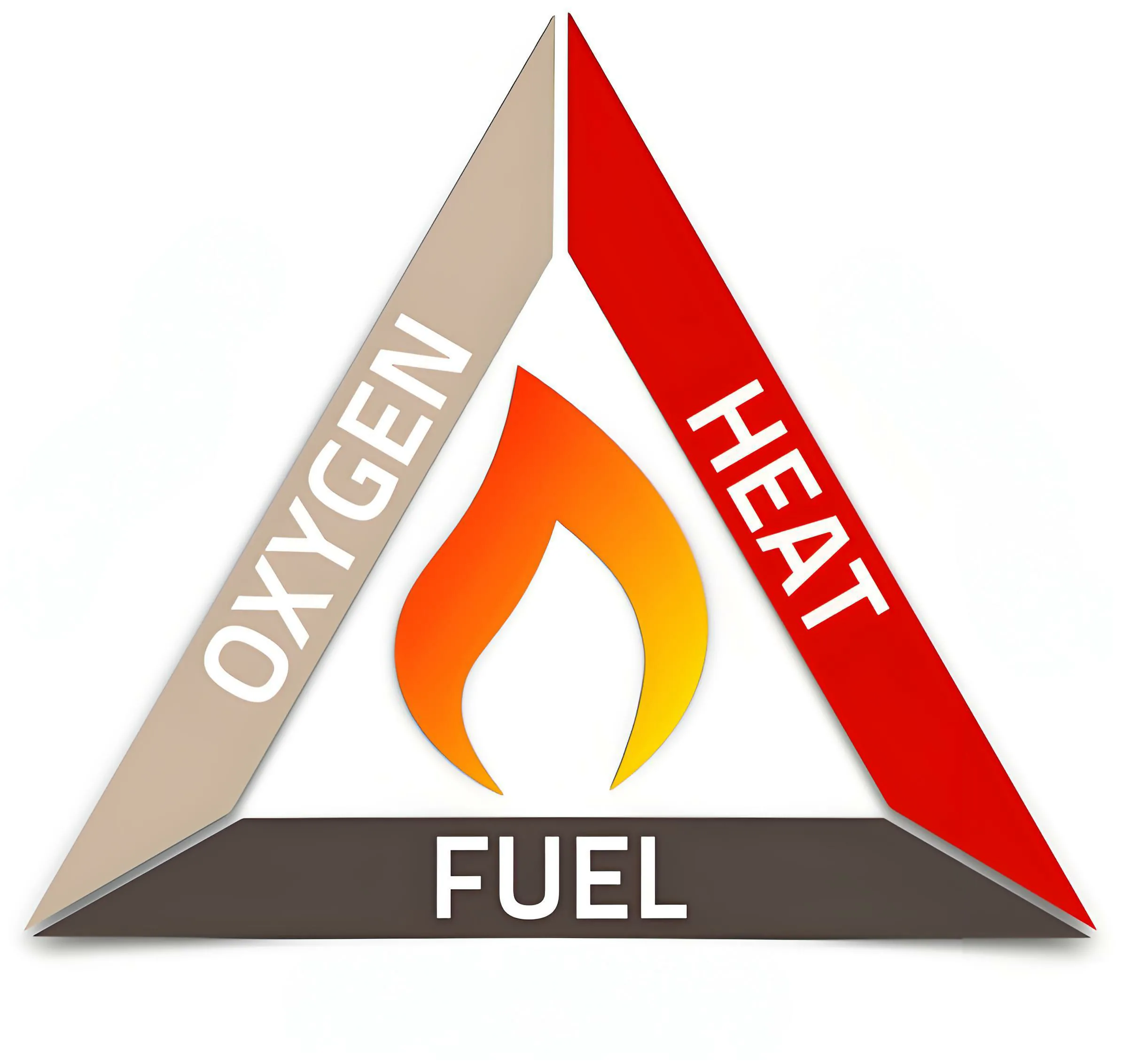
Firefighters put out fires by breaking the fire triangle—heat fuel and oxygen. If any one of the three is removed, combustion stops. Every fire suppression tactic used on the fireground, from hose streams to gaseous fire extinguishing systems, is built around attacking one side of that triangle. NFPA Firefighter I training materials treat this model as the baseline for choosing an extinguishing agent on structural, vehicle, and industrial calls.
Each leg of the triangle aligns with a specific strategy:
Heat reduction – Water cools Class A fires, dropping surface temperatures of wood and similar fuels well below typical ignition ranges around 900–1,100 °F.
Fuel separation – Foam blankets cover flammable liquids during spills or vehicle fires, stopping vapor release at the base of the fire.
Oxygen exclusion – CO₂ and gaseous systems displace oxygen around energized equipment and enclosed spaces where electrical fires are likely.
Regardless of fuel type, effective tactics focus on collapsing at least one side of the triangle fast enough to stop flame spread and allow safe crew advancement.
Tools and Agents Firefighters Use to Suppress Fires
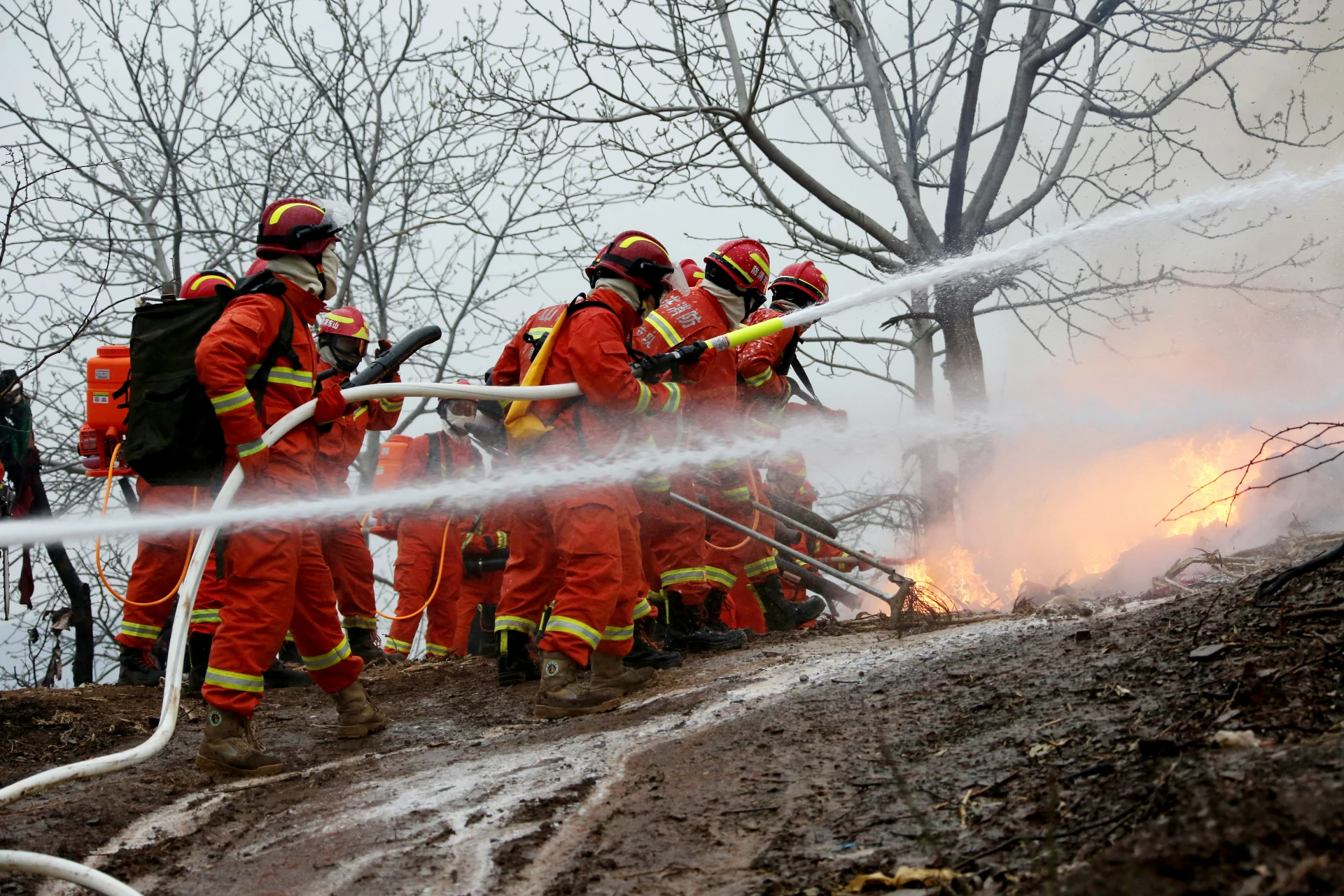
Firefighters suppress fires by pairing specific extinguishing agents with the tools required to deliver them effectively. Water, foam, dry chemical extinguishers, dry powder, CO₂, and gaseous agents all demand the correct hardware to achieve reach, cooling, oxygen displacement, or vapor control. Without the right tool, an agent cannot produce its intended suppression effect.
Water Delivery Tools
Class A suppression relies on 1¾-inch attack lines equipped with straight-stream and fog nozzles. Straight streams drive cooling water to the base of the fire, while fog patterns create heat shielding and steam conversion. Wetting agents require proportioners to reduce surface tension and boost penetration.
Foam Application Tools
Foam for flammable liquids are delivered using foam eductors, inline inductors, or foam nozzles. These tools meter the concentrate and maintain expansion ratios that allow foam to cool fuel, block oxygen, and suppress vapors.
Portable Agent Tools
Dry chemical extinguishers apply ABC monoammonium phosphate through discharge hoses that interrupt the combustion chain reaction.
CO₂ units use horn-type nozzles to displace oxygen for electrical fires, though they offer no cooling.
Dry powder extinguishers supply sodium- or copper-based media for Class D metal fires.
Gaseous System Tools
FM-200, IG-100, IG-541, and CO₂ systems use piping networks, nozzles, and control heads to flood enclosures where water would damage equipment. Aerosol generators deliver rapid flame interruption in small technical spaces.
Tools determine how far the agent reaches, how quickly the crew gains control, and whether suppression is effective in the first operational cycle.
| Tool | Compatible Agents | Fire Classes Addressed |
| Hose + Straight-stream Nozzle | Water | Class A |
| Hose + Fog Nozzle | Water | Class A (heat shielding) |
| Foam Eductor | Class A/B Foam | Class B + deep-seated A |
| ABC Extinguisher | Dry Chemical | A / B / C |
| CO₂ Horn | CO₂ | Electrical (C) |
| Class D Extinguisher | Dry Powder | D |
| Clean-Agent Discharge Head | FM-200 / IG-100 / IG-541 / CO₂ | Electrical rooms, server rooms |
| Aerosol Generator | Aerosol compound | Battery rooms / cabinets |
Firefighter Protection and Efficiency Tools

Firefighters maintain fire protection and efficiency through certified PPE, SCBA air management, and rapid-access tools. Crews enter IDLH atmospheres wearing NFPA-1971 turnout gear and SCBA, with a typical 45-minute cylinder yielding 18–22 minutes of effective work time during interior fire suppression. Efficiency depends on how quickly crews locate the fire, control heat, and move through the structure.
Key equipment enhances both protection and operational tempo:
Thermal Imaging Cameras (TICs): Identify hidden fire, structural heat signatures, and victims through smoke.
Ground Ladders: Provide access, roof ventilation points, and secondary egress paths.
Rescue and Forcible-Entry Tools: Halligan bars, axes, and saws speed door breaches, window clearing, and victim removal.
Helmet, Gloves, and Boots: Impact protection, heat resistance, and dexterity support suppression, search, and tool handling.
Protection, air discipline, and tool efficiency determine how fast a crew reaches the base of the fire and how safely they can complete fire suppression operations.
Effective fire suppression depends on selecting the right agents and equipping crews with PPE, SCBA, TICs, ladders, and rescue tools that keep them protected and fast on the move. Every second gained in protection or visibility shortens the path to the seat of the fire.
Poseidon supplies professional-grade fire extinguishers, agents, and fire extinguishing systems built to EN and NFPA standards for departments seeking dependable, mission-ready equipment.