

A European fire helmet is built around full-coverage protection, integrated features, and fast interface with SCBA masks for structural firefighting in EN 443 environments. It differs from U.S. Cairns-style helmets by using a wraparound shell and face-shield system that protects the eyes, jaw, and side of the head while keeping weight near 1.4–1.6 kg. EN 443 requires helmets to withstand 100 J impact tests and high-radiant-heat exposure while maintaining shell integrity and retention performance. Many European firefighter helmet platforms add photoluminescent shells, internal or external visors, and optional integrated radio headsets so crews get visibility, comms, and mechanical protection from one system. Line companies may wear compact half-shell helmets such as the Bullard H3000, while specialty teams step up to full-coverage systems like the HP 7000 for maximum protection during interior attack, technical rescue, and vehicle extrication.
European Fire Helmet
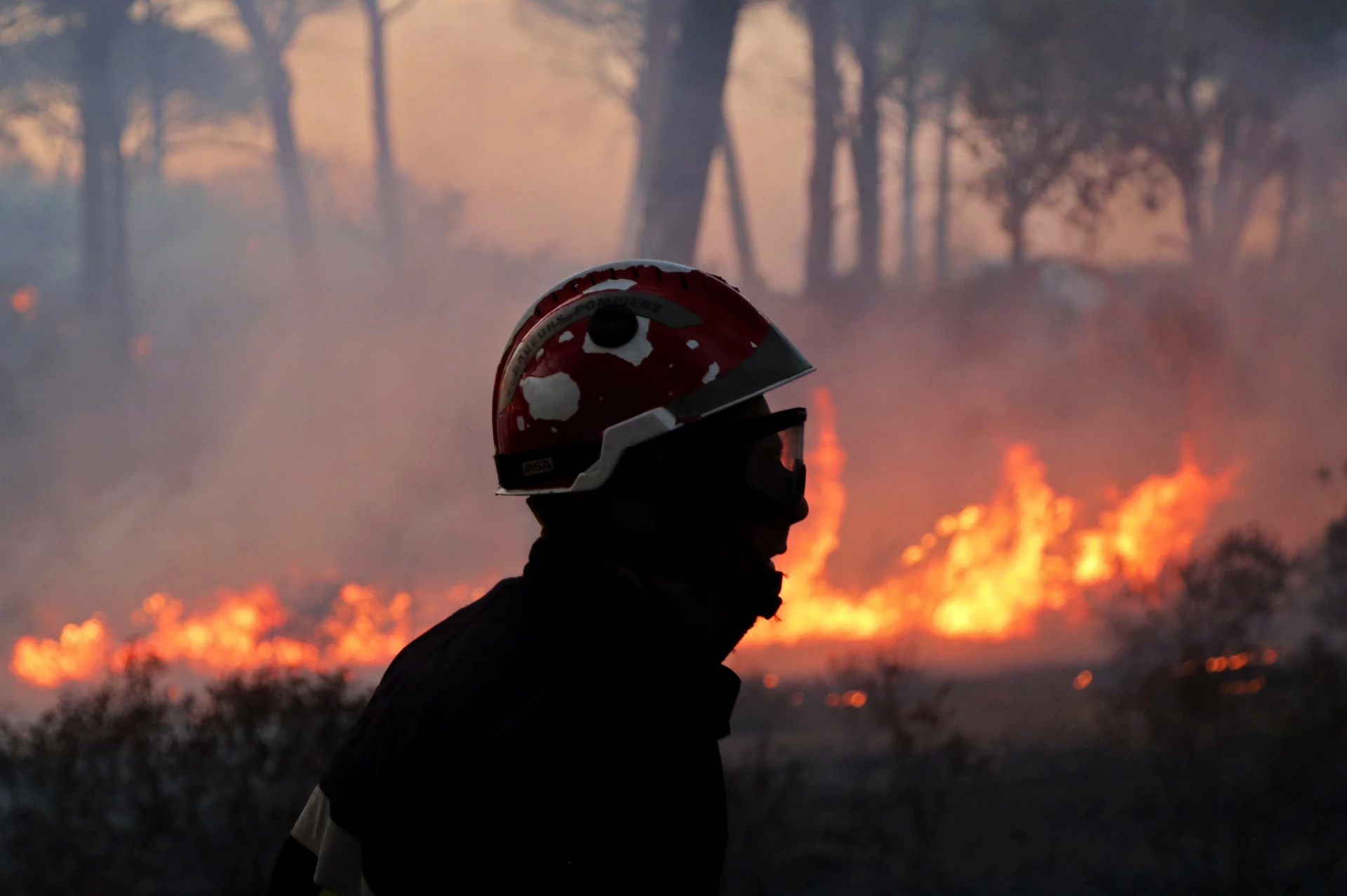
A European fire helmet represents a fully enclosed protective platform developed through more than 150 years of structural firefighting experience across France, Germany, and the U.K. Its evolution reflects one core goal: deliver wraparound thermal and impact protection that pairs quickly with SCBA masks during interior attack, where radiant conditions may exceed 300–500 °C. EN 443 defines the modern performance baseline by requiring 100 J impact resistance, limited shell deformation, and sustained protection during high-heat exposure—shaping the sealed geometry common to today’s designs.
The earliest European models borrowed directly from military patterns. France’s casque introduced the full-length crest and reflective brass shell, improving radiant-heat deflection and becoming a national symbol. Germany followed with a firefighting variant of the pickelhaube, first in leather, then in steel as urban fire loads increased. By the mid-20th century, departments across Germany and Austria shifted from metal to fiber-reinforced composites to reduce fatigue during long-duration interior operations.
Modern configurations continue this lineage. A European firefighter helmet uses thermoplastic, fiberglass, or carbon-composite shells, integrated visors, photoluminescent coatings, and optional radio or bone-conduction comms. Half-shell platforms such as the Bullard H3000 remain common in Central European municipal brigades, while full-coverage systems like the HP 7000 and Gallet F1 dominate dense urban structural work due to their superior heat shielding, visor clarity, and rapid mask-up capability.
Why are European Firefighter Helmets Different?
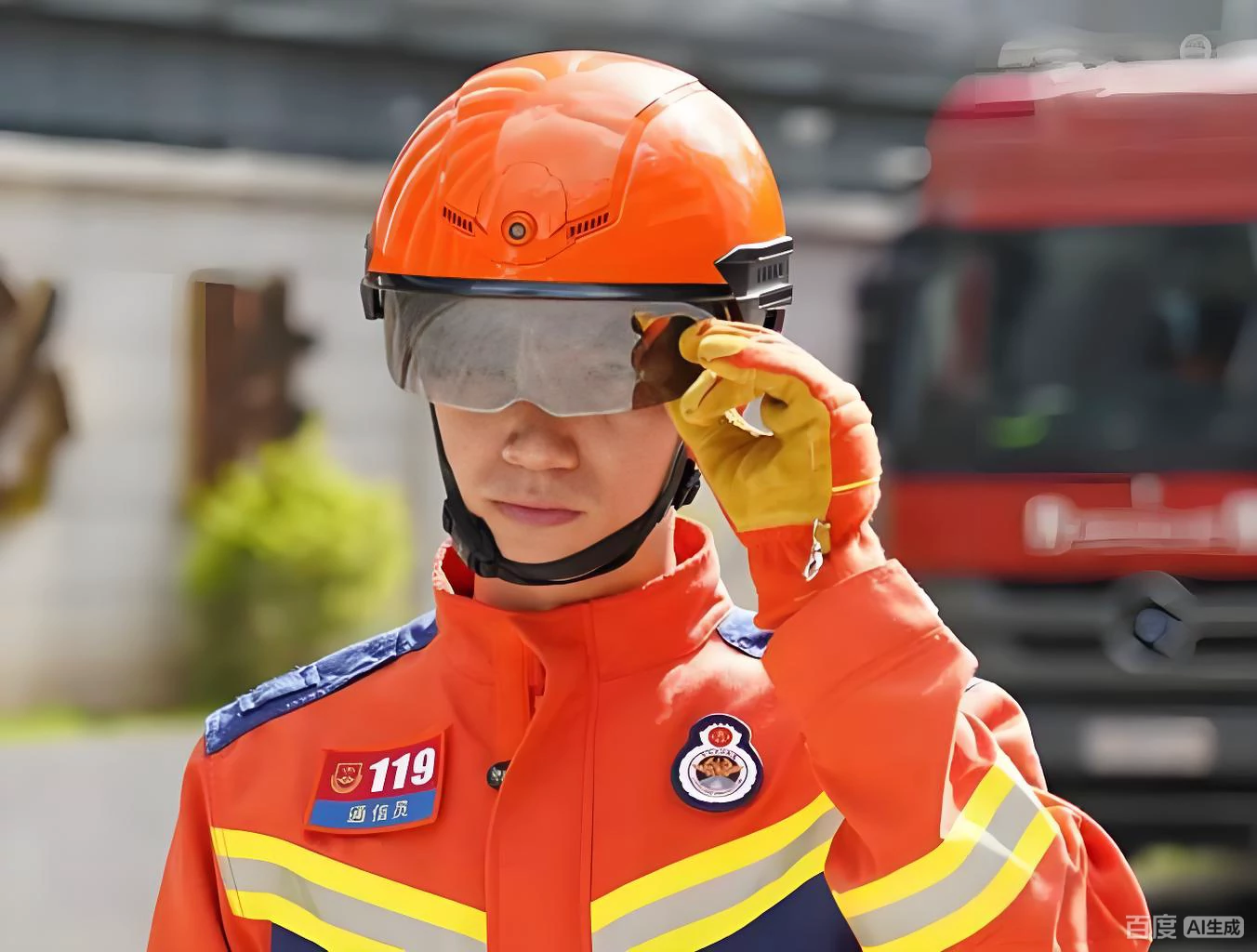
A European fire helmet delivers full-coverage protection through a sealed, streamlined shell that eliminates the wide brim found on U.S. helmets. This low-profile geometry reduces snag hazards in stairwells, vehicle cabins, and tight interior-attack corridors while extending protection to the temporal, jaw, and occipital zones. EN 443 high-heat protocols—including 100 J impact tests and deformation limits under radiant exposure—drive this structure, enabling stable performance during 300–500 °C interior-fire conditions.
Modern configurations integrate technology directly into the helmet body. Many models house LED temple lights for hands-free illumination and support optional bone-conduction or internal radio systems without external wiring that can snag debris. Dual-visor assemblies supply two independent layers of protection: a flip-down ocular visor for smoke-layer navigation and a full-face shield for heat, debris, and hydraulic-tool operations. Both stow cleanly inside the shell when not in use.
Fit customization is another core advantage. A European fire helmet with SCBA support typically uses a multi-point suspension with a rear ratchet, vertical adjustment sliders, and padded harness points that keep the helmet sealed and stable even when firefighters don a facepiece under time pressure.Despite this equipment density, most platforms operate in the 1.4–1.6 kg range, giving firefighters more integrated protection with minimal weight penalty compared to open-profile American helmets.
European vs American Fire Helmet
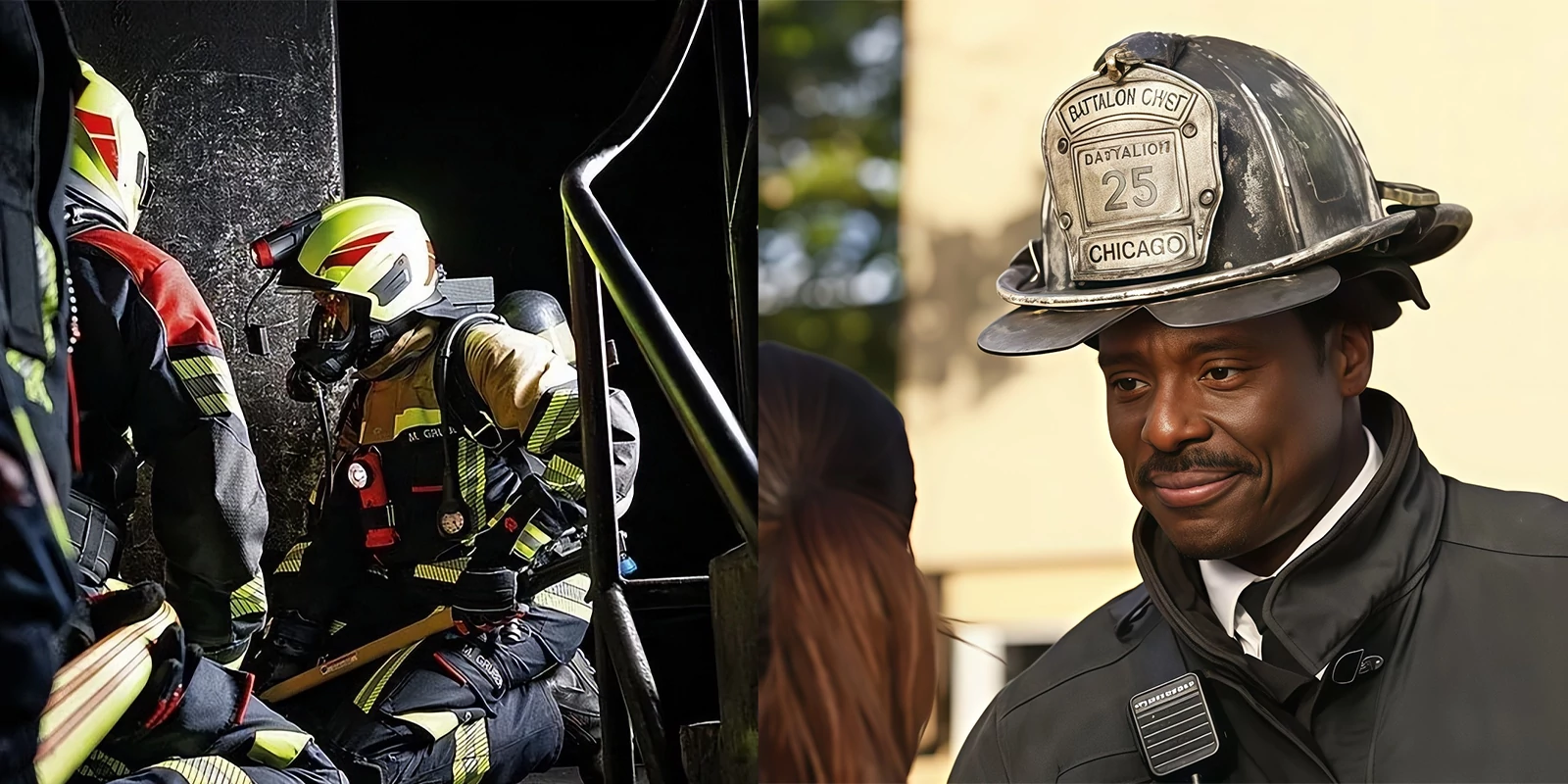
A European fire helmet prioritizes streamlined geometry and integrated protection, while a traditional American helmet—especially the Cairns New Yorker leather profile—emphasizes heritage form and extended brim coverage. The tactical impact of these differences is significant. A New Yorker stands roughly 8.7 inches tall, a height that complicates movement in crawl spaces, attic voids, stairwells, and low-condition hallway advances. The rear brim frequently strikes the SCBA cylinder when firefighters crawl forward to advance hose or when they tilt their head up for overhead checks. Weight compounds the issue: a New Yorker is about 4.4 lb, compared to 3.5 lb for a typical composite U.S. helmet.
But the brim has a purpose. Its extended surface redirects falling debris onto the shoulders and upper back instead of driving axial load straight into the spine. Many firefighters argue that a fractured scapula or clavicle heals far faster than a spinal compression injury, making the brim’s load-distribution value a legitimate operational advantage.
European designs follow EN 443, while U.S. structural helmets follow NFPA 1970. Under EN 443, the shell must provide sealed side, jaw, and face protection and support integrated systems—photoluminescent shells, dual visors, and internal comms. These features make mask-up faster: a European fire helmet with SCBA alignment allows firefighters to don facepieces in seconds without removing the helmet.
Material philosophy differs as well. American helmets rely on leather or composite laminates; European platforms adopt thermoplastic, fiberglass, or carbon composites optimized for heat deformation limits. Functionally, the European configuration outperforms in coverage, integration, and SCBA efficiency, while the American profile retains advantages in overhead debris deflection and firefighter preference for classic styling.
Selection, Operational Applications
Selecting a European fire helmet starts with matching helmet geometry and feature density to the department’s mission profile. For interior structural work, a full-coverage platform such as the MSA Gallet F1XF or Rosenbauer HEROS Titan Pro provides the strongest balance of thermal resistance, SCBA alignment, and facial protection. Both models offer dual-visor systems, photoluminescent shells, and integrated comms ports that streamline mask-up and improve visibility during high-heat corridor advances. For municipal brigades handling mixed-duty responses—vehicle extrication, wildland–urban interface calls, and technical rescue—a lighter half-shell configuration such as the Bullard H3000 delivers adequate thermal performance while offering better ventilation and situational awareness in non-IDLH environments.
Task type determines configuration priorities.
Interior attack / high-rise operations → sealed full-shell, full-face visor, comms-ready, optimized SCBA donning.
Vehicle extrication / technical rescue → lighter half-shell with clear ocular visor for metal shavings and glass debris.
Training academies / frequent multi-user rotation → rugged thermoplastic shells with simplified harness adjustments.
Proper care extends helmet service life. After each IDLH deployment, clean the shell, visor tracks, and suspension using mild detergent and soft brushes—no solvents that can degrade thermoplastic or composite materials. Inspect the rear ratchet, vertical sliders, and chin-strap stitching for heat damage or deformation. Visors should be rinsed with cool water to avoid micro-crazing, and comms ports must stay dry and debris-free. A European firefighter helmet performs best when kept clean, dry, and mechanically unobstructed, ensuring consistent protection across all operational assignments.
A European fire helmet offers stronger facial coverage, faster SCBA mask-up, and better integration for interior attack than traditional American designs. Match the helmet to your mission profile and maintain it with routine cleaning and harness checks.
Poseidon manufactures EN- and NFPA-compliant European firefighter helmets and supports agencies with model selection, OEM customization, and bulk procurement. Contact us to equip your crews with higher protection and operational efficiency.