

As safety devices with clear specifications and standards for residential safety, household house fire equipment is widely used for early fire detection, controlling initial fires, and assisting in safe evacuation.
Essential house fire equipment includes smoke alarms or combination smoke/CO alarms, multi-purpose ABC fire extinguishers as portable fire fighting equipment, fire blankets, escape ladders for upper floors, and fixed systems such as residential sprinklers.Although having portable fire extinguishers allows for immediate firefighting action in critical moments, they cannot replace evacuation or emergency rescue. Fire situations change rapidly, and a higher level of preparedness is always necessary to minimize risks and losses.
Standard residential ABC extinguishers are typically rated around 2A:10B:C, which limits control to small fires at the incipient stage and prevents control once heat release and flame spread exceed manual discharge capacity. Smoke alarms and sprinklers are life-safety systems; they reduce time-to-detection and slow fire growth but do not eliminate hazards created by delayed notification, obstructed egress, or blocked discharge.
House fire equipment buys time for evacuation; it does not put out house fires.
Definition and Functional Scope of House Fire Equipment
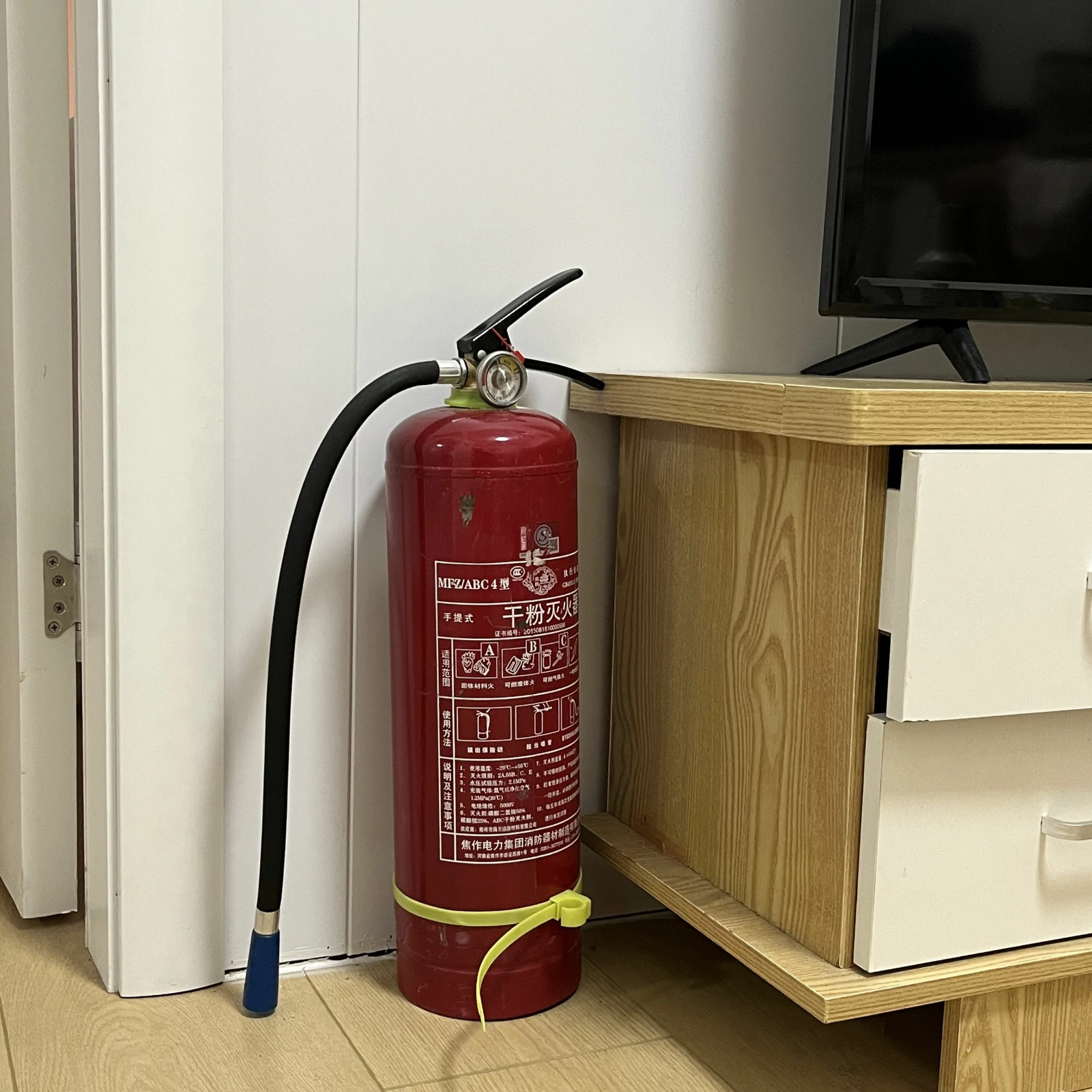
House fire equipment, also referred to in residential contexts as home firefighting equipment, is a defined category of fire protection devices, systems, and building-integrated measures used to detect, alarm, suppress, contain, or limit the effects of fire in homes.
House fire equipment functions to reduce life risk and property loss during the early stages of a fire and to preserve tenable conditions for evacuation. Once a fire spreads or cannot be controlled by household fire extinguishers, the fire department’s intervention is still necessary to complete the actual firefighting work.
This scope is reflected in both standards and engineering assumptions. NFPA 10 limits portable fire fighting equipment, such as residential fire extinguishers, to incipient-stage fires, while residential systems such as NFPA 13D sprinklers are designed to control fire growth, not guarantee extinguishment. Passive fire protection—such as fire-resistance-rated doors, compartmentation, and fire-stopping—operates by containing heat and smoke, not by active suppression.
House fire equipment serves distinct, non-interchangeable functions:
Detection and alarm: smoke and smoke/CO alarms provide early warning.
Active suppression: portable fire fighting equipment and sprinklers control small or localized fires.
Passive protection: fire-resistive elements slow fire and smoke spread.
Life safety and evacuation: egress aids preserve escape time.
Types of House Fire Equipment
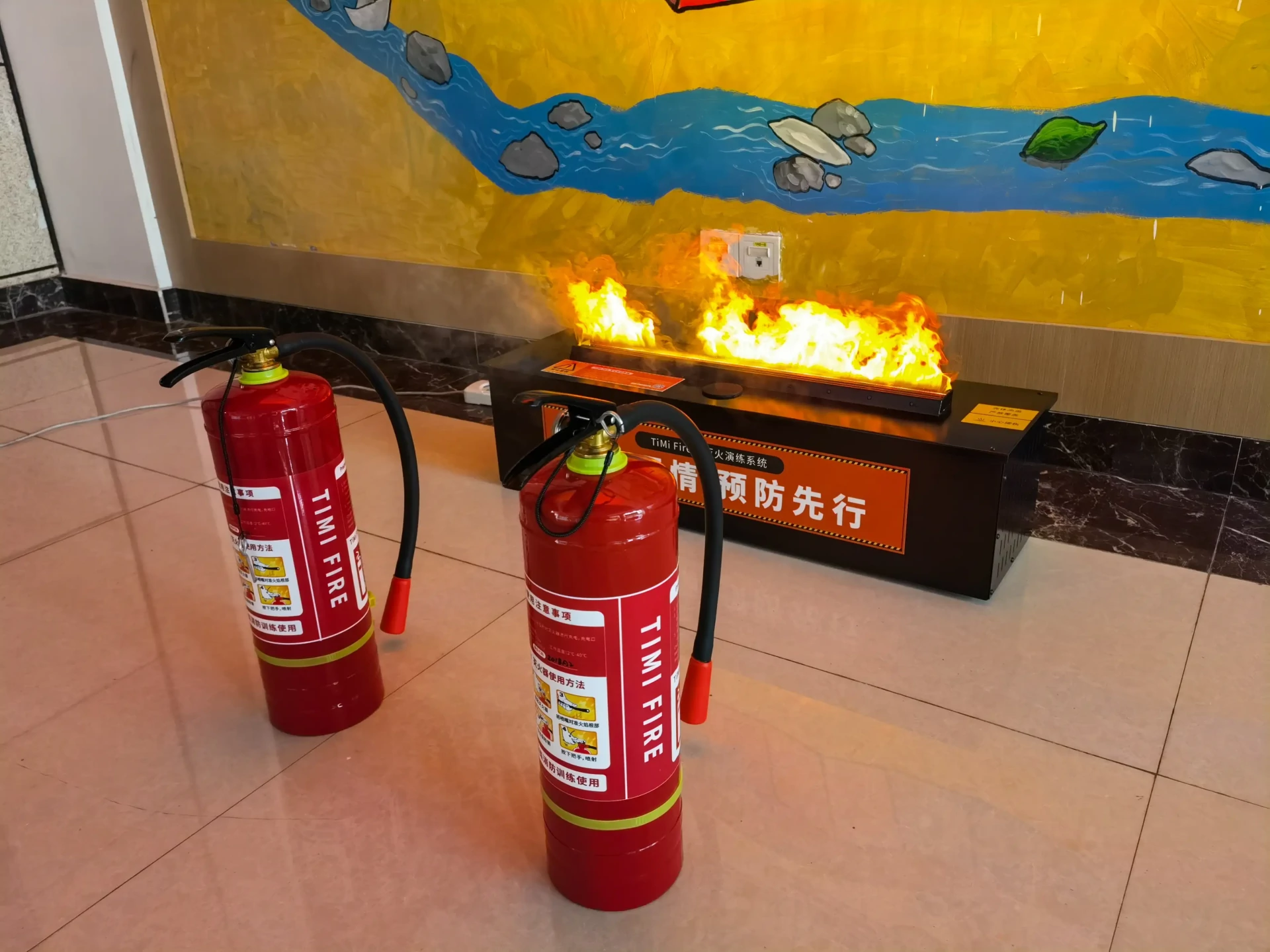
House fire equipment is classified by function: detection and alarm, portable control, evacuation and protection, and fixed suppression.
These categories serve different stages of a residential fire and are not interchangeable in purpose or performance. No category replaces fire department response once a fire becomes structural.
- Detection and alarm equipment includes smoke alarms and carbon monoxide detectors. They provide early warning so occupants can act before conditions become untenable; they do not control fire growth.
- Portable control and suppression equipment includes ABC fire extinguishers(A = wood/paper, B = liquid, C = electrical), fire blankets, and stove-top suppression devices. NFPA 10 limits portable fire extinguishers to incipient-stage fires and assumes a clear exit path; using them after a room fire is established results in rapid loss of control.
- Evacuation and protection equipment includes escape ladders, emergency lighting, and fire-resistant safes. These items support egress and asset protection; they do not reduce heat release, flame spread, or smoke production once ignition occurs.
- Fixed systems, including residential sprinklers designed to NFPA 13D, activate automatically based on heat to control fire growth and maintain tenable conditions for escape; fixed systems are not a guarantee of complete extinguishment.
Installation Locations and Use Conditions
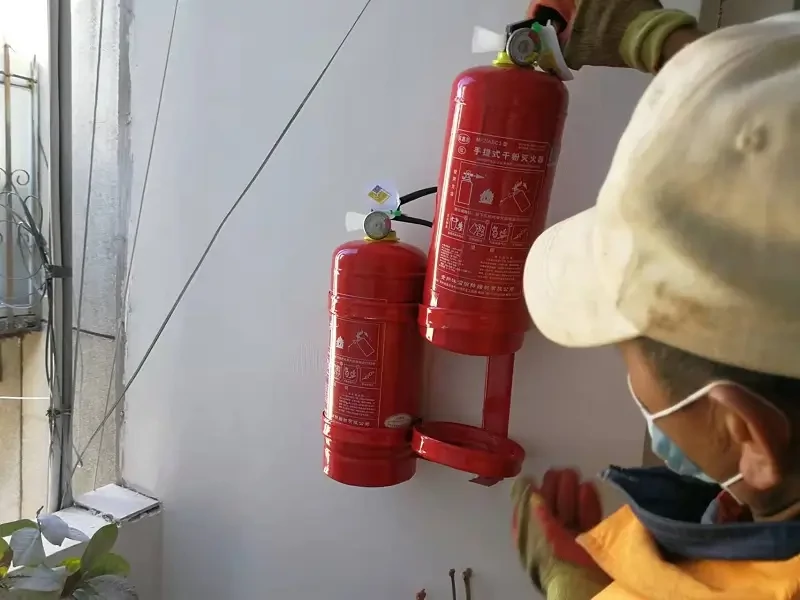
House fire equipment, including what is commonly referred to in residential contexts as home firefighting equipment, must be installed and used within defined location and operating conditions, or its intended function does not hold.
Incorrect placement or misuse breaks the engineering assumptions behind the equipment and increases life risk rather than reducing it. Installation and use are functional requirements, not discretionary choices.
- Detection and alarm devices are installed to provide warning before conditions become untenable. NFPA 72 requires smoke alarms on every level of a dwelling and inside and outside sleeping areas, where nighttime fires present the highest fatality risk. Carbon monoxide detectors are placed near sleeping areas and fuel-burning appliances to address toxic exposure, not flame spread.
- Portable fire fighting equipment is mounted in visible, accessible locations along normal egress paths—commonly near exits, kitchens, and garages—rather than deep inside hazard rooms. NFPA 10 assumes immediate access, a clear exit behind the user, and abandonment of use if fire growth or smoke increases. Standard mounting places the handle approximately 3.5–5 ft above the floor, preventing obstruction while remaining reachable.
- Fixed systems, such as residential sprinklers designed to NFPA 13D, are installed overhead in protected spaces and activate automatically based on heat thresholds; occupants do not control activation or timing.
| Equipment Type | Typical Installation Location | Intended Use Condition | Stop-Use / Limit Condition | Reference Basis |
|---|---|---|---|---|
| Smoke alarms | Every level of the home; inside and outside sleeping areas | Early warning before smoke conditions become untenable | No suppression capability once fire develops | NFPA 72 |
| CO detectors | Near sleeping areas; adjacent to fuel-burning appliances | Detection of toxic gas accumulation | Does not indicate flame spread or fire control | NFPA 72 |
| Portable fire fighting equipment (ABC extinguisher) | Near exits; kitchens; garages; along egress paths | Incipient-stage fires with a clear exit behind the user | Abandon use if fire growth or smoke increases | NFPA 10 |
| Residential sprinklers | Overhead in protected living spaces | Automatic heat-activated fire control | Not designed to guarantee full extinguishment | NFPA 13D |
Periodic Inspection and Training Requirements
Periodic inspection and user training are mandatory requirements for house fire equipment, not optional practices.
Without regular inspection, equipment status cannot be verified; without adequate training, the assumptions about correct use fail during critical moments. These activities ensure readiness for incipient-stage response and prompt evacuation; they do not extend equipment capacity beyond its design limits.
NFPA 10 mandates monthly visual inspections for portable fire fighting equipment and annual maintenance to verify functionality, including checking pressure and accessibility. If an extinguisher is discharged or its pressure gauge shows inadequate readings, it cannot perform as intended. NFPA 72 requires regular testing of smoke and CO alarms to ensure that they remain operational, particularly ensuring that the power source, sensors, and sound output are functional. Failure to test these alarms compromises their primary function—early warning before conditions become life-threatening.
Training must address the proper use of equipment within its boundaries—such as the abandonment threshold—where the user should stop and evacuate if the fire escalates. In addition, occupants must know when to rely on professional emergency response rather than manual tools.
Inspection and training serve distinct, but complementary, roles:
Inspection ensures equipment is in working order and compliant with industry standards.
Training reinforces decision-making protocols to safely operate equipment.
Both activities are essential to maintaining a safe living environment and reducing life-risk exposure in case of a fire.
Periodic inspection and user training are essential components of maintaining house fire equipment’s functionality and safety.
NFPA standards define strict requirements for inspection and maintenance, ensuring that fire extinguishers, smoke alarms, and CO detectors are operational when needed most. Regular testing and training help prevent equipment failure and ensure that users know when to use the tools and when to evacuate. Without these measures, fire equipment cannot provide the intended protection, and life risks increase.
Ensure the safety of your home and loved ones by scheduling regular inspections and training for your house fire equipment.
Contact us today to learn how our products and services can support your fire safety protocols, meet industry standards, and provide peace of mind.