

Firefighters rely on two categories of door-entry tools—non-destructive entry tools for controlled access and forcible entry tools when reinforced construction or life-safety threats require immediate force. The selection is driven by the door’s build, lock hardware, and the operational time window, making tool choice a critical fireground decision rather than a fixed routine. Across U.S. structural incidents, an estimated 60% of residential fire responses encounter locked or restricted doors, underscoring the need for reliable firefighter door-entry equipment.
This guide outlines the tools and tactics used in structural firefighting, EMS assists, commercial occupancy access, and alarm investigations under NFPA-compliant practices. It covers latch-bypass tools, through-the-lock kits, Halligan-based forcible-entry tools, hydraulic door openers, and rotary rescue saws—paired with the decision framework firefighters use to match the right tool to the door. Understanding these methods helps departments improve entry speed, reduce property damage, and optimize their firefighter entry tool inventory.
Non-Destructive Entry Tools
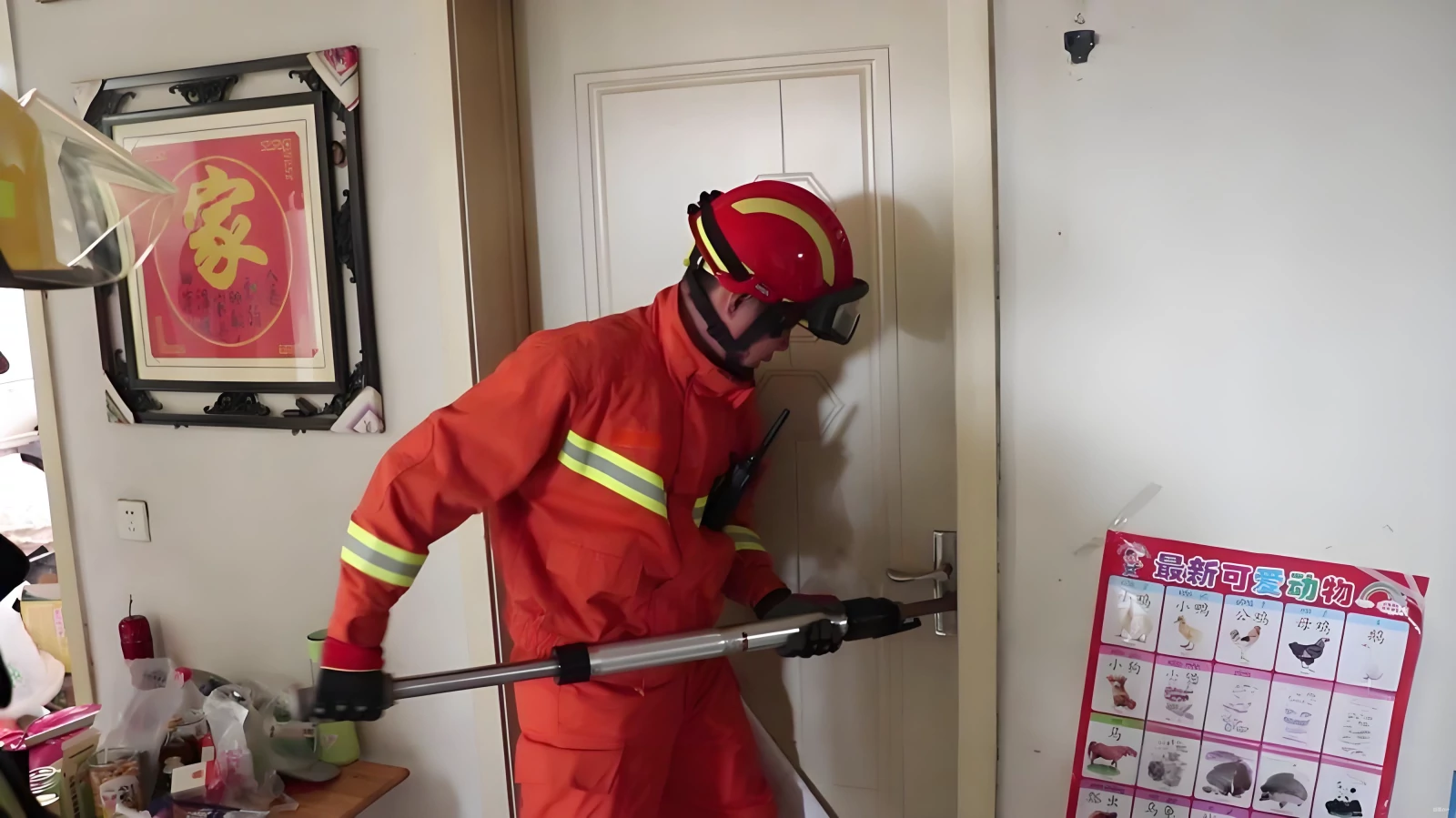
Non-destructive entry tools allow firefighters to open doors quickly without damaging the latch, lock, frame, or surrounding hardware. These tools are preferred on medical calls, welfare checks, alarm investigations, and commercial occupancy access where preservation of property and evidence matters. They are effective on spring-latch mechanisms but will not defeat deadbolts, mortise locks, reinforced strike plates, or high-security storefront systems—scenarios that require transitioning to forcible entry methods.
Because door construction varies widely, crews rely on multiple tool types. Most pocket-style bypass tools require a 1/8–1/4 inch gap between the door and frame to slide the blade into position, while Through-the-Lock (TTL) operations depend on compatible cylindrical lock designs. Departments typically require firefighters to carry light NDE tools on-person, while heavier, commercial-focused devices remain on the apparatus for deployment as needed.
Swipe / Shove Tool (Shove Knife) — Stainless steel blade that slips between latch and strike to retract spring latches on inward-swing residential or light-commercial doors. Variants such as the Williams Key (including folding version) and the Tri-Blade offer different blade geometries for tight gaps and worn frames.
J-Tool — Designed for outward-swing glass storefront doors with panic hardware. Inserted between the door and frame, it depresses the push-bar to open without breaking glass or damaging trim.
SEARAT (Seattle Rapid Access Tool) — A reinforced, compact hybrid tool from Ignition USA that combines shove, pry, and latch-manipulation capabilities. Effective on mixed-use commercial and multi-family doors where standard shove tools struggle.
Through-the-Lock (TTL) Kits — K-Tool / Officer’s Tool — Used when bypassing is not possible. The tool removes the cylinder so firefighters can operate the lock with key tools, preserving the door and maintaining re-securement capability.
W-Tool — Suited for heavier commercial applications, allowing manipulation of latch hardware and padlocked connections with reduced damage compared to cutting tools.
Door Chocks / Wedges — Carried by nearly every firefighter. Used to secure doors open once entry is made, protecting hoselines, maintaining ventilation control, and preserving egress routes.
For routine interior access, crews should keep a set of compact, non-destructive tools on-person—swipe/shove tools for spring-latch doors, a folding Williams Key and a tri-blade for narrow gaps and panic hardware, plus wedges to secure doors and protect hoselines.
TTL kits, W-tools and specialty commercial-access devices belong on the apparatus so technicians can deploy them quickly when a scene requires a more delicate approach.
When crews encounter deadbolts, reinforced hardware, security gates or zero-gap commercial frames, tactically escalate to forcible-entry methods with coordinated crew support rather than persisting with improvised techniques that waste time. Used in sequence, these tools give interior teams fast, quiet, and controlled access—minimizing property damage while maintaining fireground momentum and firefighter safety.
Forceful Entry Tools for Doors

Forceful entry relies on tools designed to overpower door construction, lock hardware, or security reinforcements when life safety demands immediate access. For structural firefighting, departments standardize both mechanical and powered options, ensuring crews can defeat everything from lightweight residential doors to reinforced commercial steel frames.
Halligan Bar + Flat-Head Axe (“The Irons”): The foundational forcible-entry set. A 30-inch Halligan bar can deliver 700–900 lb of spreading force during gap-set operations, while the firefighting axe drives the adze or fork into position.
Hydraulic Door Openers (Rabbit Tool / Hydra-Ram): Compact hydraulic pumps producing 8,000–10,000 psi, ideal for metal-framed commercial doors, multi-point deadbolts, and inward-swing steel assemblies.
Forcible-Entry Sledge Hammers (8–12 lb): Used to drive the Halligan, defeat hasps, strike hinges, or shear padlock shackles on utility or storage areas.
Rotary Rescue Saws: Gas or battery platforms running 12–16 in composite or diamond blades for cutting roll-down steel doors, bars, hinges, or welded security plates.
Chainsaws with Carbide-Tipped Blades: A fast-cut option for lightweight wood doors and rapid “through-the-door” ventilation cuts when collapse time is a concern.
Operations should be performed in NFPA 1971–compliant PPE and follow departmental SOGs under NFPA 1500 to ensure safe, controlled, and effective entry.
Choose the Right Tool for the Door
Firefighters select entry tools by matching door construction, lockwork, and time-to-access goals. Life hazard and property conservation drive whether they start with non-destructive entry or escalate to forcible entry. NFPA 1001 requires members to demonstrate forcible-entry competencies; departments operationalize this as a rapid, repeatable decision model.
Swing & build: Inward-swing wood door with a latch favors the irons; outward-swing steel with latch guards pushes toward a hydraulic door opener.
Lock type: Rim cylinder or key-in-knob? Use a K-tool to pull the cylinder and manipulate the latch. Heavy commercial mortise with reinforced frames may require a rabbit tool/Hydra-Ram.
Access options: Present Knox Box? Try the key before you pry to control damage and smoke movement.
Time: Typical residential rescue target is ≤60 seconds from contact to clear access. A 30″ Halligan can deliver ~700–900 lb of spreading force; hydraulic units operate at 8,000–10,000 psi for metal frames.
Escalation: If roll-down doors or bars block primary egress, deploy a rotary rescue saw (12–16″ composite/diamond blade) with charged-line protection and a cut plan.
Firefighters match the tool to the door: non-destructive options (swipe tools, shove knives, Williams Key, SEARAT, Tri-Blade) when speed and low damage matter; the Irons, hydraulic door openers, or rotary rescue saws when fortified hardware or life safety demands force. The right choice cuts entry time, limits collateral damage, and stays within department SOPs while operating under NFPA-compliant PPE and safety practices.
Poseidon manufactures NFPA-conforming non-destructive and forcible-entry tools—connect with a Poseidon specialist to spec the optimal door-entry solution for your department.