
Home » Wind Turbine Dry Chemical Fire Suppression Unit
Wind Turbine Dry Chemical Fire Suppression Unit
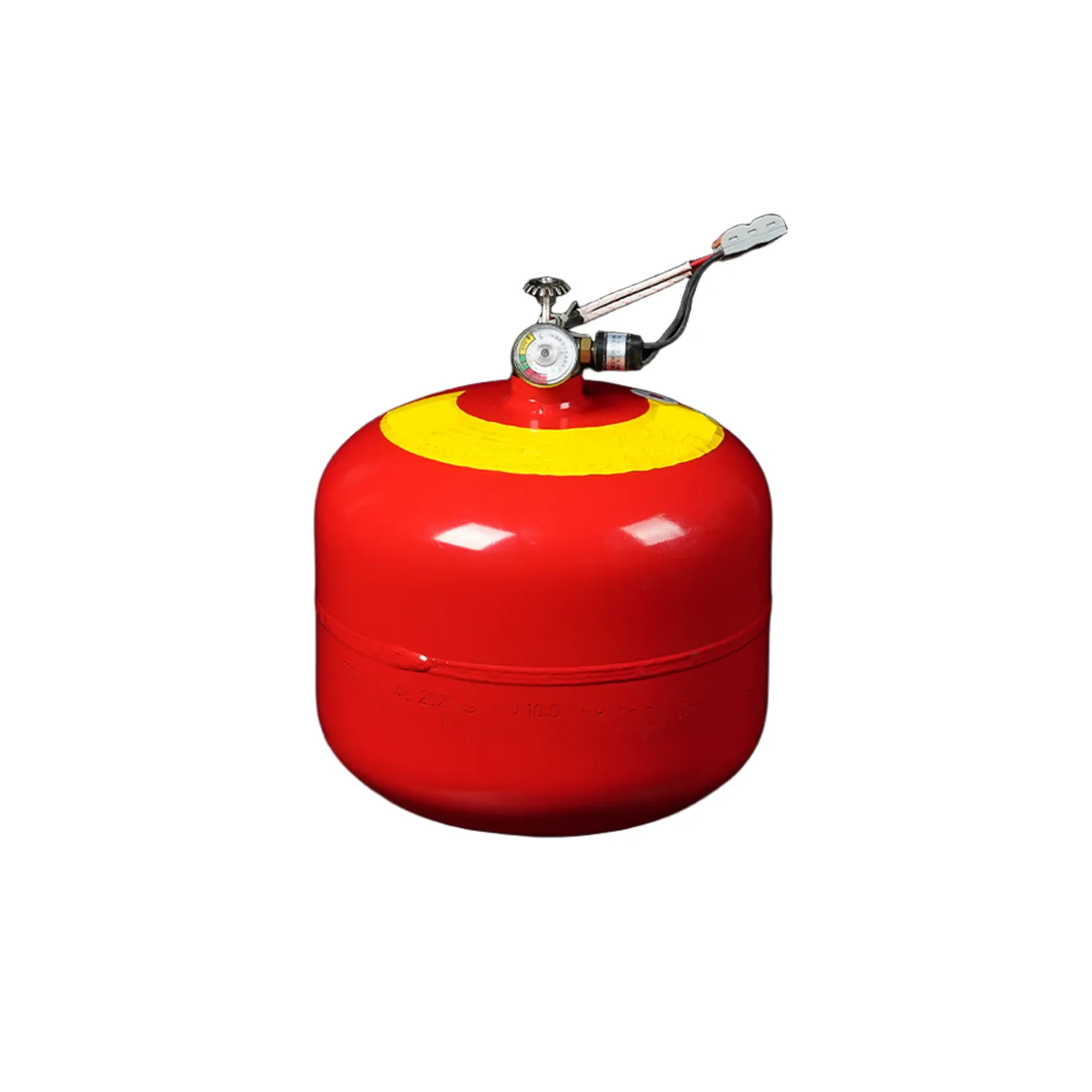
The Wind Turbine Dry Chemical Fire Suppression Unit is an autonomous, compact fire protection system engineered for wind turbine nacelles operating in remote or harsh environments. Built to meet the requirements of NFPA 17 for dry chemical extinguishing systems and incorporating UL-referenced test methods, it ensures reliable protection without dependence on external utilities.
Designed for confined nacelle spaces, it provides fast discharge within ≤ 5 seconds, extinguishing Class A, B, and C fires caused by electrical faults or lubricant ignition while minimizing downtime and protecting critical turbine assets.
Wind turbine nacelles face complex fire risks—from overheated converters to oil mist ignition. The Poseidon unit offers dual activation capability: an autonomous thermal device that operates without external power and an electric release circuit (24 V DC, 700 mA) compatible with turbine SCADA interlocks for remote triggering.
The system employs a cartridge-operated discharge design that stores ultra-fine ABC dry powder at atmospheric pressure. Upon activation, the cartridge instantly generates discharge force, releasing the powder through corrosion-resistant stainless-steel nozzles. The powder interrupts combustion by smothering oxygen, absorbing heat, and disrupting chemical reactions, achieving full coverage within five seconds.
With a five-year service life and minimal maintenance, it is ideal for remote installations where technician access is limited. Components are fabricated from high-grade steel and treated aluminum, ensuring durability against vibration (15 Hz, 1.5 mm) and humidity up to 95 % RH, tested per IEC 60068-2-6 / -78. Operating reliably between −40 °C and +50 °C (−40 °F to +122 °F), it maintains performance across extreme climates—from arid deserts to offshore wind farms.
Each suppression unit protects up to 15 m² (161 ft²) when installed at 3.5 – 8.5 m (11.5 – 28 ft) height under open plume conditions. Multiple units can be networked for large nacelles or gearbox compartments.
The system is maintenance-light: operators perform annual visual inspections, while powder and cartridge replacement are scheduled every five years or after discharge. Recharge kits and nozzle replacements are designed for on-site servicing in under 30 minutes by trained technicians. Post-discharge cleanup guidance and SDS documentation are provided for compliance with ISO 9001 quality management procedures.
Optional features include SCADA alarm integration via dry-contact or Modbus RTU (RS-485) and compatibility with linear heat-sensing cables or spot-type detectors.
Engineered for Wind Turbines – Withstands vibration, confined spaces, and temperature extremes typical of nacelle environments.
Dual Activation – Autonomous thermal trigger or 24 V DC / 700 mA electric activation for immediate response.
Fast Discharge – ABC dry chemical agent deploys in ≤ 5 seconds, preventing fire escalation.
Extreme-Condition Endurance – Operates −40 °C to +50 °C (−40 °F to +122 °F), 95 % RH humidity, 15 Hz vibration.
Low Maintenance – Five-year service life; annual inspection only.
Flexible Installation – Compact design fits nacelles or electrical housings, 3.5–8.5 m mounting range.
SCADA Ready – Optional Modbus RTU monitoring and alarm feedback.
Environmentally Compliant – RoHS and WEEE standards; powder free of heavy metals.
Nacelle Fire Protection – Rapid suppression of electrical or lubricant fires in confined turbine housings.
Extreme Climate Operations – Performs under −40 °C cold, salt-fog, and high-humidity offshore conditions.
Low-Access Installations – Ideal for remote wind farms requiring minimal maintenance.
SCADA-Integrated Safety – Supports 24 V DC signal activation and fault diagnostics for automated shutdown or fan stop logic.
Energy-Sector OEMs – Available for project supply and private label integration into turbine fire safety packages.
| Parameter | Specification | Standard / Notes |
| Activation Methods | Thermal (auto) / Electric (24 V DC 700 mA) | Dual mode; SCADA compatible |
| Discharge Time | ≤ 5 s | Full agent release |
| Suppression Agent | Ultra-fine ABC dry powder | Non-conductive, multi-class |
| Fire Classes | A / B / C (non-conductive electrical) | NFPA 17 methodology |
| Storage Pressure | Atmospheric (cartridge-operated) | Pressure generated on actuation |
| Coverage Area | Up to 15 m² (161 ft²) per unit | 3.5–8.5 m mounting height |
| Operating Temp Range | −40 °C to +50 °C (−40 °F to +122 °F) | IEC 60068-2-1 / -2 |
| Humidity Resistance | ≤ 95 % RH | IEC 60068-2-78 |
| Vibration Endurance | 15 Hz @ 1.5 mm amplitude | IEC 60068-2-6 |
| Nozzle Material | 316 / 304 Stainless Steel | ISO 9227 salt-spray 48–96 h |
| Service Life | 5 years | Annual inspection / recharge cycle |
| Certifications / References | NFPA 17 / UL 299 (test methods) / RoHS / WEEE | Not UL-listed; tested per UL procedures |
NFPA 17 – Design and performance requirements for dry chemical extinguishing systems.
UL 299 – Referenced test procedures for agent discharge and chemical evaluation.
IEC 60068 – Vibration and humidity resilience verification.
ISO 9227 – Corrosion resistance validation (48–96 h neutral salt fog).
RoHS / WEEE – Environmental compliance and material traceability.
(System engineered to NFPA and UL standards but not UL-listed.)