

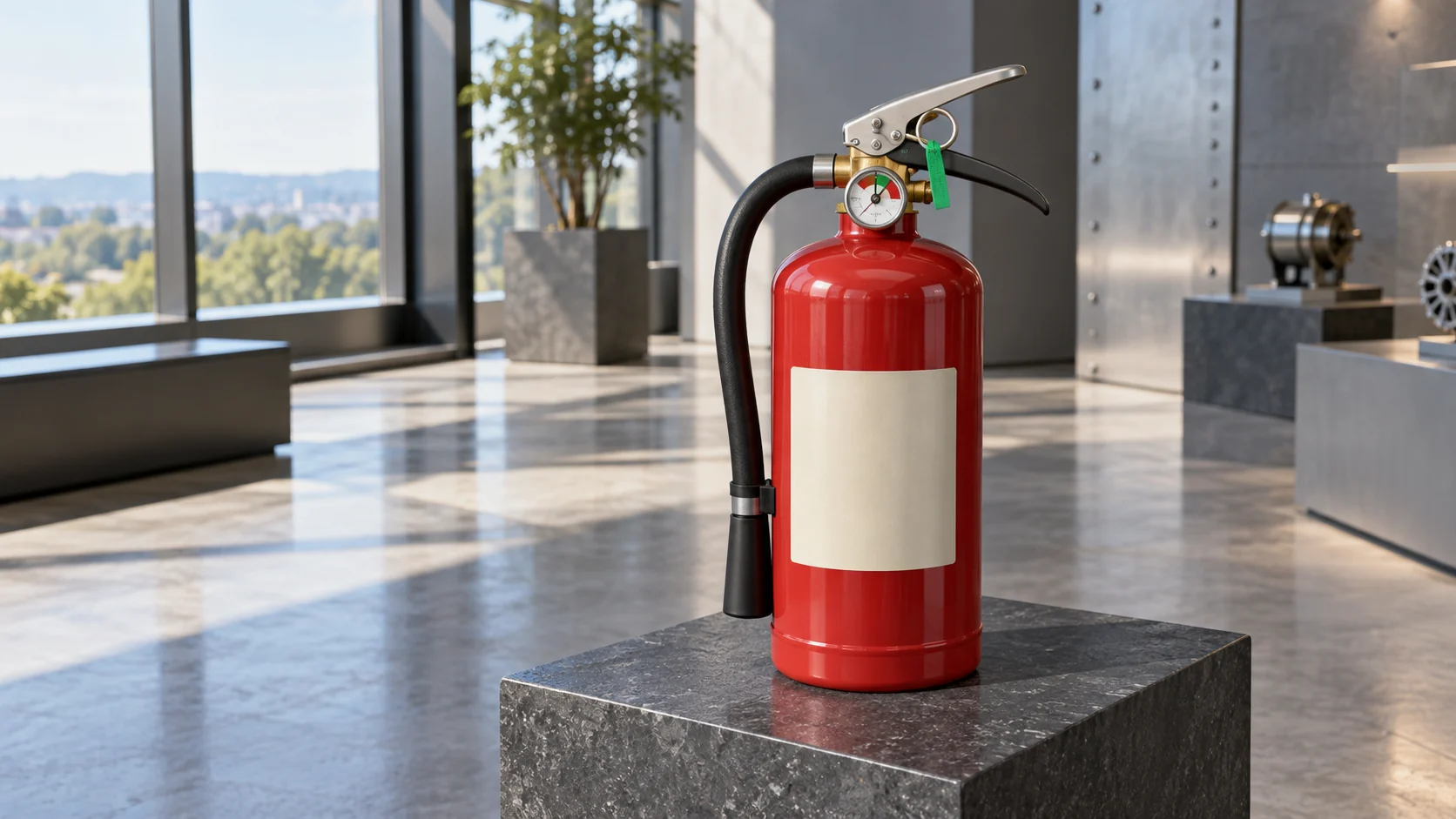
A fire extinguisher marked 2-A:10-B:C has a Class A rating of 2, a Class B rating of 10, and a nonconductive agent suitable for use on energized electrical equipment. The numbers describe separate fire-fighting capabilities. They do not tell you the pounds of agent inside or the extinguisher’s total weight.
These meanings apply to the U.S. fire classification system. Read the letters and their associated numbers separately before comparing catalog models.
Read 2-A:10-B:C one field at a time
| Field | What it describes | What it does not describe |
|---|---|---|
| 2-A | Rated capability on ordinary combustible materials | Two gallons of agent or two pounds of contents |
| 10-B | A separate rating for Class B fire capability | Ten pounds of agent or a guaranteed real-world fire area |
| C | Electrical suitability based on agent nonconductivity | A numerical electrical rating or voltage limit |
2-A: performance on ordinary combustibles
Wood, paper, and cloth are Class A fuels. The A number expresses water-equivalent extinguishing capability: each unit of A corresponds to 1.25 U.S. gallons of water. A 2-A rating therefore represents the equivalent of 2.5 U.S. gallons in this classification, as explained in OSHA’s extinguisher basics.
A dry chemical extinguisher can carry an A rating without containing water. Its capability is established through controlled fire tests; the equivalent volume is neither its actual charge nor an instruction to apply that amount of water at a fire. For the fuel distinction, see our guide to extinguishers for wood, paper, and fabric.
10-B: a separate liquid-fire rating
Read 10-B as a B rating of 10. OSHA’s simplified explanation relates that number to a nominal 10-square-foot Class B fire that a non-expert user could extinguish. It is a rating shorthand, not a guarantee for a real spill, a room-area allowance, or a measure of agent quantity.
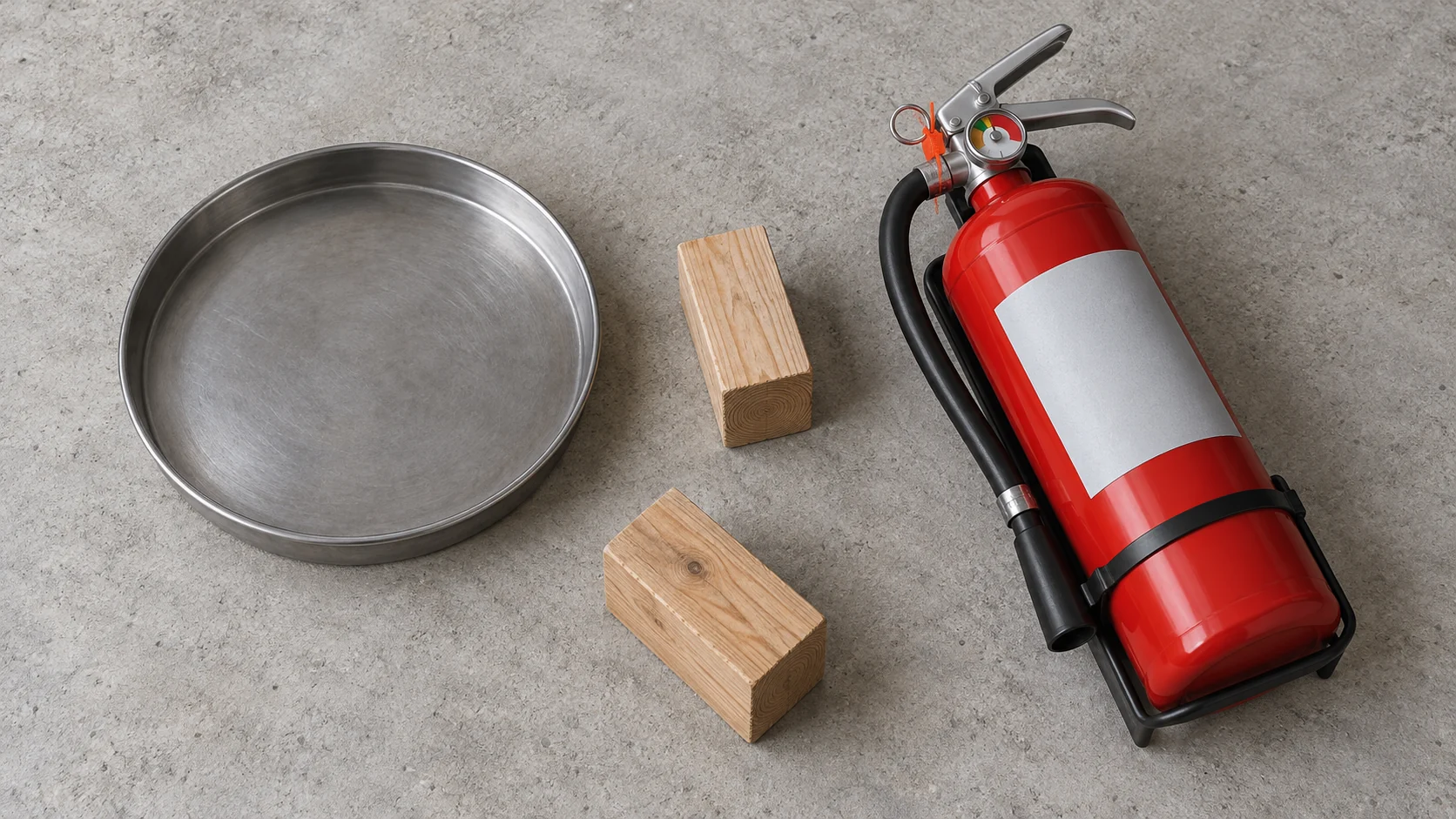
The test area and the rating number are also different. NFPA’s explanation of extinguisher ratings gives a 10-B example tested on a heptane fire in a 25-square-foot steel pan. The 25 square feet describes that test pan; 10 is the assigned B rating. Neither figure alone predicts the fire an individual can safely tackle under actual conditions.
C: electrical suitability, with no number
C indicates that the agent meets the nonconductivity requirement for use on energized electrical equipment. It has no numerical component, so there is no C value to add to A or B. It does not specify a safe voltage or make every electrical fire safe to approach.
Once the equipment is de-energized, the burning material determines whether A or B capability is needed. NFPA’s ratings explanation makes this distinction: electricity changes the agent-suitability requirement; it does not replace the underlying fuel.
A rating is different from agent charge and total weight
A 5 lb agent charge describes the mass of extinguishing material. A 2-A:10-B:C rating describes fire classes and rated capability. Read these as separate specification fields.
| Specification field | Form or units | Question it answers |
|---|---|---|
| Fire rating | Class letters with A/B rating numbers | What fire classes and rated capabilities does the model cover? |
| Agent type | For example, dry chemical, water, or carbon dioxide | What extinguishing material does it discharge? |
| Agent charge or capacity | Mass, such as lb or kg; liquid volume, such as gal or L, where specified | How much agent does it contain? |
| Charged gross weight | Total weight, usually stated in lb or kg | How much does the complete charged extinguisher weigh? |
The cylinder, valve, hose, and other hardware contribute to gross weight along with the charge. Agent formulations and discharge arrangements also differ between models. A larger cylinder or heavier complete unit does not, by itself, establish a higher rating for every fire class.
Agent type, fire rating, net charge and charged gross weight are separate model specifications. Compare the rating for capability and the charged gross weight for handling; one does not provide a universal conversion to the other.
Compare the same fire class, not the combined label
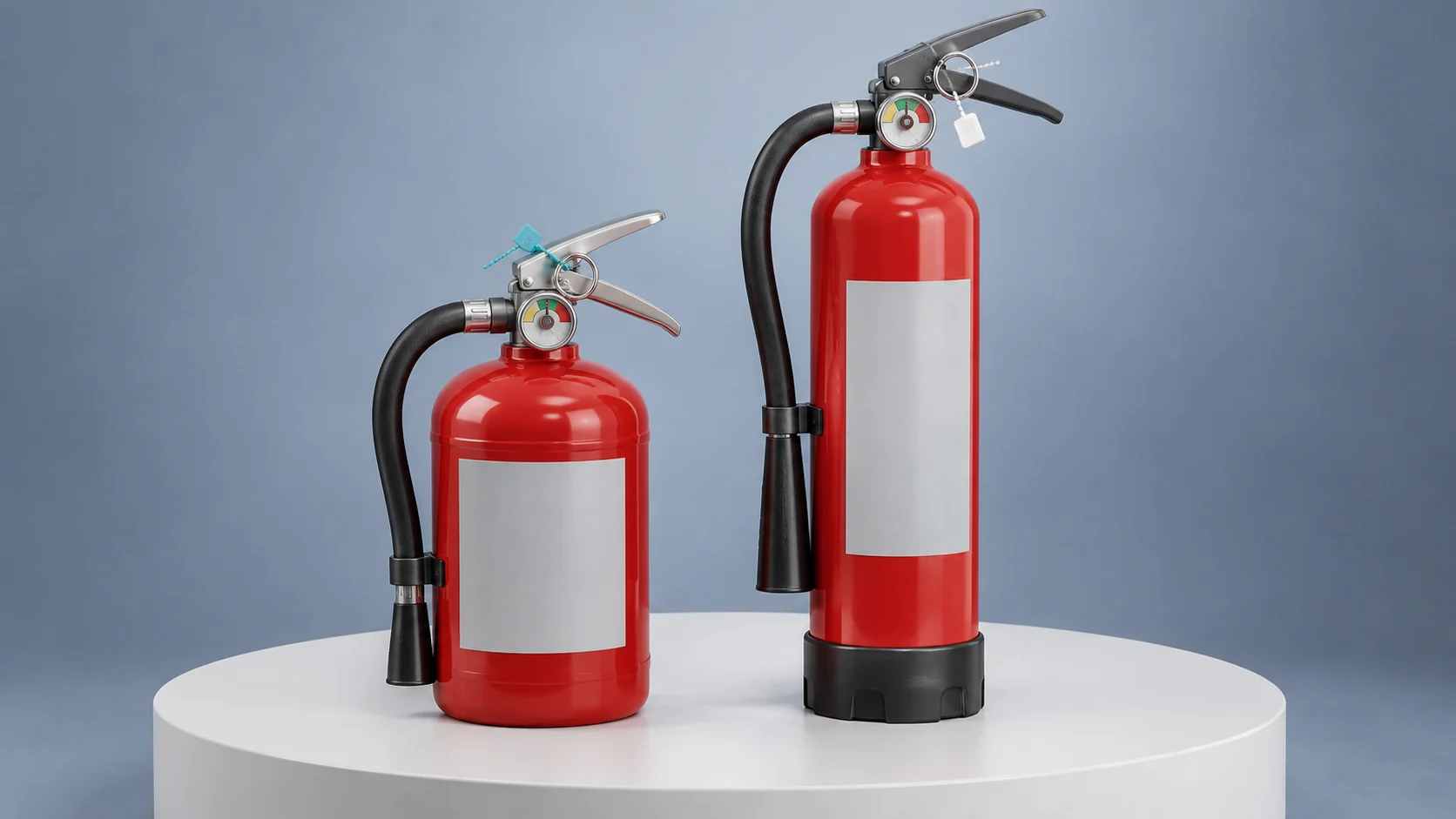
Compare the class letters and rating numbers on these labels separately.
First, compare 2-A:10-B:C with 2-A:20-B:C:
| Field | 2-A:10-B:C | 2-A:20-B:C |
|---|---|---|
| A rating | 2 | 2 |
| B rating | 10 | 20 |
| C designation | Present; no number | Present; no number |
The second label has a higher B rating. Its A rating is unchanged. The labels do not establish twice the overall capability, twice the safely manageable fire area, or a difference in agent weight.
Next, compare 2-A:10-B:C with 20-B:C:
| Field | 2-A:10-B:C | 20-B:C |
|---|---|---|
| A rating | 2 | No A rating shown |
| B rating | 10 | 20 |
| C designation | Present; no number | Present; no number |
The 20-B:C label has a higher B number but does not show Class A coverage. That is a difference in the classes covered, not a reason to rank one extinguisher above the other for every application. Match the class to the fuel before comparing its number.
What the rating does not decide for you
An ABC designation does not automatically cover combustible-metal fires, Class D, or cooking-oil and fat fires, Class K. Those hazards require an extinguisher and agent suitable for the particular fire.
Even within Class B, a shallow liquid spill and fuel escaping under pressure present different conditions. Flowing fuel, changing elevations, or obstacles can affect the required agent and discharge performance. The B rating alone does not describe how the agent reaches fuel under those conditions.
The user also needs training and the physical ability to operate the extinguisher. U.S. Fire Administration guidance makes use conditional on a small, contained fire, others being alerted, the fire department being called, safety from smoke, and a clear escape route. If safe use is uncertain, alert others, leave, and call 911.
For a catalog comparison or wholesale and OEM extinguisher selection, keep the complete rating, agent type, net charge, charged gross weight, and exact model documentation together. Check the applicable listing for that model and configuration. UL Solutions identifies ANSI/UL 711 as the rating and fire-testing standard; a fire rating does not by itself establish that a site’s extinguisher quantities, placement, or maintenance meet the applicable requirements.