
NH and NST are two names for the same fire hose thread family. NPSH is a different straight hose thread, while NPT is tapered pipe thread. A matching inch label alone does not make two connections compatible: the thread standard, nominal size, male or female end, and sealing arrangement must work together.
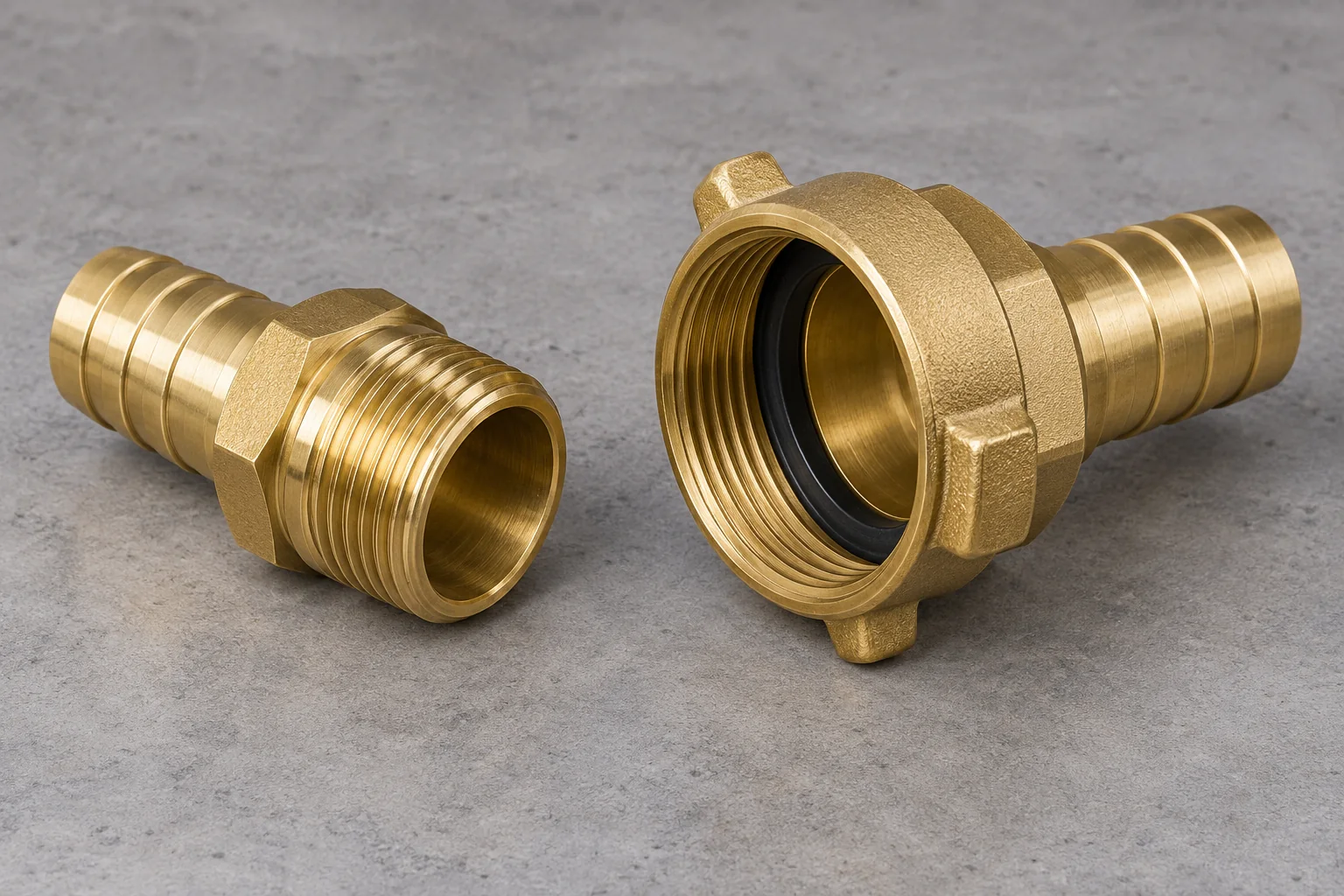
NH, NST, NPSH and NPT: what the names mean
A male connection has threads on the outside; a female connection has threads inside. For a direct hose connection, identify both the thread family and the end type before comparing sizes.
| Thread name | Thread form | Usual mating connection | Where the seal forms |
|---|---|---|---|
| NH / NST: National Hose / National Standard Thread | Straight | Male NH to female NH of the same size; NST is the same designation | Male end face against a washer in the female coupling |
| NPSH: National Pipe Straight Hose | Straight | Male NPSH to female NPSH of the same size | Male end face against a washer in the female coupling |
| NPT: National Pipe Tapered | Tapered | Male NPT to female NPT of the same size | Tapered thread joint |
NH and NPSH have different thread dimensions. A 1½-in. male NH connection does not directly mate with a 1½-in. female NPSH connection. Labels such as IPT or NPS also need clarification; they do not identify NPSH precisely enough to select a mating end.
Storz belongs outside this thread comparison. It uses a genderless, lugged quarter-turn connection rather than mating male and female screw threads.
Match the seal as well as the threads
NH and NPSH hose connections use straight threads to draw the male end face against a recessed washer or gasket inside the female coupling. Compressing that gasket creates the water seal. The threads provide the clamping action; matching thread pitch alone does not establish that the end face can reach and compress the gasket.
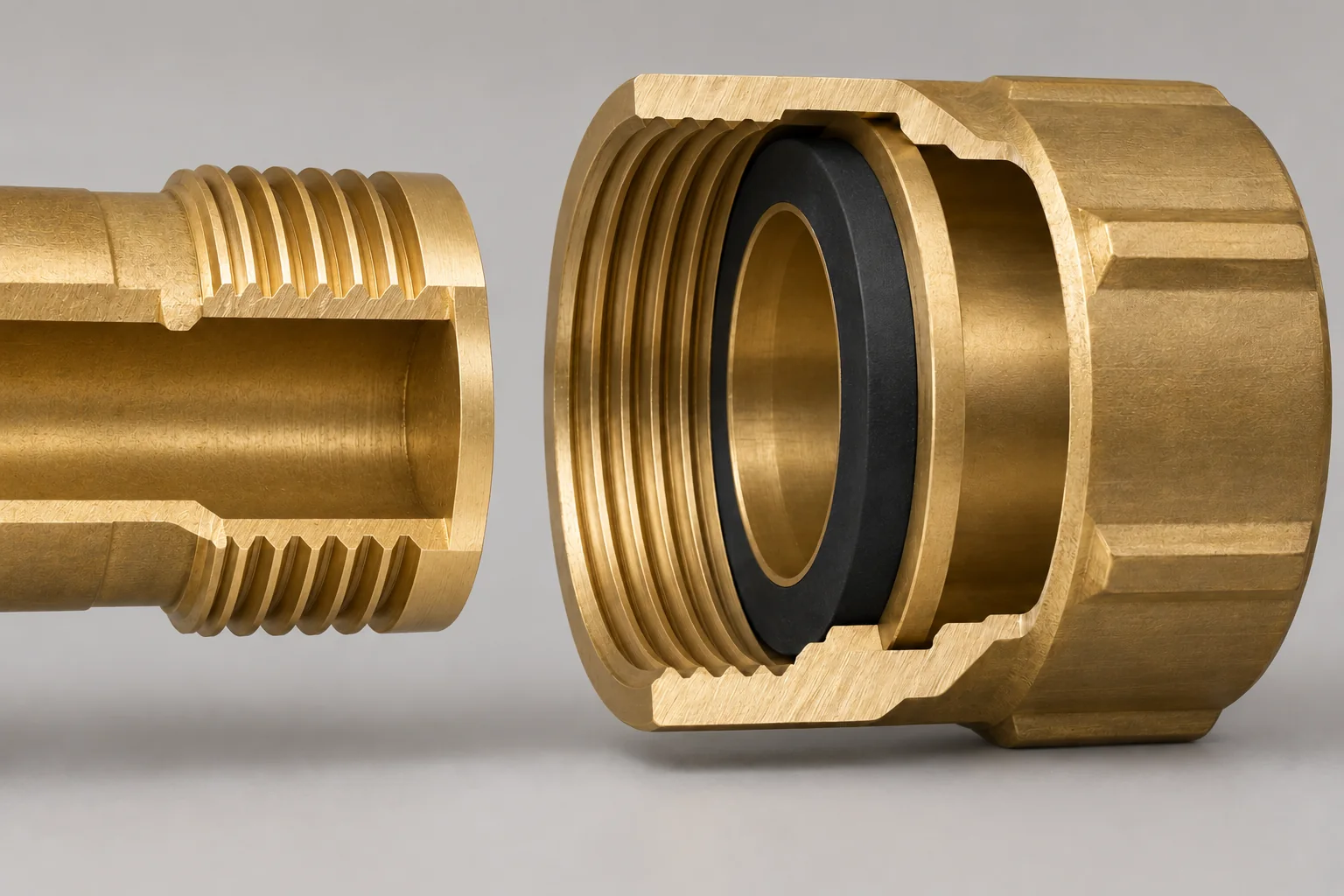
The USFS Water Handling Equipment Guide explains this hose-coupling seal and distinguishes it from tapered pipe connections. In an NPT-to-NPT joint, the tapered threads engage progressively to form the sealing joint.
When NPT can connect to female NPSH
A male NPT end can connect to a female NPSH end of the corresponding nominal size and thread pitch when the male end face can reach and compress the female coupling’s washer. This is a gasket-sealed connection. The straight female threads do not become a tapered thread seal.
The direction matters: a male NPSH end into a female NPT port is not the reverse equivalent. It does not provide the intended NPT tapered joint or the NPSH washer seat. For the male-NPT-to-female-NPSH arrangement, the end geometry, gasket seat and component pressure ratings must also suit the application.
Identify an unmarked connection
Inspect a disconnected, depressurized connection. Start with any stamped thread designation and the equipment’s connection specification, then examine the end itself:
- Record male or female. External threads identify a male end; internal threads identify a female end. A female hose swivel also needs its gasket and seating surface identified.
- Check straight or tapered. A straight male thread stays approximately the same diameter along its threaded length. A tapered thread changes diameter along the axis.
- Measure diameter and pitch. Use these together to compare the connection with the dimensions for a named thread standard.
Measure a male thread’s outside diameter with the caliper jaws across opposite thread crests, rather than down in the grooves. Use a thread-pitch gauge to identify the threads per inch (TPI). For a tapered male thread, compare diameters at different positions along its length. A female opening measurement is a different dimension and cannot be compared directly with the male outside-diameter values below.
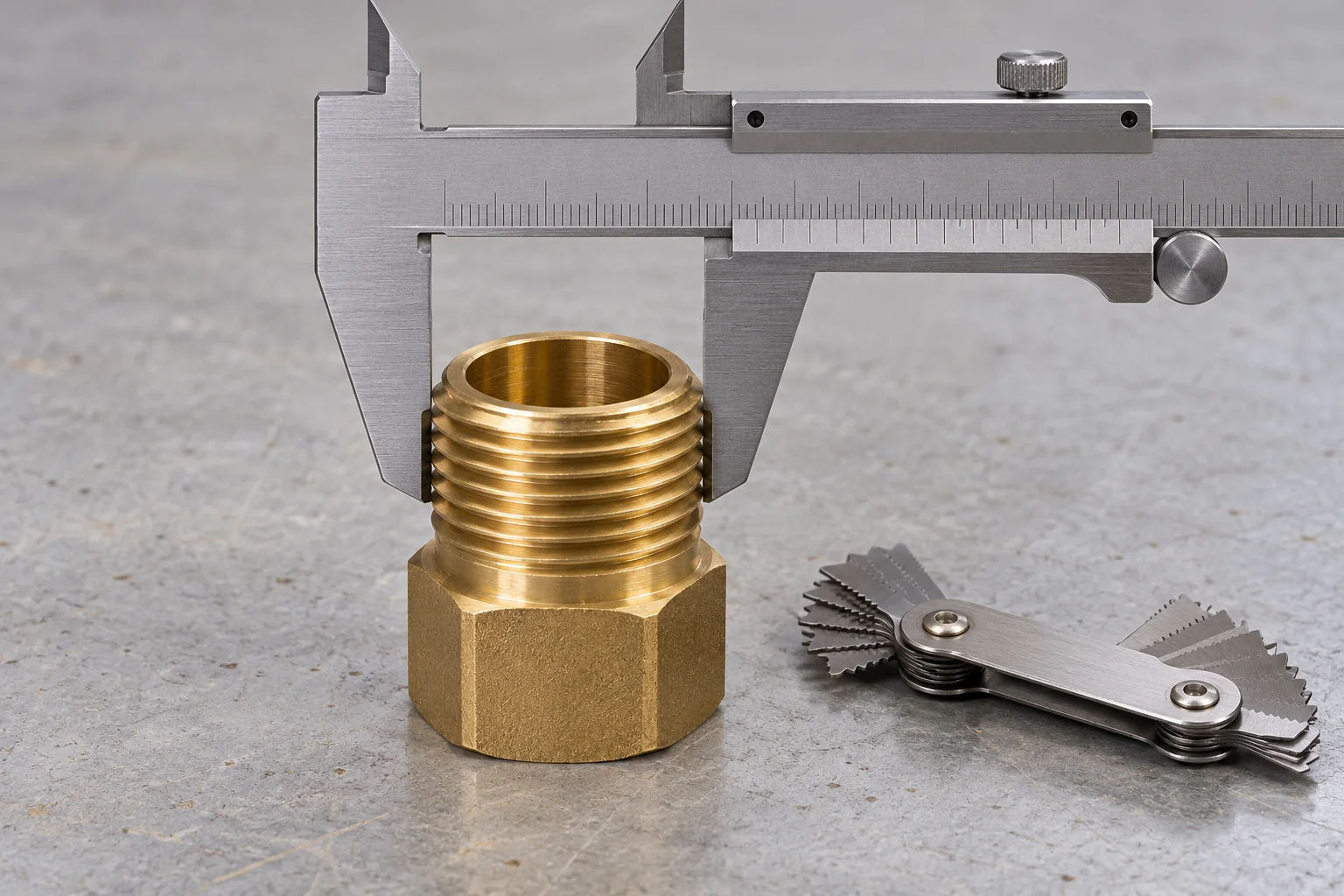
Calipers and a pitch gauge support identification; ring, plug or GO/NO-GO gauges provide more precise thread gaging. A damaged thread or an uncertain reading is a reason to resolve the identity, rather than force a partly engaged connection together.
Hydrant and fire department connection threads can vary by local specification. Match the actual installed interface and the local fire department’s requirements; a city name or a familiar nominal size is not enough to identify an individual outlet.
Why the same nominal size does not mean the same thread
The nominal connection size is a size designation, not the measured outside diameter of the male threads. The following reference values show how NH/NST and NPSH differ at two common nominal sizes. OD means outside diameter measured crest to crest; the OD column gives the maximum male thread diameter, in inches.
| Nominal connection size | Thread | TPI | Maximum male thread OD (in.) |
|---|---|---|---|
| 1½ in. | NH / NST | 9 | 1.990 |
| 1½ in. | NPSH | 11½ | 1.8788 |
| 2½ in. | NH / NST | 7½ | 3.068 |
| 2½ in. | NPSH | 8 | 2.8434 |
At 1½ in., NH has 9 TPI while NPSH has 11½ TPI, so their thread spacing differs. Their maximum male outside diameters also differ: 1.990 in. versus 1.8788 in. The shared 1½-in. label cannot overcome either mismatch. At 2½ in., the same problem appears with 7½ versus 8 TPI and maximum male diameters of 3.068 versus 2.8434 in.
These maximum diameters are identification references, not a complete tolerance table or a fixed reading expected from every fitting. Manufacturing tolerances and wear affect an actual measurement. Compare the thread form, pitch and diameter together; none of these values describes the hose’s inside diameter.
Specify both ends of a thread adapter
Consider a connection with a 1½-in. male NH end on one side and a 1½-in. female NPSH end on the other. The required adapter end specification is:
1½-in. female NH × 1½-in. male NPSH.
The adapter’s female NH end mates with the existing male NH end. Its male NPSH end mates with the existing female NPSH end. Each connection needs its corresponding gasketed sealing arrangement. This changes the thread family while keeping the nominal size the same.
A reducer or increaser changes connection size. A double-male or double-female adapter changes the available end genders; that name alone does not say whether it also changes thread family. Specify size, thread standard and gender independently for each end.
When selecting fire hose couplings, provide those two end specifications together with the equipment connection, intended service and required working pressure. For a complete fire hose assembly, specify hose inside diameter and length separately from the coupling thread specifications.