

Firefighter gloves are multilayer protective PPE built to defend the hands against heat, flame, cuts, punctures, and liquid exposure while preserving enough dexterity to operate tools, valves, and SCBA hardware.
These fire protective gloves use a three-layer architecture—an outer shell of leather or Kevlar/Nomex blends, a PTFE moisture/chemical barrier, and a thermal liner—engineered to withstand the operational demands defined in NFPA 1971 gloves testing, including sustained exposure near 482–662°F (250–350°C).
Structural firefighting gloves prioritize thermal and liquid protection; rescue gloves emphasize cut and puncture resistance; wildland gloves focus on radiant-heat performance and long-duration comfort. Understanding these categories helps departments match glove design to mission profile and risk.
What Are Firefighter Gloves
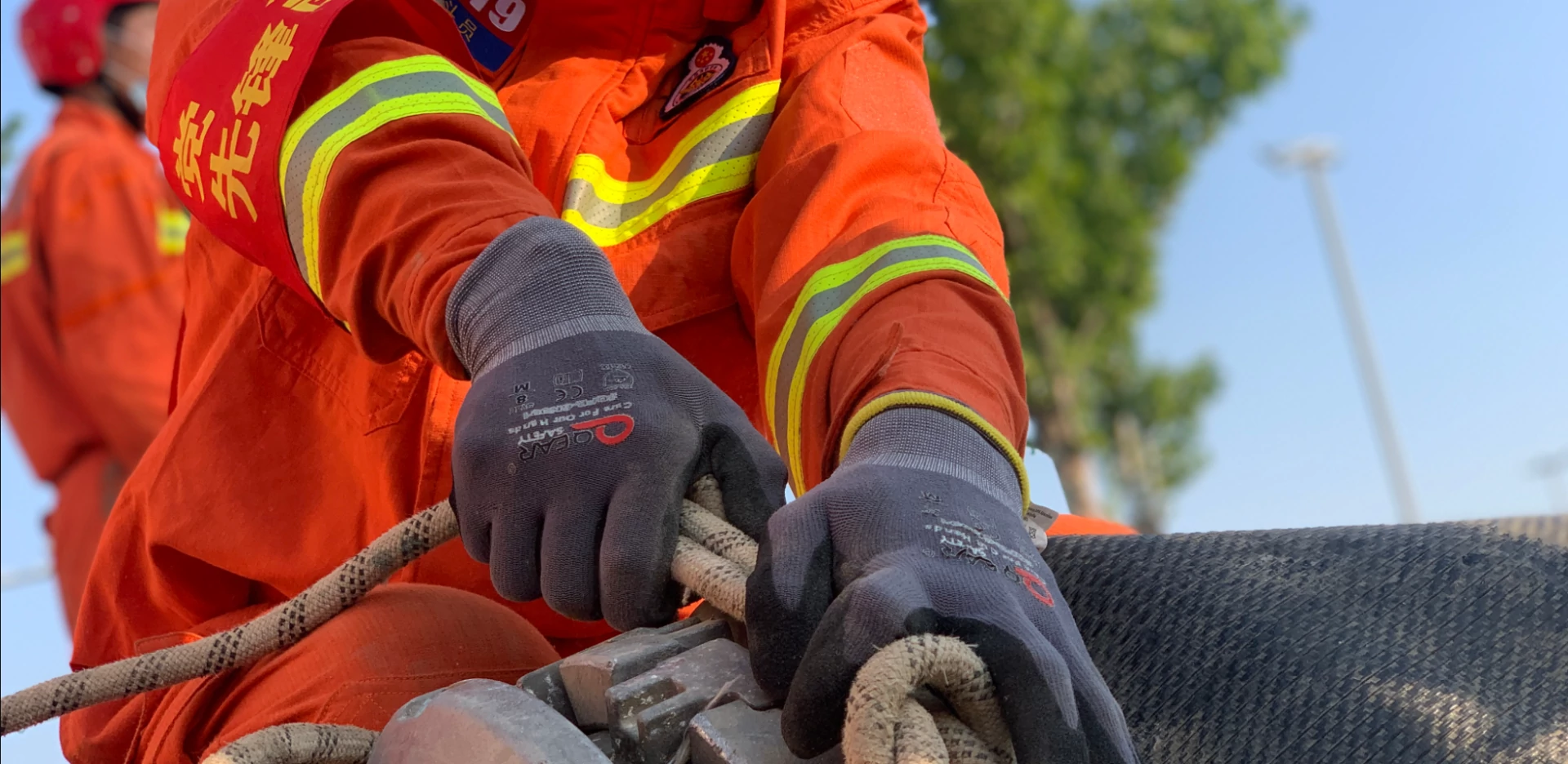
Firefighter gloves are engineered PPE that shield a firefighter’s hands from heat, flame, cuts, punctures, and fluid exposure while preserving the dexterity needed to handle tools in structural and wildland operations. NFPA 1971 gloves used in interior attack are certified for thermal resistance, conductive heat transfer, and grip function, with testing procedures typically validating 250–300°C (482–572°F) contact levels to reduce steam-burn risk and hot-gas-layer exposure.
Most structural firefighting gloves use a three-layer system: an outer shell of cowhide, goatskin, or high-strength kangaroo leather for abrasion resistance; a PTFE moisture/chemical barrier blocking water, blood, and chemicals; and an aramid thermal liner designed to slow heat rise during prolonged entries and overhaul.
Key features include:
NFPA 1971 / NFPA 1977 compliant fire protective gloves
Reinforced silicone/rubber grip zones and impact padding
Gauntlet or elastic cuffs for debris exclusion and bunker-gear integration
Low water absorption to limit hand fatigue
Typical tasks—coupling tightening, forcing entry, debris clearance, glass management, and extrication—depend on firefighter work gloves that balance heat load, cut protection, and fine-motor control. Departments selecting fire safety gloves for mixed-response crews weigh dexterity requirements against thermal mass and maintenance cycles to match operational risk and budget.
Types of Firefighter Gloves
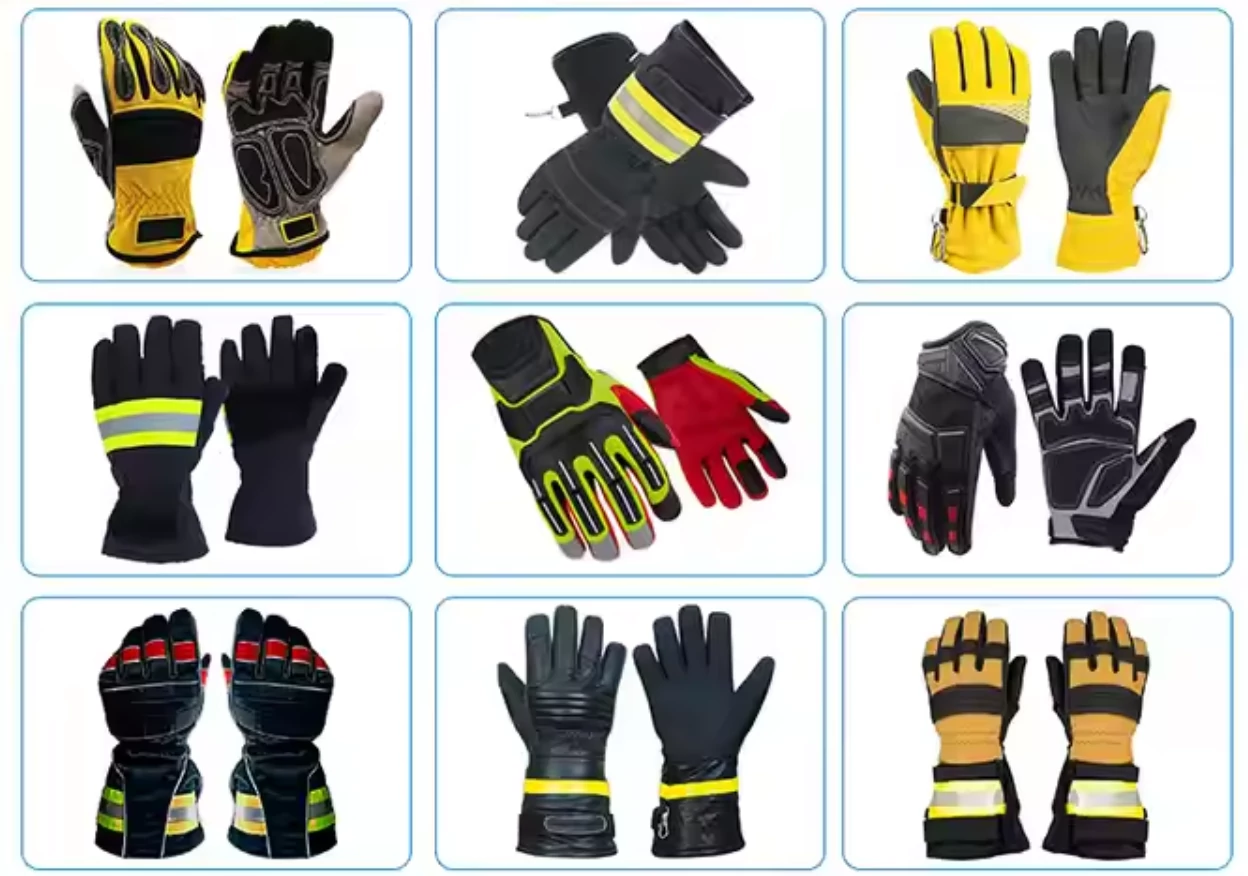
Firefighter gloves fall into four mission-specific categories—structural firefighting gloves, wildland gloves, technical rescue gloves, and hazmat gloves—each matched to specific heat, mechanical, and chemical risks. Differences in material selection, barrier design, and certification standards, such as NFPA 1971 gloves for structure fires and NFPA 1977 compliance for wildland campaigns, determine how each type performs on the fireground.
Structural Firefighting Gloves (NFPA 1971)
These structural firefighting gloves provide the greatest thermal mass and are validated for 250–300°C (482–572°F) contact exposure during interior attack, overhaul, and door forcing. They typically use cowhide, goatskin, or kangaroo leather for grip and abrasion resistance, paired with aramid thermal liners and PTFE moisture/chemical barriers. Reinforced silicone or rubber palms and bunker gear gloves–compatible cuffs improve tool control, debris exclusion, and integration with turnout ensembles.
Wildland Fire Gloves (NFPA 1977)
Wildland fire protective gloves emphasize breathability, dexterity, and low water absorption for long-duration outdoor operations. Lighter leather or aramid weaves resist embers, vegetation abrasion, and light steam exposure without the heavy thermal composites used in structural gloves.
Technical Rescue Gloves
Technical rescue firefighter work gloves trade higher heat protection for precision. Built with cut-resistant fibers, impact padding, and silicone grip patterns, they support extrication, glass management, and confined-space manipulation of couplings, controls, and small hardware.
Hazmat Gloves
Hazmat fire safety gloves rely on multilayer polymer systems designed to block industrial chemicals, fuels, and solvents. Performance is validated through permeation standards such as ASTM F739, providing extended resistance during spill mitigation, decontamination, and container breach response.
Key Characteristics Across Categories
Dexterity: Fine control for tools and equipment
Durability: Reinforced palms, abrasion-resistant leather, strong stitching
Comfort: Low water absorption, ergonomic liners, reduced fatigue
Safety Standards: NFPA 1971 / 1977 compliance; ASTM F739 for chemical permeation
Departments running both interior suppression and roadside extrication often issue separate structural firefighting gloves and technical rescue gloves to balance thermal load, mechanical protection, and chemical resistance across operations.
Choosing and Sizing Firefighter Gloves
| Palm Width ↓ | 66–69 mm | 70–73 mm | 74–77 mm | 78–81 mm | 82–85 mm |
| 50–54 mm | 66N | 70N | 74N | 78N | 82N |
| 55–59 mm | 66W | 70W | 74W | 78W | 82W |
| 60–64 mm | 66XW | 70XW | 74XW | 78XW | 82XW |
| 65–69 mm | 66XXW | 70XXW | 74XXW | 78XXW | 82XXW |
Correct sizing begins with the NFPA 1971 glove-sizing chart, which functions as a two-dimensional matrix: index-finger length (X-axis) and palm width (Y-axis) measured across the knuckles. These millimeter-based measurements generate the NFPA numeric code—e.g., 70N, 70W, 76N, 76W—where the number reflects hand length and the letter indicates width. This precision is essential for selecting structural firefighting gloves that maintain dexterity, heat resistance, and grip security during interior attack.
How to measure:
Measure index-finger length from the flexion crease to the fingertip.
Measure palm width in millimeters across the knuckles (2nd–5th metacarpals).
Plot both values on the NFPA matrix to determine the exact code for your firefighter gloves.
Fit characteristics:
Fingers must flex fully without tightness; fingertip depth must maintain clearance under load.
Your palm should sit fully inside the cuff of the bunker gear gloves to prevent snagging and heat bypass.
When between two codes, select the closer size or request a custom variation.
Operational tips:
Grip a halligan or coupling during fitting; twisting or fingertip bottoming indicates an incorrect size.
Wildland fire protective gloves benefit from a slightly snugger fit to reduce fatigue during long tool cycles.
Best Firefighter Gloves
The best firefighter gloves deliver consistent NFPA 1971 performance, dependable thermal protection, and strong dexterity in real fireground operations. When choosing structural firefighting gloves, departments look for documented TPP results, reliable liner systems, and grip stability under moisture, while rescue scenarios benefit more from high-dexterity firefighter work gloves.
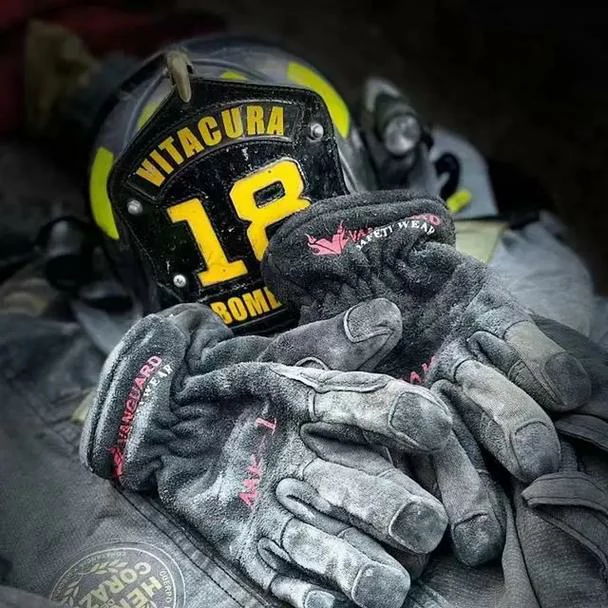
Tier 1 – Front-line NFPA 1971 Structural Firefighting Gloves
- Shelby 5226 / 5283 Series structural firefighting gloves: US-made bunker gear gloves using pigskin or cowhide with Gore RT7100/Crosstech barriers, NFPA 1971-2018 certified and widely used in North American interior-attack crews.
- Pro-Tech 8 Titan Pro structural firefighting gloves: Aramid-based shell, Porelle PTFE barrier, strong liner-retention performance, NFPA 1971-2018 certified; built for forcible entry, nozzle control, and rapid hand-function tasks.
- Dragon Fire X2S / Texan structural models: High-dexterity leather configurations with TPP values often above 60, surpassing the NFPA 1971 minimum threshold.
Tier 2 – Rescue & Mixed-Mission Firefighter Work Gloves
- Ringers R-314 / R-327 Series: High-impact, cut-resistant firefighter work gloves engineered for extrication, glass management, and confined-space operations.
- Southcombe Firemaster / NFPA Line: EN659 / NFPA-compliant options with strong palm durability and good articulation for non-structural tasks.
Tier 3 – OEM / Private-Label Partners
- Poseidon fire protective gloves: OEM/PL manufacturer producing NFPA-aligned structural and wildland models with aramid liners, PTFE barriers, and customizable cuff systems.
- Midas Safety firefighter gloves programs: Global firm supporting private-label and high-volume OEM builds for departments and brands requiring NFPA-based specifications.
- Top-Skin (Spain) fire protective gloves: OEM supplier for agencies needing flame-resistant platforms adaptable to structural or rescue-glove configurations.
Maintenance and Care
Firefighter gloves must be maintained as part of the full firefighter PPE ensemble, since contamination and heat damage typically affect gloves, turnout gear, and hoods simultaneously. Under NFPA 1851, gloves require routine inspection after every fire and advanced cleaning whenever exposed to soot, PAHs, or chemicals.Certified Independent Service Providers (ISPs) can perform compliant deep cleaning, repairs, and end-of-life assessments to keep gloves aligned with PPE program requirements.
Cleaning procedure:
Inspect for tears, liner displacement, and seam failure.
Hand-wash in warm water below 105°F (40°C) using mild, pH-neutral detergent; do not machine-wash structural gloves.
Rinse thoroughly and air-dry in a ventilated area—no sunlight or forced heat, which can shrink leather and damage PTFE barriers.
Storage and service life:
Store only when fully dry, away from oils, chemicals, and sharp tools; avoid sealed plastic bags.
Leather gloves may require periodic conditioning to maintain flexibility.
NFPA 1851 sets a 10-year maximum service life from the date of manufacture.
Firefighter gloves function as a critical element of the PPE ensemble, with performance defined by materials, NFPA standards, and task-specific design. Proper selection, sizing, and maintenance directly influence thermal protection, dexterity, and long-term service life across structural, wildland, rescue, and hazmat operations. Departments that match glove construction to mission demands—while maintaining NFPA-compliant care—achieve safer and more consistent fireground performance.
Poseidon is a professional manufacturer specializing in firefighter gloves, bunker gear gloves, and full-spectrum fire protective gloves with OEM and private-label capabilities. We engineer NFPA-aligned structural, wildland, and rescue glove platforms, and support departments and brands requiring customized materials, sizing, and performance specifications. Contact us to build your next-generation glove program with reliable manufacturing, compliant design, and consistent quality.