




Home » Firefighter Gloves
Firefighter Gloves
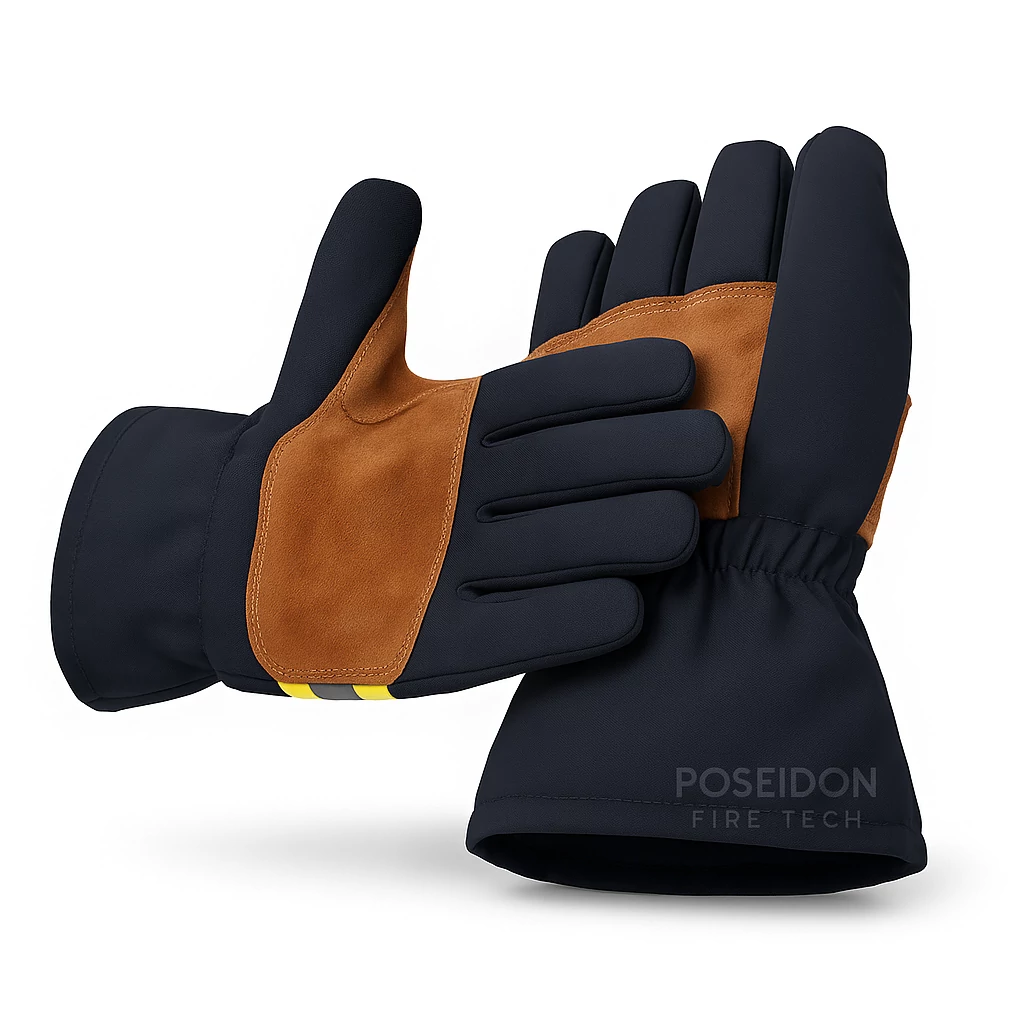
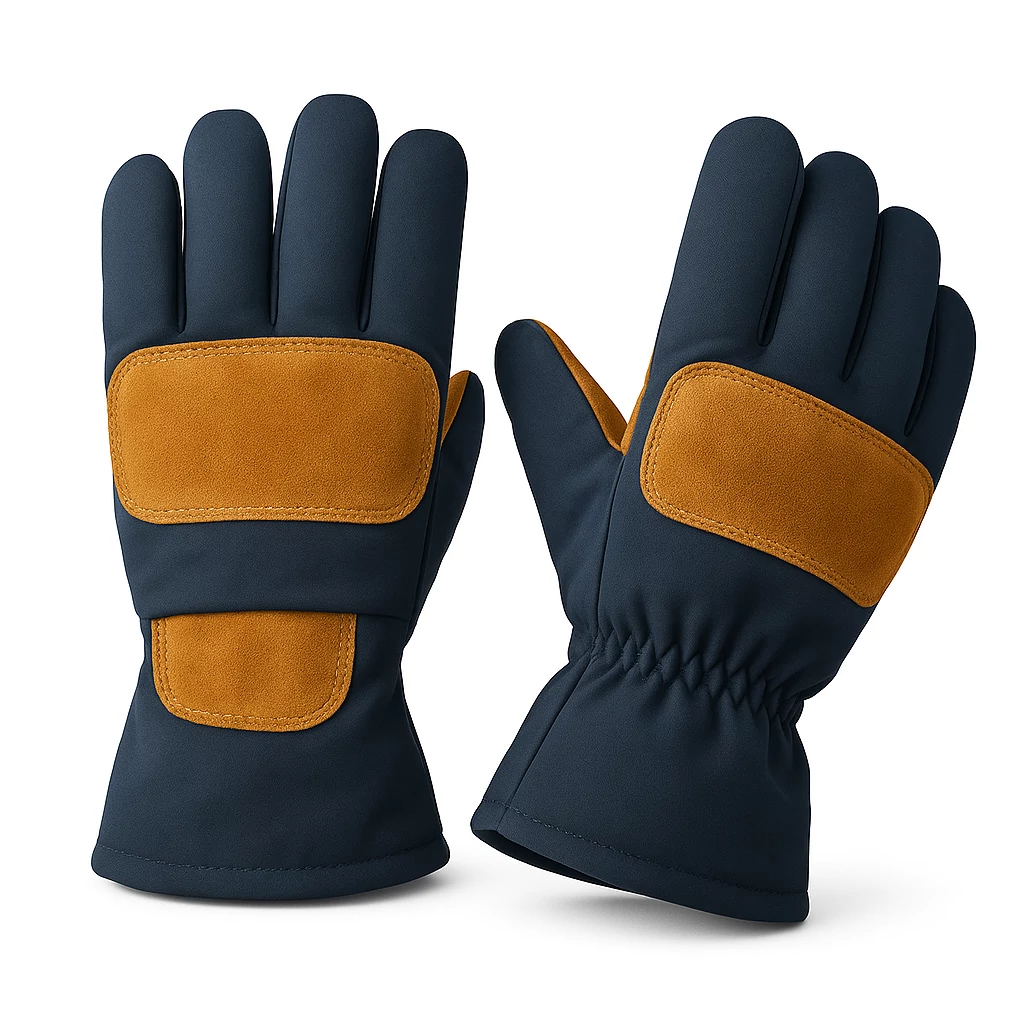
Poseidon Firefighter Gloves use a three-layer structure for structural firefighting: a flame-resistant leather and aramid outer shell, PTFE-based moisture/viral barrier, and aramid thermal liner. Reinforced grip zones, pre-curved fingers, and gauntlet or knit-wrist cuffs support hand fit and turnout-sleeve compatibility.
The gloves are designed and independently tested using NFPA 1970 laboratory methods for heat and mechanical performance. Select the exact configuration, sizing, cuff interface, and required documentation for the assigned duty. Browse the firefighter accessory range for other equipment types.
Poseidon Firefighter Gloves provide reliable protection for firefighters and technical rescue personnel operating in high-temperature, high-impact, and moisture-rich environments.
The glove’s three-layer composite structure includes:
Outer Shell – High-strength flame-resistant leather reinforced with aramid fabric for radiant-heat and abrasion protection.
Moisture / Viral Barrier – PTFE-based membrane passing ASTM F1671 for viral penetration resistance and maintaining waterproof breathability during prolonged use.
Thermal Liner – Needle-punched aramid felt providing contact-heat and radiant-heat insulation per NFPA 1970 CCHR / RPP methods.
Critical zones such as the thumb crotch, fingertips, and palm are reinforced with goatskin or cowhide suede panels and para-aramid stitching, resisting tearing and puncture from glass, rebar, or debris.
An ergonomic pre-curved finger design improves tool control, while gauntlet or knit-wrist cuffs interface securely with turnout sleeves to block debris entry.
Each pair is trace-coded by lot and date for quality tracking.
NFPA 1970 Method Testing – Evaluated for Thermal Protective Performance (TPP), Conductive Heat Resistance (CCHR), and Radiant Heat Resistance (RPP).
Three-Layer Composite – FR leather shell + PTFE moisture barrier + aramid liner for balanced protection and mobility.
Enhanced Cut / Puncture Defense – Reported cut force ≥ 2200 g (21.6 N) and puncture force ≥ 150 N (34 lbf), using the stated test methods.
Waterproof & Viral Barrier – Passes ASTM F1671; hydrostatic resistance ≥ 35 kPa (5 psi).
Durable Construction – Para-aramid thread, double-stitched seams, reinforced thumb and palm grip zones.
Ergonomic Fit & Visibility – Curved finger pattern, elasticized wrist or gauntlet cuff; optional reflective piping for low-light ID.
Comfort & Breathability – Inner aramid spacer mesh reduces sweat accumulation and heat stress during long operations.
Structural Firefighting – Interior attack, overhaul, and ventilation tasks requiring heat and moisture barrier integrity.
Rescue & Extrication – Provides grip and puncture resistance when handling sharp or twisted metal during vehicle extrication.
Industrial Fire Response – Resists abrasion and limited hydrocarbon splash in oil, chemical, or power-generation facilities.
Training & Drill Use – Durable construction for repeated high-temperature and mechanical stress cycles.
Municipal and Airport Departments – OEM/OEM+ options with custom sizing, colors, and branding available upon request.
| Parameter | Specification (Metric / Imperial) | Test Method / Standard |
| Design Basis | Structural Firefighting Glove | NFPA 1970 methods – TPP / CCHR / RPP |
| Outer Shell | FR leather + aramid reinforcement | ASTM D6413 flame test |
| Moisture / Viral Barrier | PTFE membrane laminate | ASTM F1671 viral penetration |
| Thermal Liner | Needle-punched aramid felt + spacer mesh | NFPA 1970 CCHR test |
| Cut Resistance | Reported cut force ≥ 2200 g (21.6 N) | ASTM F2992 |
| Puncture Resistance | Reported puncture force ≥ 150 N (34 lbf) | ASTM F1342 |
| Tear Strength | ≥ 100 N (22.5 lbf) | EN 388 Method 4.1.3 |
| Hydrostatic Resistance | ≥ 35 kPa (5 psi) | ISO 811 |
| Thermal Performance (TPP) | Reported TPP ≥ 35 cal/cm² | Thermal protective performance test |
| Radiant Heat Exposure (reported) | ≥ 20 kW/m² exposure / 60 s no damage | Radiant-exposure test |
| Weight | ≈ 420 g per pair (14.8 oz / pair) | – |
| Sizes | S – 3XL (6 – 12 in palm circumference) | – |
| Cuff Options | Gauntlet / Knit Wrist (heat-resistant elastic) | – |
| Seam Construction | Para-aramid thread, double-stitched reinforcement | – |
| Cleaning Durability | Shrinkage ≤ 3 % after 10 wash cycles | ISO 6330 |
| Chemical Resistance | Limited splash to hydrocarbons; not for chemical PPE use | – |
| Traceability | Lot ID + Production Date code per pair | – |
| Approx. Service Life | 3 – 5 years (typical department rotation) | – |
NFPA 1970 Testing: Independent testing uses NFPA 1970 methods for structural firefighting gloves; specify the applicable edition and configuration documentation in the order.
Standards Alignment: ANSI/ISEA 105 (Cut/Puncture), ASTM F1671 (Moisture Barrier), EN 388 (Tear Strength).
Safety Disclaimer: Limited splash resistance only — not a chemical-protective glove.
For bulk or OEM supply, provide the duty, required standard and documentation, quantity, size distribution, palm circumference and fit requirements, gauntlet or knit-wrist cuff, turnout-sleeve interface, grip reinforcements, colors, reflective piping, branding, and packaging.
- Wash separately to prevent contamination from other garments.
- Use mild detergent and a soft brush; avoid abrasive cleaning tools or harsh chemicals.
- Do not use bleach or fabric softeners, as they may degrade the gloves’ protective features.
- Wash in warm water not exceeding 40°C (104°F).
- Air dry in a shaded, ventilated area or tumble dry on low heat; avoid direct sunlight and dry cleaning.
Recommended PPE
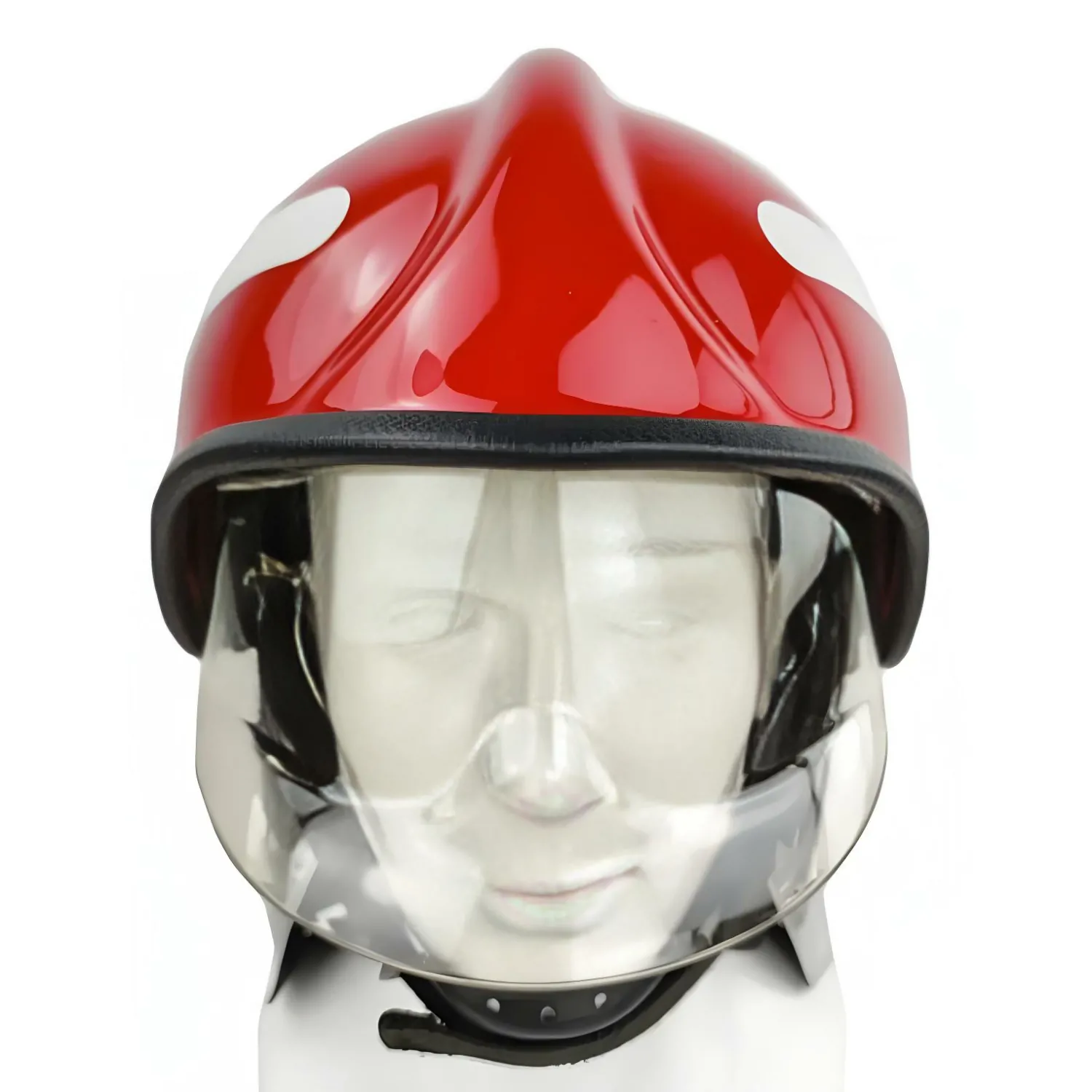
European Fire Helmet
- Shell heat resistance 300°C (572°F)
- Reported impact test force 5000 N (1124 lbf)
- Weight 1200 g (2.65 lb)

Red Turnout Gear (Kevlar)
- PTFE coating
- 93% meta-aramid
- Fabric weight 200 g/m²
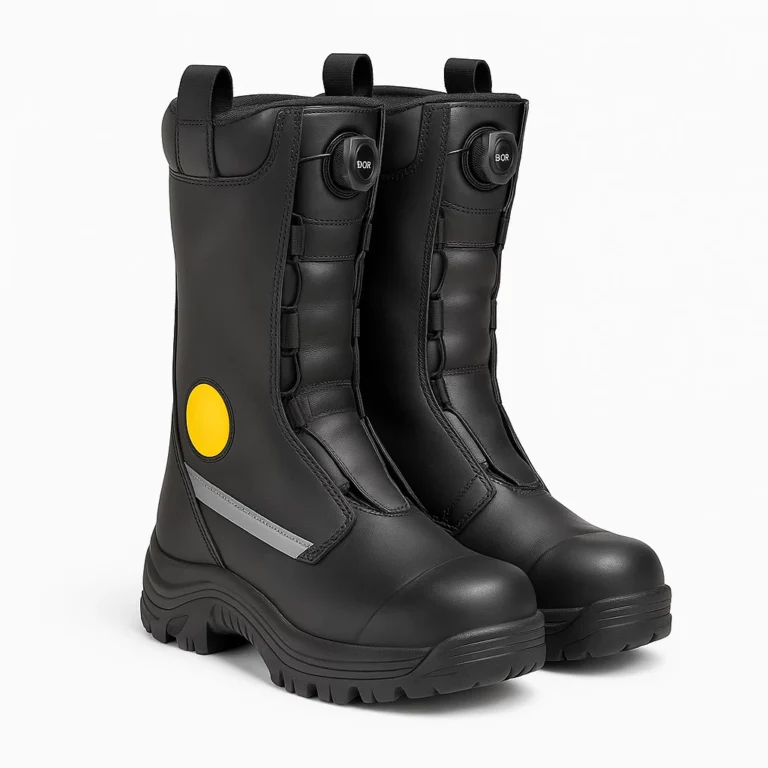
PSSFB-141B
- Leather structural fire boots
- Aluminum toecap
- Composite puncture-resistant midsole
- Listed height 340 mm (13.4 in)

Firefighter Carabiner
- AISI 304/316/316L stainless options
- Automatic-locking gate options
- Specify connector configuration and documentation