

Wildland fire boots are footwear designed for extended movement and work on wildland and wildland–urban interface fire incidents. Compared with structural firefighting boots, their design places greater emphasis on walking over uneven terrain, secure footing, ankle support, heat exposure appropriate to the wildland environment, and sustained wear during fireline operations.
Boot requirements are not determined by the words “wildland boot” alone. Agency rules, the applicable PPE standard, footwear construction, sole design, fit, and the exact certification status of the model all need to be checked for the intended operation.
Wildland Fire Boots
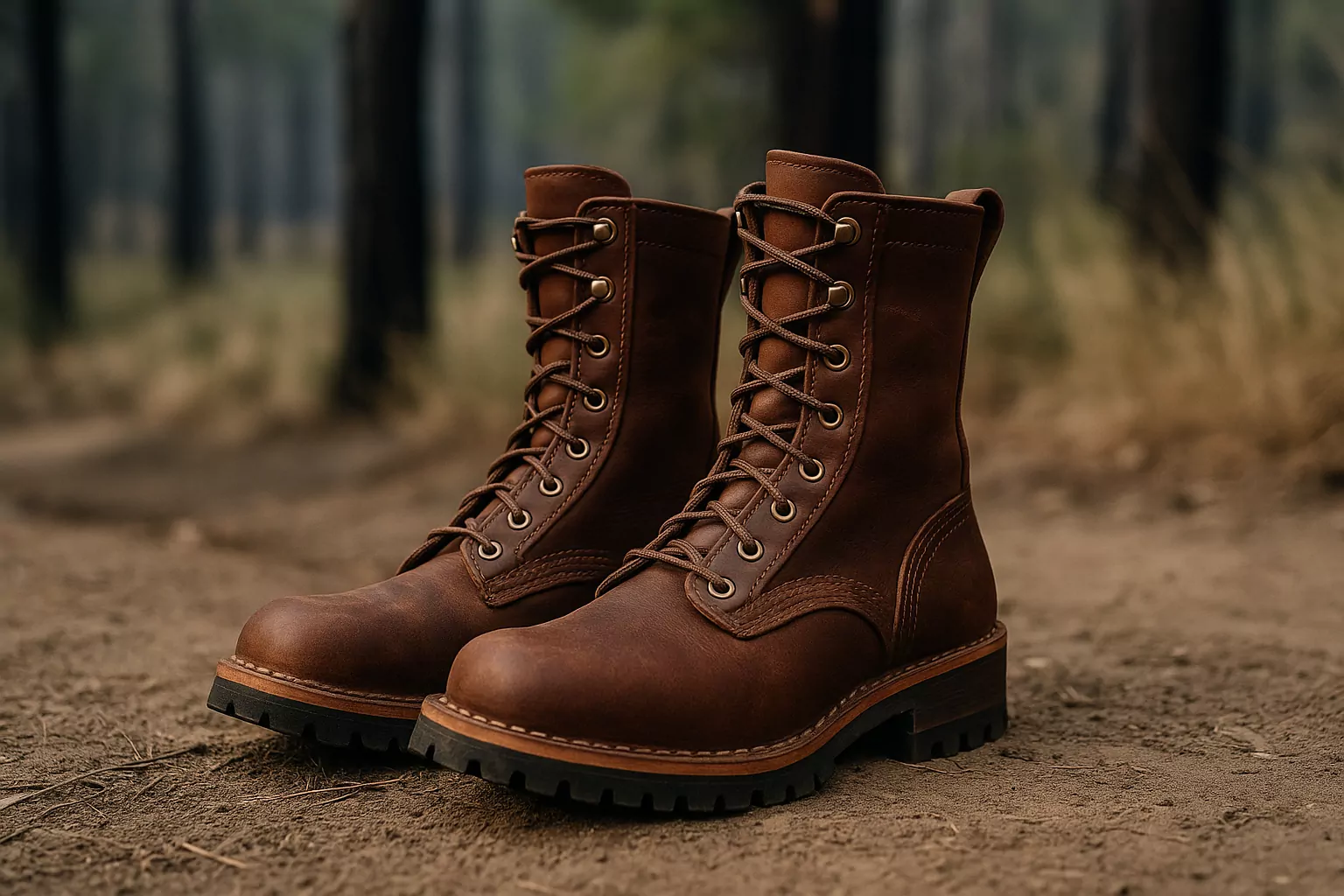
Wildland firefighter boots are used for activities such as fireline construction, patrol, mop-up, and movement over dirt, rock, vegetation, ash, and other uneven outdoor surfaces.
For many U.S. federal fireline roles, agency requirements specify leather, lace-up boots with an upper at least 8 inches high and a lug or nonskid sole. Other agencies and jurisdictions can use different procurement requirements.
Common wildland boot designs use leather uppers and lug-type outsoles. Stitchdown, welted, cemented, or other construction methods may be used depending on the boot. Construction method alone does not establish durability, rebuildability, heat resistance, or certification.
Protective toe, puncture protection, electrical-hazard properties, outsole heat performance, and other protective features are model-specific. They should be stated only when supported by the documentation for that exact boot.
Wildland boots should not be treated as substitutes for structural firefighting boots. Structural footwear is designed and certified for a different operating environment and protective ensemble.
Requirements for Wildland Fire Boots
Wildland footwear requirements depend on the jurisdiction, agency, duty assignment, and certification basis.
Current NFPA Framework
For the 2025 edition, wildland and urban-interface PPE requirements previously associated with NFPA 1977 were incorporated into NFPA 1950. Current certified wildland items can therefore be labeled to NFPA 1950 (1977), while older products can still carry valid certification to an earlier edition of NFPA 1977.
The edition and certification mark on the exact footwear model should be checked rather than assuming that every wildland boot carries the same certification.
Agency Footwear Requirements
Agency rules can add practical footwear requirements beyond the NFPA certification framework.
For example, U.S. Forest Service fireline requirements commonly specify:
- Leather construction
- Lace-up design
- Minimum 8-inch upper
- Lug or nonskid sole
These are agency requirements and should not automatically be presented as universal requirements for every wildland firefighter in every jurisdiction.
Construction and Fit
When selecting wildland footwear, check:
- Boot height and ankle support
- Upper material and seam construction
- Outsole tread and terrain suitability
- Fit and heel retention
- Sole attachment method
- Weight and flexibility
- Protective toe or puncture protection where required
- Model-specific heat, electrical, or other protective properties
- Repair or resoling options where relevant
A construction method such as stitchdown or Goodyear welt is one design variable. It does not by itself establish certification, service life, or suitability for wildland firefighting.
Operational Boundary
Wildland footwear is not a substitute for structural firefighting footwear. The two categories are designed around different hazards, protective ensembles, and certification requirements.
Wildland vs. Structural Firefighting Boot Standards
Structural and wildland footwear are covered by different protective-equipment requirements because the operating environments are different.
For current structural firefighting PPE, requirements formerly published in NFPA 1971 are incorporated into NFPA 1970. For current wildland and urban-interface PPE, requirements formerly associated with NFPA 1977 are incorporated into NFPA 1950.
This distinction does not mean that one boot category is better than the other.
Structural firefighting footwear is part of an ensemble designed for structural and proximity firefighting hazards. Wildland footwear is designed for the requirements of wildland and urban-interface operations, where extended movement over terrain is a major part of the job.
A boot should therefore be selected and verified against the duty for which the exact model is designed and certified.
How to Select Wildland Fire Boots
A useful selection process starts with the operating requirement rather than a brand ranking.
1. Confirm the Duty
Determine whether the footwear is being selected for wildland or wildland–urban interface firefighting, station duty, structural firefighting, technical rescue, or another role.
Do not assume that a boot intended for one category is suitable for another.
2. Verify the Applicable Standard and Edition
Check the label and documentation for the exact model.
For current U.S. wildland PPE, look for the applicable NFPA 1950 (1977) certification basis where required. Older footwear can carry certification to an earlier NFPA 1977 edition.
3. Check Agency Requirements
A department or agency can impose its own requirements for:
- Boot height
- Leather construction
- Lacing
- Outsole profile
- Protective toe
- Other approved features
These requirements should be checked separately from the product’s NFPA certification.
4. Match the Boot to Terrain and Work
Evaluate:
- Traction on the expected terrain
- Ankle support
- Fit and heel retention
- Flexibility
- Weight
- Sole construction
- Repairability where required
- Durability of the complete boot
- Comfort during the expected duty cycle
5. Verify Model-Specific Protective Claims
Heat resistance, electrical-hazard properties, puncture resistance, protective toe ratings, certification, and other performance claims must be verified for the exact model.
Wildland vs. Structural vs. Station Boots
| Boot Type | Primary Use | Main Selection Focus |
|---|---|---|
| Wildland fire boots | Wildland and WUI fireline operations | Terrain, mobility, fit, agency footwear rules, applicable wildland PPE certification |
| Structural firefighting boots | Structural and proximity firefighting | Certified structural PPE requirements and ensemble compatibility |
| Station or duty boots | Station work and general duty | Fit, walking comfort, work requirements, and department policy |
These categories should remain separate unless an exact boot model has been designed and certified for more than one defined use.
For available firefighter boot categories, model information, OEM requirements, and procurement enquiries, see Firefighter Boots.