

In the early decades of firefighter footwear manufacturing, most boots were built with Goodyear welt or stitched-down methods that prioritized strength but offered limited liquid sealing. Once exposed to high heat, water, or structural breakdown, those boots often needed immediate replacement—pushing departments to demand faster turnaround, reliable supply, and better barrier performance. By the 1960s, as NFPA expectations around liquid and chemical protection took hold and demand for PPE surged, manufacturers sought a sole-attachment method that improved both waterproofing and production throughput. Direct Injection Sole Construction answered that need: an injection moulding technique where molten PU/TPU is forced around the lasted upper inside a closed mold, forming a chemical bond that fuses outsole and upper into a single, sealed unit. This injection process eliminates potential ingress points from stitched seams, speeds manufacturing, and simplifies decontamination. Today, it is the dominant construction used in structural firefighter boots and also common in safety work boots across heavy industry.
Direct Injection Sole Construction
Direct Injection Sole Construction is a footwear method where the outsole is formed and bonded directly to the upper via injection moulding. Unlike welted methods that require sewing a strip of leather to join outsole and upper leathers, this system relies on liquid polyurethane (PU) or thermoplastic polyurethane (TPU) injected under pressure into a closed mold around the lasted upper. As the material cools and solidifies, a seamless chemical bond is created, eliminating stitched channels and producing a reliably water resistant interface. In firefighter boots, dual-density injection is common—combining a softer PU midsole for cushioning with a harder TPU or high-durometer PU outsole for abrasion, heat, and slip resistance—offering a lightweight, flexible platform that decontaminates easily.
The roots of injection technology go back to 1872, when John Wesley Hyatt and his brother Isaiah patented the first injection machine. At that time, the machine used a plunger to push polymer material into a two-part mold, producing small items like buttons and combs rather than footwear. As polymers became more sophisticated, engineers developed improved injection machinery. In 1946, James Watson Hendry invented the screw injection machine, which dramatically increased speed and precision, and in 1970 he advanced the process with gas-assisted injection, enabling faster cooling and more complex hollow designs while reducing material use. By the early 1970s, automated part removal and hydraulic drives further streamlined production. Today, most direct injection systems are electrically driven, reducing idle energy consumption, while digital sensors allow operators to inspect results without opening the mold—improving consistency and throughput.
Footwear manufacturers began adapting this industrial technology in the 1960s–1970s to address the limitations of welted construction: slow output, limited waterproofing, and high labor intensity. As fire service requirements evolved and NFPA 1971 placed greater emphasis on liquid and chemical integrity, the injection process proved ideal. By fusing outsole and upper into a single sealed unit, direct injection not only eliminated delamination risks but also delivered the production scalability needed for firefighter and safety work boots at a time when demand for protective footwear was surging.
Advantages and Limitations
The single greatest advantage of Direct Injection Sole Construction—one no other method replicates—is the seamless molecular bond it creates between outsole and upper. During the injection process, molten PU or TPU is forced into a closed mold around the lasted upper, chemically fusing the components into one integrated unit. Unlike welted or cemented methods, which rely on stitches or adhesives, direct injection eliminates the interface layer and dramatically reduces delamination risk, producing a reliably water resistant and chemical-resistant seal. This unique feature makes it the preferred choice for NFPA 1971 structural boots, which must withstand hose spray, hydrocarbons, and repeated decontamination. Beyond sealing, direct injection allows dual-density soles—a cushioned PU midsole for comfort and a rugged TPU outsole for traction, slip resistance to ASTM F2913, abrasion resistance, and short-term heat stability up to 250–300°C. Automated injection moulding also ensures consistent bond strength (≥3 N/mm per EN ISO 20344) and production throughput, yielding boots that are typically 10–15% lighter and require shorter break-in periods than welted footwear.
The limitations are equally important. Direct injection boots are generally classified as non-resole PPE under NFPA 1851; once the bonded sole or midsole integrity fails, direct injection footwear must be retired. While this guarantees consistent protective performance, it shortens the usable lifecycle compared to Goodyear welted footwear, which can be resoled multiple times. Polyurethane midsoles are also subject to hydrolysis, often degrading after 5–8 years of storage if environmental conditions are not controlled. And although lighter, DI boots may lack the rigid underfoot stability valued in NFPA 1977 wildland boots, where long hikes over rocky fire lines demand maximum durability.
For procurement teams, these trade-offs are decisive. Direct injection construction offers unmatched waterproofing and chemical resistance, making it the preferred option for NFPA 1971 structural firefighting, while welted methods remain relevant for NFPA 1977 wildland and station boots where rebuildability and long-mile durability are the priority.
How Direct Injection Sole Construction Is Made
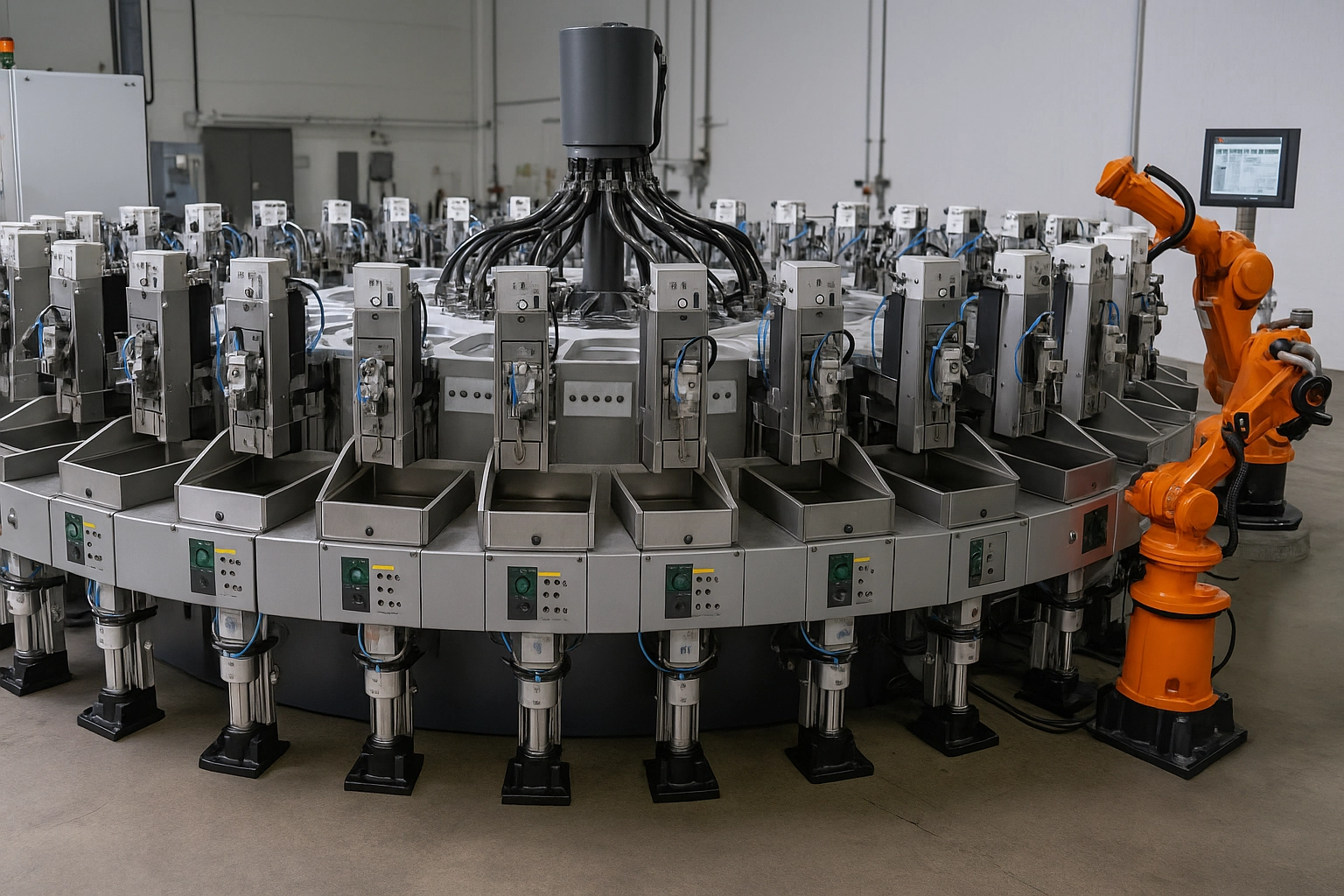
The production of Direct Injection Sole Construction follows a computer-controlled, multi-stage process engineered for consistency and safety compliance. It begins with the lasting of the upper, where firefighter boot uppers—typically full-grain flame-resistant leathers or engineered microfibers laminated with moisture and chemical barriers—are stretched over a last to achieve their final form. The lasted upper is placed into a precision steel mold maintained at 40–55°C for optimal bonding conditions.
Next, the injection process begins. Liquid polyurethane (PU) or thermoplastic polyurethane (TPU) is metered, heated, and injected under pressure via a screw-driven system into the closed mold cavity. Modern injection moulding allows for dual-density construction, often combining a PU midsole at 0.25–0.35 g/cm³ for cushioning with a TPU outsole at 0.9–1.1 g/cm³ for abrasion resistance, slip performance to ASTM F2913, and short-term thermal stability up to 250–300°C. Cycle times typically range from 60–120 seconds per pair, supporting both consistency and high throughput.
As the compounds cure, they chemically bond with the upper, forming a seamless, single-piece structure with no stitch channels or adhesive layers. Once solidified, the mold opens and the boot is automatically de-molded, with digital sensors and PLC systems verifying temperature, pressure, and curing times. Bond strength is routinely tested at ≥3 N/mm under EN ISO 20344, confirming adhesion integrity.
Final finishing includes trimming, attaching hardware, and certifying compliance with NFPA 1971, ASTM F2413 (impact/compression), and ASTM F2913 (slip). Because the construction is non-rebuildable, lifecycle planning under NFPA 1851 assumes full replacement once sole integrity is compromised. This precise, automated process ensures every batch of boots meets safety standards with minimal variability compared to manual methods.
Which Firefighter Boots Benefit from Direct Injection Sole Construction?
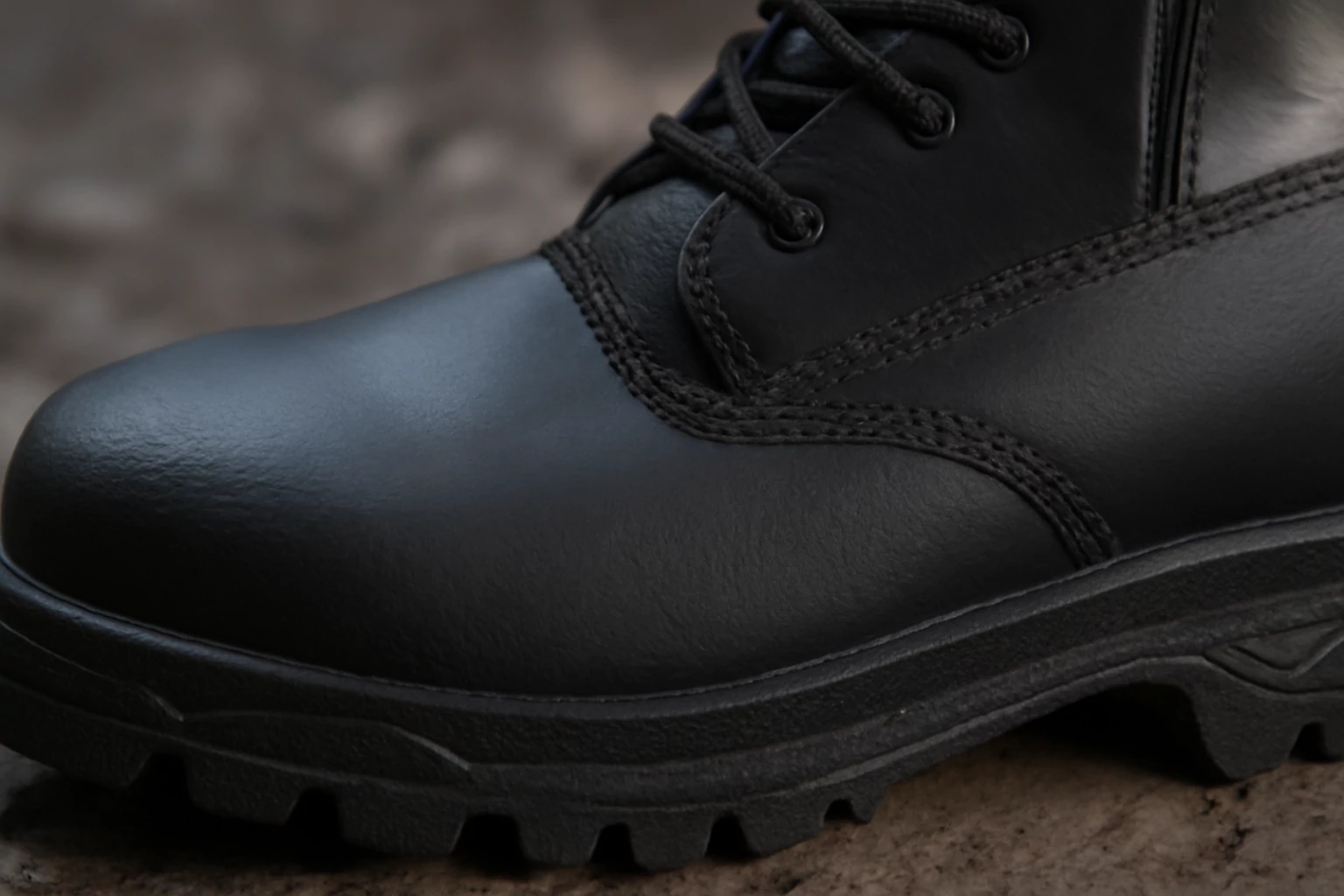
Direct Injection Sole Construction is ideal for NFPA 1971 structural boots and NFPA 1977 wildland boots due to its superior waterproofing, chemical resistance, and durability. The seamless bond between the outsole and upper provides enhanced liquid integrity, meeting strict standards for interior fire attacks. The dual-density sole offers comfort with a soft PU midsole and durability with a hard TPU outsole, ensuring abrasion resistance and heat protection.
For wildland boots, Direct Injection offers lightweight, flexible construction that reduces fatigue during long hikes while maintaining abrasion resistance and water resistance, ideal for rugged terrain and wet environments.
However, Direct Injection is not suitable for all boots. For station boots or bunker boots, which require resoleability for long-term use, Goodyear welt construction is preferred due to its ability to extend the boot’s life through multiple resoling cycles. Direct Injection boots, in contrast, are non-resoleable, limiting their long-term repairability.
Direct Injection Sole Construction revolutionized firefighter footwear by creating a seamless molecular bond between outsole and upper—delivering unmatched waterproofing, chemical resistance, and production consistency that welted methods cannot match. While it trades resoling for reliability, its role as the preferred choice for NFPA 1971 structural boots is clear.
At Poseidon, we specialize in manufacturing firefighter boots and safety footwear using both Direct Injection Sole Construction and traditional welted methods. Our engineering team tailors solutions to your department’s mission profile—whether structural, wildland, or station wear. Connect with our experts today to strengthen your safety performance and procurement efficiency.