
Firefighter personal protective equipment (PPE) is the system of protective clothing and equipment selected to protect firefighters against the hazards of a specific mission. Structural firefighting, wildland operations, technical rescue, and routine station duties do not use one interchangeable PPE configuration because their thermal, mechanical, respiratory, and environmental hazards differ.
For structural and proximity firefighting, the current NFPA framework is NFPA 1970, which consolidates requirements previously published in NFPA 1971, NFPA 1975, NFPA 1981, and NFPA 1982. Wildland and urban-interface PPE is now addressed within NFPA 1950.
A structural firefighting ensemble can include protective garments, helmet, hood, gloves, footwear, SCBA, and PASS equipment. Each element has a different protective function, and effective PPE selection depends on mission, certification, compatibility, fit, care, and condition—not simply whether equipment is marketed as “firefighter PPE.”
Firefighter Personal Protective Equipment (PPE)
Firefighter PPE is an integrated system rather than a single product category. Garments, helmets, hoods, gloves, footwear, respiratory protection, and alert equipment address different hazards and must be selected according to the operation in which they will be used.
Structural and proximity firefighting PPE requirements are addressed within NFPA 1970. Wildland and urban-interface PPE requirements are addressed within NFPA 1950. Other missions can require different PPE standards and configurations.
Certification should be verified at product-model level. A general statement that equipment “meets NFPA” does not establish which standard, edition, product configuration, or certification applies.
Types of Firefighter PPE
Firefighter PPE is best classified by mission because the hazard profile and applicable requirements change with the operation.

Structural and Proximity Firefighting PPE — NFPA 1970
Structural firefighting PPE is intended for interior structural firefighting and related operations involving significant thermal, flame, liquid, impact, and mechanical hazards. The protective ensemble includes compatible garments and ensemble elements such as helmets, hoods, gloves, and footwear.
Proximity firefighting PPE is also addressed within NFPA 1970 but is designed for operations involving high levels of radiant heat. It should not be treated as interchangeable with ordinary structural turnout gear.
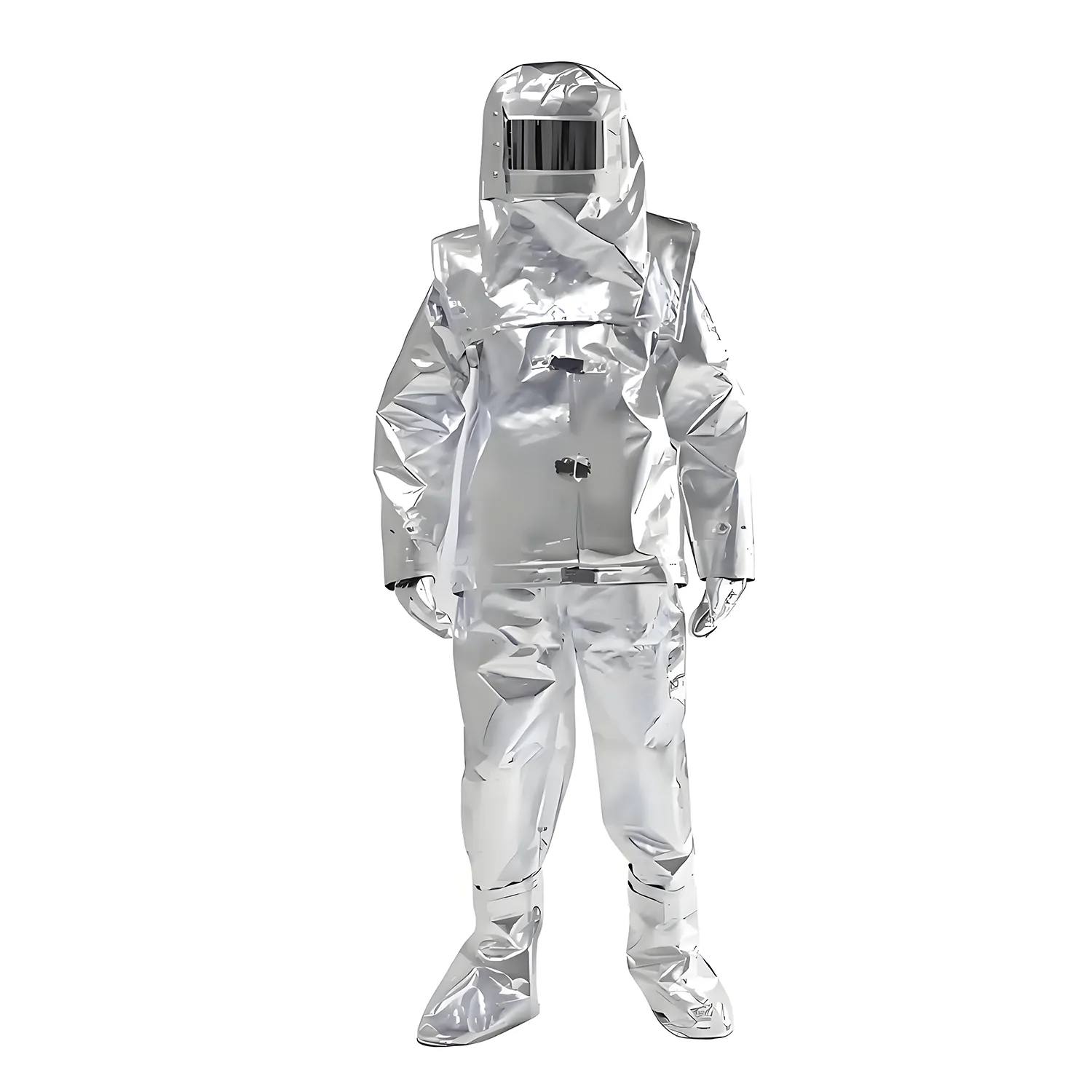
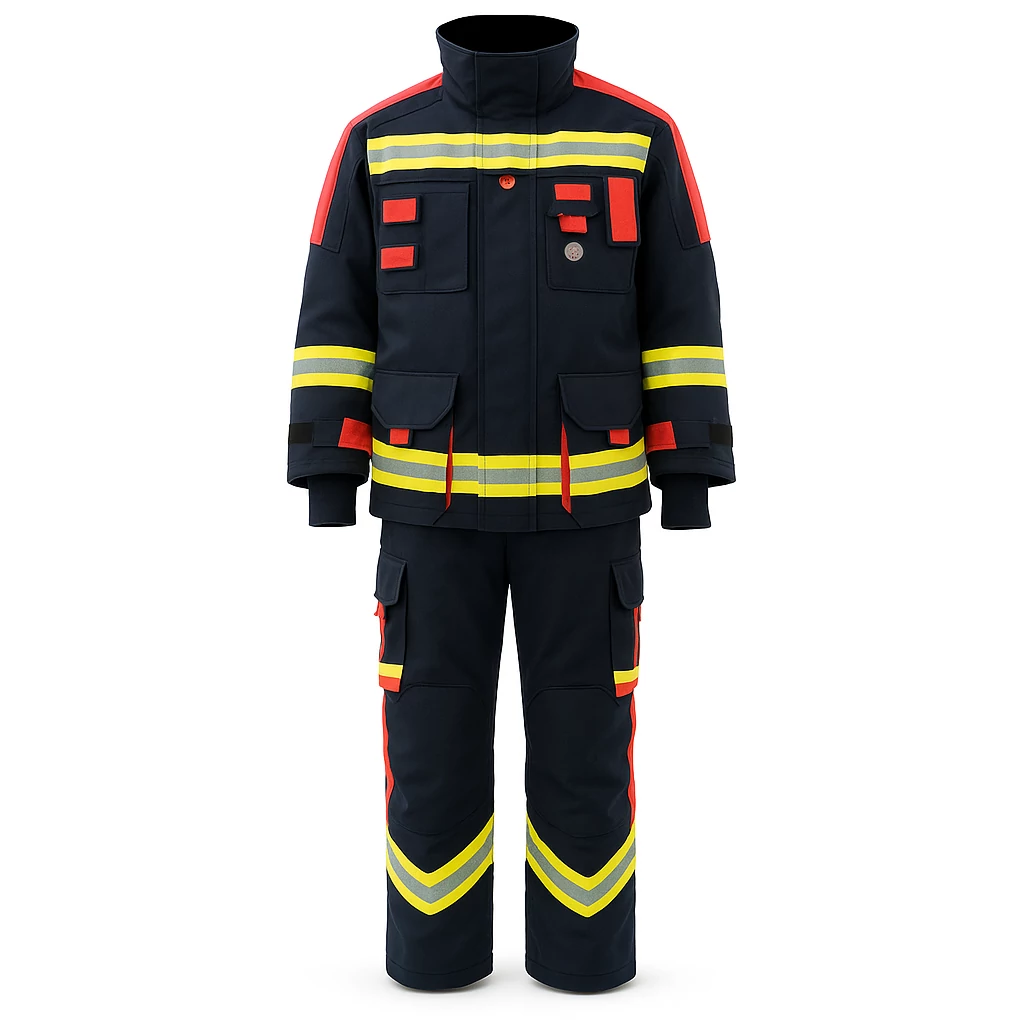
Wildland and Urban-Interface PPE — NFPA 1950
Wildland and urban-interface firefighting require a different balance of flame resistance, mobility, heat-stress management, and protection against terrain-related hazards. These ensembles are not substitutes for structural firefighting PPE and should be selected against the applicable NFPA 1950 requirements and mission profile.
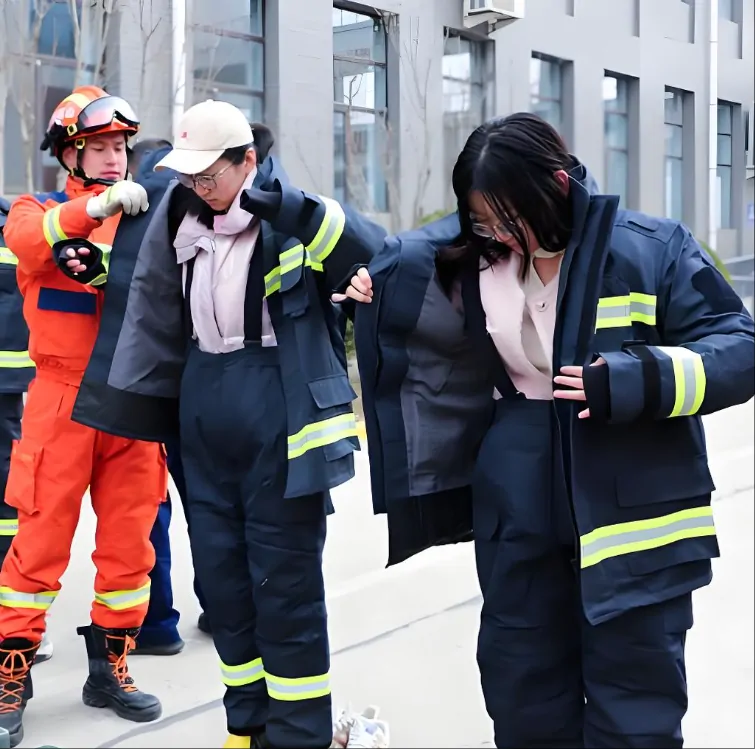
Technical Rescue and Other Operations
Technical rescue, emergency medical operations, hazardous-material response, and station duties can require different clothing and equipment. Selection should begin with the actual hazard and applicable standard rather than trying to use one PPE ensemble across every type of response.
Components of Firefighter Personal Protective Equipment
A complete PPE system is made from multiple elements that protect different parts of the body and address different hazards. The exact configuration depends on the mission.
Turnout Gear
Structural turnout coats and trousers normally use an outer shell, moisture barrier, and thermal barrier. The layers work together to provide flame resistance, thermal insulation, liquid resistance, and mechanical protection while maintaining enough mobility for firefighting tasks.
Helmet
A firefighter helmet protects the head against impact, penetration, heat, flame, and other hazards defined for its intended use. Structural, wildland, and technical-rescue helmets should not be assumed to provide the same protection simply because they are all sold as firefighter helmets.
Protective Hood
The hood protects interface areas around the head, neck, ears, face opening, helmet, coat collar, and SCBA facepiece. Compatibility and coverage at these interfaces are as important as the material used in the hood itself.
Gloves
Firefighter gloves must balance thermal and mechanical protection with the dexterity required to operate tools, hose fittings, radios, SCBA controls, and other equipment. Structural, rescue, wildland, and chemical-protective gloves serve different hazard profiles.
Firefighter Boots
Structural firefighting boots form part of the protective ensemble and address thermal, liquid, impact, penetration, traction, and interface requirements. Wildland and station boots serve different operating environments and should not be substituted for structural footwear without the required protection and documentation.
SCBA and PASS
SCBA protects the respiratory system in atmospheres that are immediately dangerous to life or health. PASS equipment provides an emergency alarm function when a firefighter is incapacitated or otherwise requires assistance. Requirements previously associated with NFPA 1981 and NFPA 1982 are now incorporated into NFPA 1970.
Inspection, Care, and Retirement
PPE protection depends on more than its original certification. Contamination, heat exposure, mechanical damage, cleaning, repairs, storage, and age can change whether an item remains suitable for service.
Current selection, care, and maintenance requirements for structural and proximity firefighting ensembles and open-circuit SCBA are addressed within NFPA 1850. Departments should follow the applicable current standard, manufacturer instructions, and their own inspection program when determining cleaning, repair, continued use, or retirement.
How to Verify Firefighter PPE Before Procurement
Start with the operating environment rather than a product name.
For each PPE item, confirm the intended mission, applicable standard and edition, exact model, certification or listing documentation, sizing, compatibility with adjacent ensemble elements, and the required care and maintenance procedures.
For structural and proximity firefighting, current product requirements are addressed within NFPA 1970. Wildland and urban-interface PPE is addressed within NFPA 1950. Care and maintenance requirements should be checked against the applicable current standard rather than relying on legacy standard numbers printed in older procurement documents.
A supplier statement that a product is “NFPA compliant” should not replace model-specific documentation. When certification is required, verify that the certificate, listing, label, or test documentation corresponds to the exact product and configuration being purchased.
For buyers ready to compare available equipment categories, review Poseidon’s firefighter PPE range.