

Stitchdown construction is a footwear construction method in which the lower edge of the upper is flared outward and stitched to the midsole or sole structure. Unlike a Goodyear welt, it does not depend on a separate welt to connect the upper to the sole.
The method can produce a flexible boot with a broad sole platform, but stitchdown construction alone does not determine waterproofing, durability, repairability, or suitability for a particular firefighting duty. Those properties also depend on the upper material, sole package, sealing method, stitching, and complete boot design.
For firefighter footwear, the construction method must therefore be evaluated together with the intended mission and the requirements that apply to the complete boot.
Stitched Down Construction
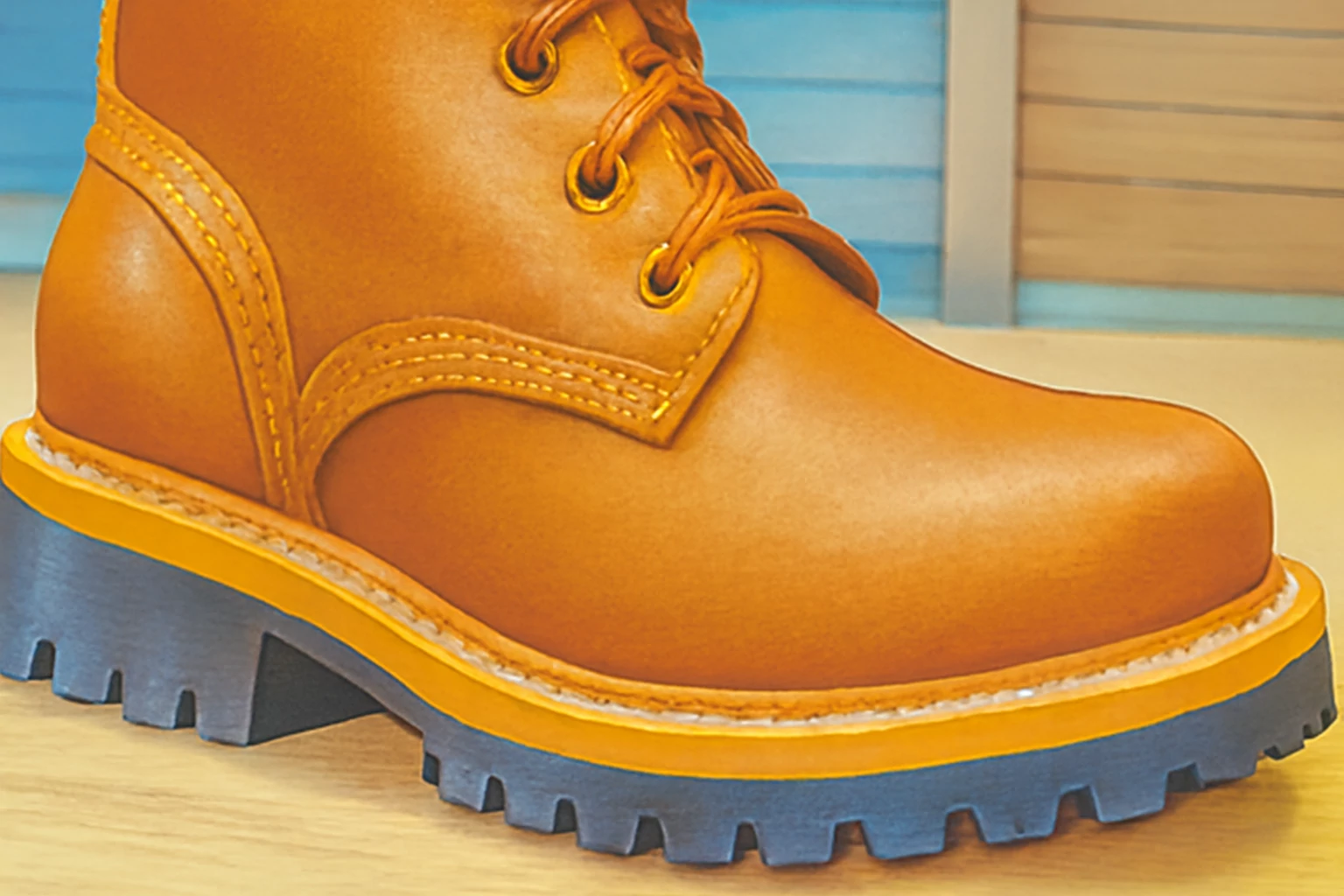
In a stitchdown boot, the lower edge of the upper is turned outward to form a flange. That flange is stitched into the sole structure, creating a direct mechanical connection between the upper and the sole.
This differs from Goodyear welt construction, which uses a separate welt as part of the connection, and from direct-injection construction, where sole material is moulded directly to the prepared upper.
None of these methods is automatically superior in every application. The useful distinction is how each construction affects flexibility, liquid sealing, repair options, manufacturing complexity, and the final boot design.
Advantages of Stitched Down Construction
- Flexibility: The flared upper and stitched sole structure can allow the forefoot to flex without relying on a separate welt.
- Stable Sole Platform: The outward flange can create a relatively broad base around the boot.
- Visible Mechanical Connection: The construction makes the upper-to-sole stitching accessible for inspection.
- Repair Potential on Some Designs: Some stitchdown boots can be resoled or rebuilt when the remaining upper, flange, stitching geometry, and sole construction allow it.
Limitations
- Repairability Is Model-Dependent: Stitchdown construction does not automatically mean that a boot can or cannot be resoled. The manufacturer must design the boot for that repair process.
- Water Resistance Is Not Inherent: Exposed seams and stitching require appropriate materials and sealing if liquid resistance is required.
- Construction Does Not Establish Certification: A stitchdown boot is not automatically suitable for wildland, structural, rescue, or station use because of the sole attachment method alone.
- Design Trade-Offs Remain: Flexibility, stiffness, weight, sealing, and durability depend on the complete boot rather than one construction feature.
How Stitchdown Construction Is Made

1. Preparing and Lasting the Upper
The upper is shaped around the last. At the lower perimeter, the leather or other upper material is prepared so that its edge can flare outward rather than being turned inward beneath the foot.
2. Forming the Stitchdown Flange
The lower edge of the upper is spread outward around the perimeter of the boot. This flange forms the surface through which the stitchdown connection is made.
3. Stitching the Sole Structure
The flange is stitched to the midsole or other sole components according to the boot design. Additional outsole layers may then be attached using stitching, bonding, or another method.
4. Finishing and Inspection
The finished boot is checked for alignment, stitching, sole attachment, and the other requirements defined for that particular model.
The exact sequence and materials vary among manufacturers and boot designs.
Stitchdown vs. Goodyear Welt vs. Direct Injection
| Construction | Upper-to-Sole Connection | Repairability | Liquid-Sealing Consideration | Main Design Trade-Off |
|---|---|---|---|---|
| Stitchdown | Upper edge is flared outward and stitched into the sole structure | Possible on some designs | Depends on seam design and sealing | Flexibility and repair potential vary by model |
| Goodyear welt | Upper is connected through a separate welt | Often designed for resoling | Depends on welt, stitching, lining, and sealing system | More components and manufacturing steps |
| Direct injection | Sole material is moulded directly to the prepared upper | Often more difficult to resole | Moulded joint can reduce reliance on exposed sole stitching | Repair options depend heavily on the moulded construction |
The construction method should be compared as one design variable, not used by itself to decide which boot is suitable for firefighting.
Where Stitchdown Construction Can Fit in Firefighter Footwear
Wildland Fire Boots
Stitchdown construction can be used in wildland footwear where the complete boot provides the required protection, traction, durability, and fit for prolonged movement over uneven terrain.
In the U.S., current wildland and urban-interface protective footwear requirements fall within NFPA 1950. The use of stitchdown construction alone does not establish compliance; the complete footwear model and its certification status must be checked.
Station and Duty Boots
The construction can also be used in duty footwear where flexibility, walking comfort, and repairability are design priorities. Station or duty footwear should not be treated as structural or wildland protective footwear unless the complete model is approved for that mission.
Structural Firefighting Boots
Stitchdown should not be described as automatically suitable or unsuitable for structural firefighting. Structural footwear has its own complete set of performance and certification requirements. The deciding factor is the certified boot design, not whether one construction method is considered better in isolation.
Related Boot Construction Methods
For a deeper comparison, see:
For firefighter boot models and procurement information, see Firefighter Boots.