

Firefighter helmet shapes are purpose-built: the traditional “New Yorker” wide rear brim sheds water and embers and shields the neck; Euro-style jet helmets wrap the face with integrated visors and ear coverage; wildland hard-hat profiles cut weight and heat load for long hikes. Scope: U.S. helmets evaluated under NFPA 1971 (structural), NFPA 1977 (wildland), and NFPA 1951 (technical rescue)—procurement and training audiences only. In structural interiors, the upper air layer can exceed 500°F (260°C); shell geometry helps deflect convective heat and prevent brim deformation. Typical weights reflect the mission: ~2.5–3.5 lb (1.1–1.6 kg) for structural designs, ~12–20 oz (340–570 g) for wildland. Understanding how brim width, crown height, and visor integration manage heat, impact, and snag risk lets departments match helmet shape to the hazard profile without trading off comfort or communication.
History Evolution

Fire helmet shapes didn’t start as protective gear—they began as symbols.
In the late 1700s, American volunteers marched in tall silk “parade hats” with wide brims and high crowns that looked impressive but offered almost no protection. The shape changed only when firefighting became truly dangerous work. In the 1830s, Philadelphia volunteer Henry Gratacap built a hardened-leather helmet with a domed crown and a long rear brim, a silhouette intentionally shaped to deflect embers, falling debris, and scalding water away from the neck. That profile became the backbone of the iconic New Yorker shape.
As fires grew hotter and electrical hazards increased, the shape kept evolving with new materials: metal shells gave way to cork, rubber, and eventually fiberglass, which cut helmet weight by 30–40% while preserving the tall crown and protective rear sweep. By the mid-20th century, this geometry—high dome, front shield, and extended rear brim—had become synonymous with structural firefighting, while lighter, open-brim shapes branched into wildland work and low-profile rounded shells into technical rescue.
Fire Helmet Styles and Functional Characteristics
Fire helmet shapes are purpose-built. U.S. departments generally choose among four profiles: Traditional “New Yorker,” Modern/Euro-style composite, Wildland cap-style, and Technical-rescue low-profile. Each fire helmet style balances heat deflection, weight, and interface with SCBA or eye protection under specific NFPA domains.

Traditional (New Yorker)
NFPA 1971 (structural). Tall crown and wide rear skirt shed heat and water off the collar, aiding survivability in upper air layers that can exceed ~500°F (260°C) during interior attack. Typical weight: ~2.6–3.6 lb depending on leather vs composite shells. Strong identity; slightly higher profile in tight spaces.

Modern / Euro-style Composite
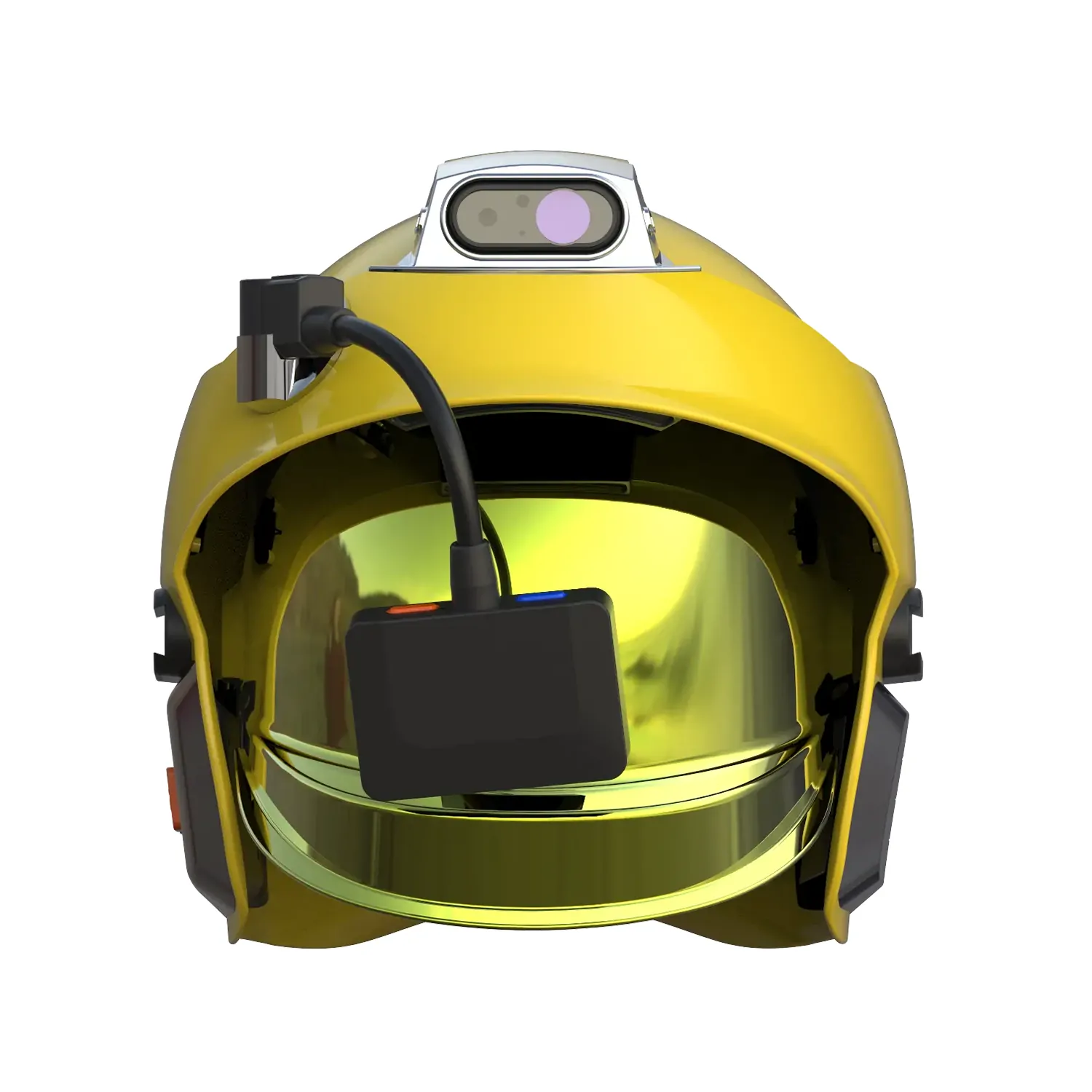
NFPA 1971 (structural). Lower center of gravity, integrated visor and ear/neck coverage improve balance and eye protection (visor compatibility with ANSI Z87.1 face-shielding). Streamlined brim reduces snag hazards around cab interiors and confined hallways.

Wildland Cap-style
NFPA 1977. Light weight for long operational periods (~1.5–2.2 lb), short brim to maintain uphill visibility, and compatibility with shrouds/ear covers for ember exposure. Optimized for radiant heat and long-distance hiking rather than flashover.
Technical-Rescue Low-profile
NFPA 1951. Climbing-inspired shell and suspension support rope ops, vehicle extrication, and USAR where overhead strike hazards dominate; emphasis on impact attenuation and hearing/PPE integration, not high-heat flame impingement.
If crews expect interior fire growth with collapsing ceilings, pick Traditional or Euro-style NFPA 1971. For extended brush patrol and saw work, choose NFPA 1977 wildland. For vehicle extrication or rope systems, deploy NFPA 1951 technical-rescue. Matching the helmet shape to the hazard profile cuts fatigue, improves visibility, and preserves protection where it matters.
What Are Firefighter Helmets Made Of?
The evolution of materials used in fire helmets has mirrored the changing risks of fire scenes. In 1836, Henry T. Gratacap introduced an improved leather helmet, its core material being thick leather with good heat resistance, crack resistance, and moldability. Later, with industrialization and changes in urban fire environments, helmet materials began to expand towards metal. However, a fundamental problem with metal helmets is electrical conductivity, so subsequent developments shifted towards cork/rubber composites and more modern non-metallic materials.
In the modern era, thanks to advancements in materials science, thermoplastic and composite materials have become the mainstream materials for helmets. Today’s fire helmets are no longer based on a single material approach; mainstream helmet materials include:
- Thermoplastic: A core material for modern lightweight helmet shells. Its key advantages are consistent molding, low weight, and ease of mass production, enabling the creation of lighter, more streamlined “metro”-type helmets. However, its performance still depends on the specific formulation and overall structure. It does not cause shape changes in the helmet shell even at ambient temperatures up to 300°C.
- Fiberglass Composite: One of the mainstream materials for modern high-performance structural fire helmets. Fire helmets from brands like MSA Cairns 1836 and Bullard extensively utilize fiberglass-reinforced composites combined with fire-resistant thermosetting resins to enhance heat resistance, impact resistance, and rigidity, achieving an HDT of ≥204°C, and even >250°C.
- Kevlar: Used in some composite shell designs. Essentially, Kevlar incorporates the high-strength properties of aramid fiber into the helmet shell to enhance impact resistance and structural strength, while also providing electrical insulation. However, Kevlar is typically not used alone but as part of a composite system. Kevlar does not melt, and its decomposition temperature in air is approximately 427–482°C (800–900°F).
- Rigid polyurethane foam (PUR)/EVA: Primarily used in the internal cushioning and impact absorption systems of fire helmets. It typically forms a complete cushioning layer with energy-absorbing pads and suspension systems. MSA also uses high-temperature foam impact caps. The cushioning layer is what truly determines whether the force on the head is “cut off.” EVA foam commonly operates at temperatures from approximately -40°C to +80°C.
- Polycarbonate/Polyarylate/PPC: Primarily used in the manufacture of face masks and goggles. This material offers a good balance between transparency, impact resistance, and weight, and must simultaneously meet ANSI/ISEA Z87.1 optical requirements as well as NFPA’s heat resistance and impact resistance requirements. Polycarbonate has an HDT of approximately 132–137°C; high-heat-resistant Apec PC can reach an HDT of 148–162°C, while polyarylate commonly has an HDT of 174–180°C, significantly higher than ordinary PC. Therefore, it is often used in external face masks where heat resistance is paramount.
- Nomex: Used for heat-resistant textile components such as chin straps, ear protectors, and headgear contact layers. It is thermally stable up to approximately 426°C (800°F) and does not melt or drip; it primarily carbonizes upon exposure to high temperatures.
- PBI: Used for high-end ear protectors, headgear, and some heat-resistant fabrics for the head and neck area. Decomposition begins at approximately 1300°F (approximately 704°C), with higher grades of PBI LP even specified up to approximately 1500°F (approximately 816°C).
How Shape Protects Firefighters
Helmet geometry is engineered to manage heat, impact, and movement—not aesthetics. The curve of the crown, the length of the brim, and the contour of the shell all influence how the helmet performs under structural, wildland, and rescue conditions. In firefighting, shape determines how heat flows around the head, how debris is shed, and how force is absorbed during impact.
A tall domed crown creates an internal air buffer that slows heat transfer when upper-layer temperatures reach 500–1200°F (260–649°C) during structural interior attacks. Curvature also disperses impact energy across multiple ribs or shell paths instead of allowing a single-point strike. The extended rear brim—iconic in the New Yorker profile—redirects scalding water, embers, and falling debris off the collar line, a critical function in stairwell climbs or nozzle-forward movement.
In contrast, Euro-style helmets use a wrap-around shell with continuous side geometry that reduces snag points by up to 30–50% in cab interiors, attic spaces, and wire-heavy environments. This shape also lowers the helmet’s center of gravity, reducing neck torque during long operations. Wildland helmets rely on shallow crowns and short peripheral brims to maximize ventilation and uphill visibility while keeping weight near 1.5–2.2 lb, protecting endurance during multi-hour line work. Technical rescue helmets use smooth, rounded shells inspired by climbing PPE to eliminate edge catches in confined-space and rope systems.
Shape is a protective mechanism: crown height governs thermal standoff, brim geometry directs hazards away from vulnerable areas, and shell contour determines both balance and snag resistance. When departments select a helmet, they are choosing a geometry built for a specific threat environment, not a style preference.
Firefighter helmet shapes exist because every profile—New Yorker, modern composite, Euro, wildland, and technical rescue—solves a different heat, impact, and mobility challenge. Understanding the geometry behind these designs helps departments match their PPE to the hazards their crews face on every shift.
Poseidon manufactures NFPA-compliant structural, wildland, and technical rescue helmets—connect with a Poseidon specialist to evaluate the ideal helmet shape and configuration for your department’s mission profile.