
Fire Blanket vs. Welding Blanket: Can They Be Used Interchangeably?

An emergency fire blanket is designed to smother a small fire. A welding blanket shields nearby equipment and combustible materials from hot-work sparks and heat. Interchangeable use depends on the finished product’s suitability for both tasks.

Material and temperature ratings help compare fabrics. The choice also depends on exposure, blanket construction and the object being protected. A blanket intended to slow a weld’s cooling has a third task: retaining heat in the workpiece.
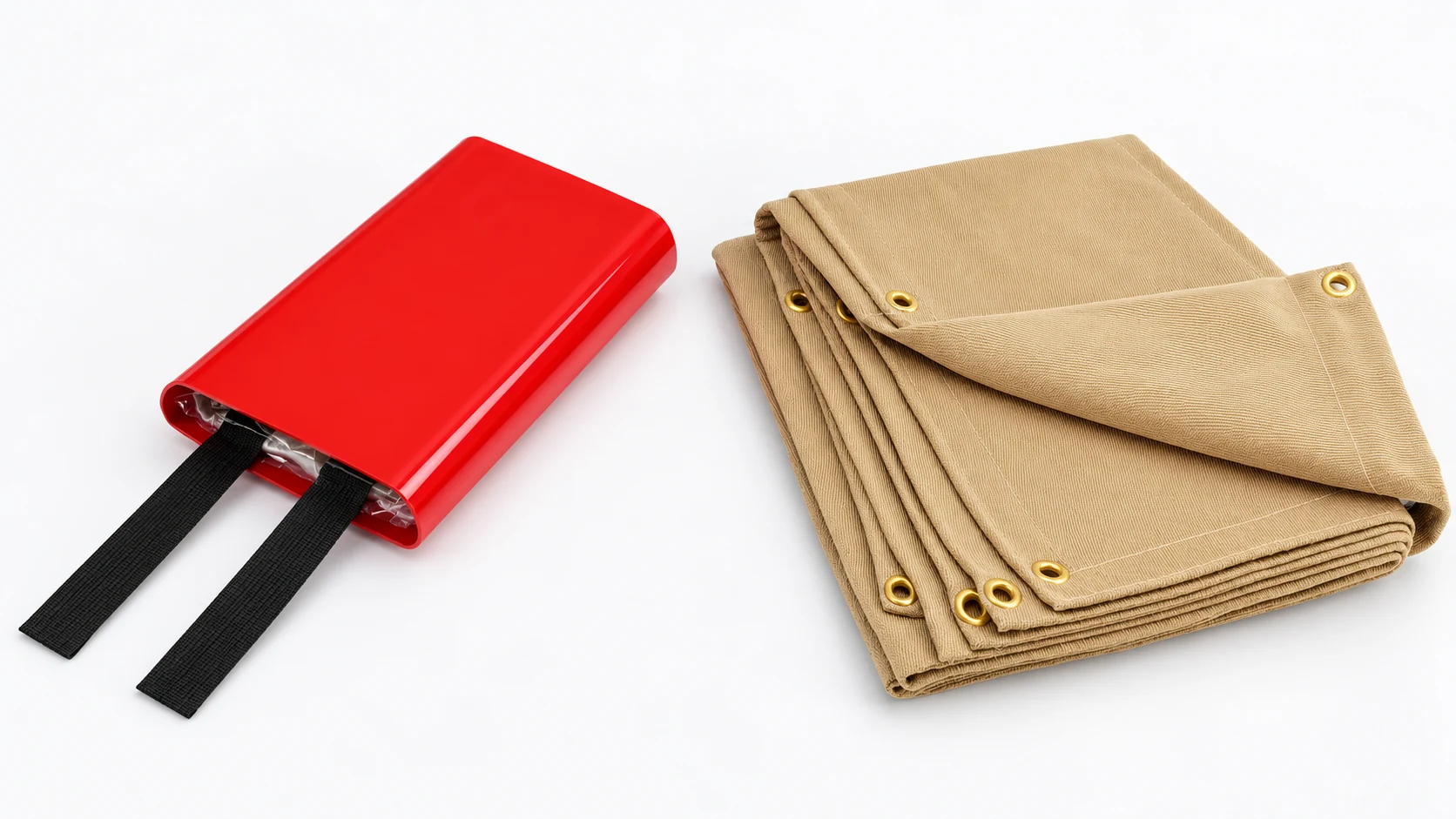
Red emergency blanket container with two pull tapes beside a folded tan welding blanket.

Fire Blankets and Welding Blankets Do Different Jobs

For emergency smothering, an effective cover limits air reaching the small fire. The sheet’s dimensions and construction affect how it covers the fire. The product’s fire-performance evidence establishes its intended range of use.

During hot work, sparks and heat continue to come from the operation. The protective barrier intercepts that exposure before it reaches nearby objects. Heat can also pass through intact fabric, so protection includes the temperature reached by objects behind or underneath it.

Compare the intended task before comparing the material
Selection pointEmergency fire blanketHot-work welding protection
Intended resultSmother a small fire within the product’s stated scope.Protect adjacent equipment and combustibles during the stated hot-work operation.
Exposure to assessThe fire conditions covered by the finished product’s performance evidence.Sparks, heat and any molten exposure, in the specified position and direction.
What must workThe complete covering product, including its dimensions and construction.The barrier’s resistance to damage and its protection of objects behind or beneath it.
Useful evidenceFire-performance documentation tied to the supplied blanket.Application and performance documentation tied to the operation, exposure and finished product.

Cooling blankets limit heat loss from hot workpieces. Selection depends on the heat retention needed by the welding procedure.

Read Material and Temperature Specifications Together

“Fiberglass” identifies the fibers in the fabric. Weave, coating, thickness, hems, joined seams and finished dimensions also affect how the blanket performs. Compare those construction details alongside the stated application.

Two fiberglass products may have different handling features: an emergency blanket stored in a release container, and a heavier cloth with grommets for hot-work protection. Pull tapes support deployment from the container; grommets provide attachment points. These details explain handling and positioning, while fire performance and hot-work protection depend on the complete construction and exposure.
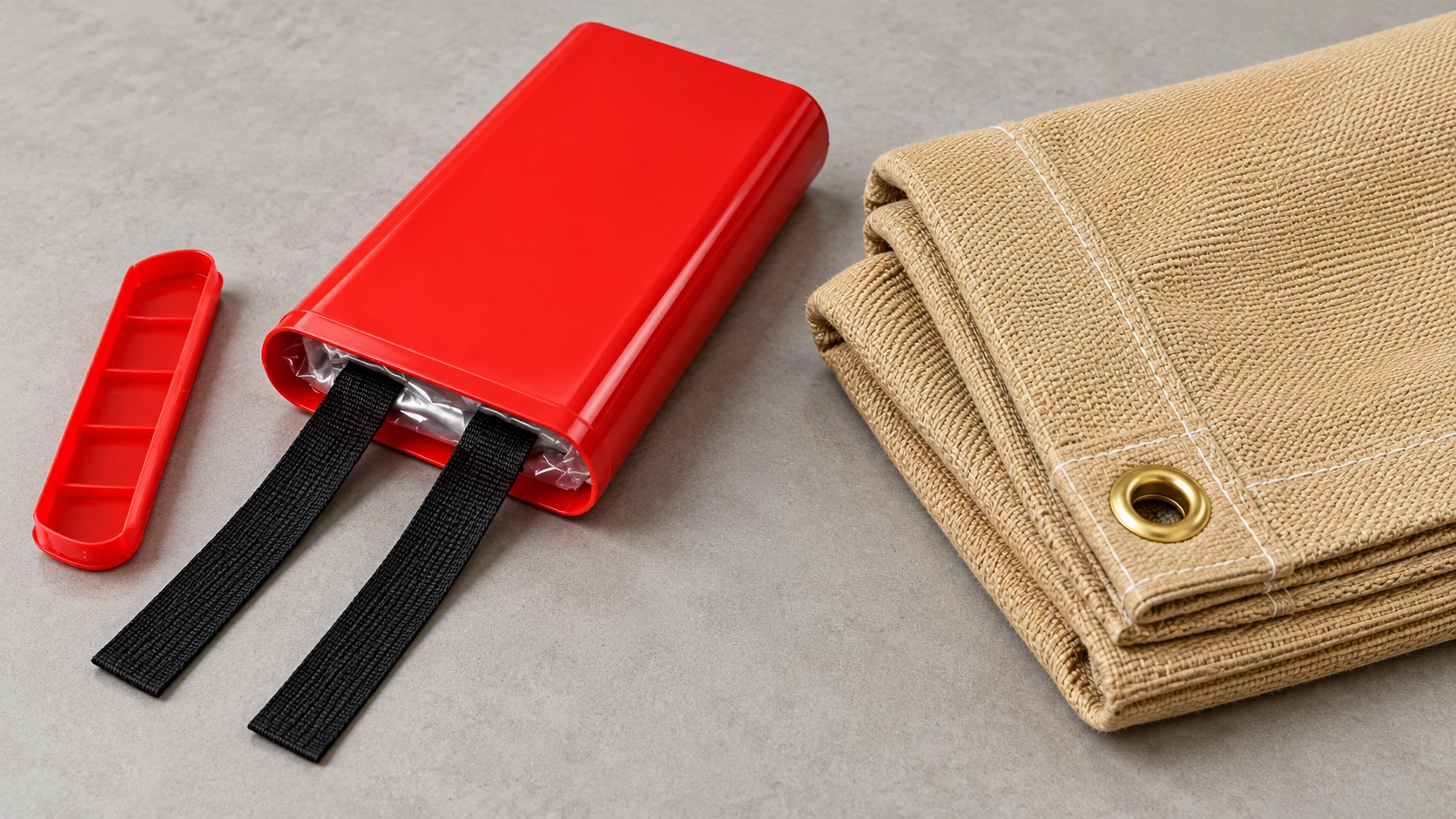
Two emergency blanket pull tapes beside a welding blanket corner with a stitched hem and metal grommet.

High-silica fabric containing more than 96% silica can withstand continuous operating temperatures up to 1800°F (about 980°C) and peak temperatures up to 2300°F (1260°C). The 2300°F peak is well above its maximum continuous operating temperature.

An exposure-time decision also needs the duration associated with the peak rating. Molten-droplet resistance, heat transfer to the protected side and small-fire extinguishing performance are separate properties of the finished blanket.

Choose Welding Protection for the Actual Task

Horizontal Protection and Vertical Screening Face Different Exposure

On a horizontal surface, molten material can collect and keep transferring heat into one location. A vertical screen intercepts flying sparks and confines them to an area. Position and exposure severity therefore belong in the selection.

Distinguish a pad intended for severe molten exposure from a blanket intended for lighter horizontal protection and a curtain intended to confine sparks vertically. These application categories help match the barrier to the operation.

For horizontal protection, resistance to burn-through and heat transfer to underlying combustibles both matter. A vertical barrier needs the flexibility and dimensional stability to maintain its screening position under the stated exposure. Welding-arc radiation requires suitable screens and eye protection in addition to thermal shielding.
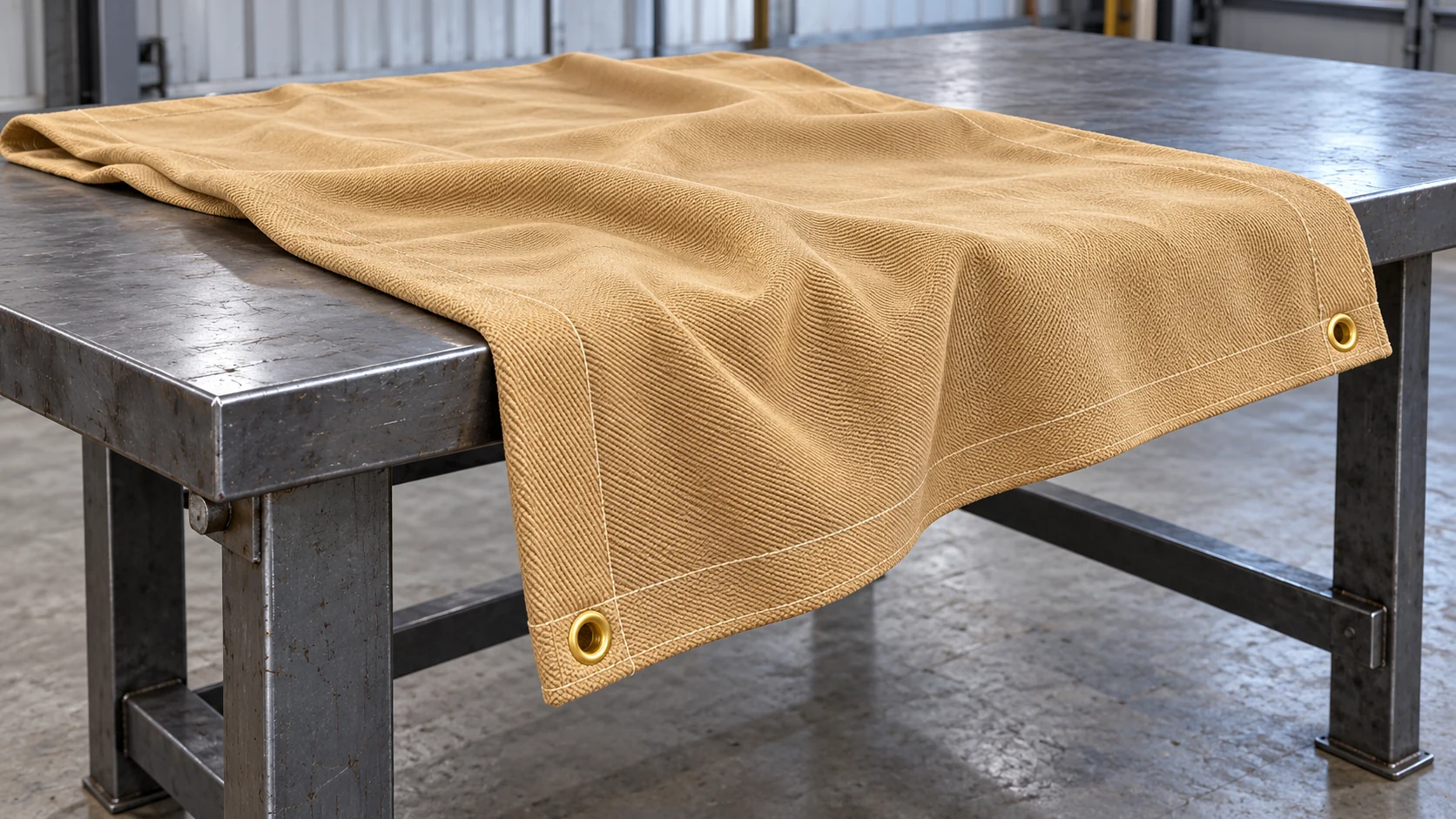
Tan woven welding blanket draped across part of an inactive steel worktable.

Cooling a Weld Is a Separate Thermal Task

Protecting a neighboring machine from sparks and slowing a completed weld’s cooling require different thermal behavior. In the first case, the barrier limits heat reaching another object. In the second, the covering retains heat in the workpiece.

Cooling-blanket selection follows the heat-retention requirement and the applicable welding procedure, including the required cooling behavior. Flame resistance and maximum material temperature describe different properties.

What Evidence Supports Each Use?

Emergency Fire-Blanket Evidence

BS EN 1869:2019 is a European standard for non-reusable fire blankets intended for one person to smother small fires. It addresses the finished product’s construction, marking, packaging and fire performance.

For emergency coverage, match the supplied material, size and finished construction to the product’s fire-performance documentation. That connection identifies the configurations covered and the intended small-fire application.

Hot-Work Protection Evidence

ANSI/FM 4950-2024 covers welding pads, blankets and curtains for hot-work operations. Product documentation connects these categories to the exposure being addressed, the position of use and the finished construction, including any joined seams.

OSHA’s welding and cutting requirements address guarding against heat, sparks and slag as part of the site’s fire precautions. Authorization, suitable extinguishing equipment, fire watches where required and appropriate PPE remain part of planning the work.

When Can One Blanket Serve Both Tasks?

One blanket can serve both tasks when its finished construction and performance documentation cover both applications and their exposure conditions. Follow its condition and reuse instructions; an emergency blanket specified for single use is replaced after firefighting.

Explore Poseidon’s fire-blanket range for emergency coverage and welding blankets for hot-work protection. Identify the task and exposure when discussing a product, so the proposed construction can be matched to the application.

Expert Fire Safety Support 24/7

Need a quick quote or emergency maintenance? Poseidon’s expert team, with 30+ years of experience, is ready 24/7 to handle urgent service requests, schedule inspections, and provide tailored solutions. Let us know how we can assist you today.

Leave A Message