

A fire extinguisher cabinet should protect the extinguisher without reducing visibility, inspection access, or emergency removal. It is not just a storage box; the cabinet must fit the extinguisher correctly, support routine checks, and suit the installation conditions.
Cabinet type and cabinet material are two separate selection decisions. Type usually relates to mounting method, wall projection, wall condition, and installation stage, while material should be judged by moisture, corrosion exposure, cleaning frequency, impact risk, temperature, and outdoor or indoor use. Before comparing appearance or price, confirm which cabinet type fits the location and which material can handle the expected environment. A material that works well in a dry indoor corridor may not be suitable for washdown, coastal, outdoor, or high-impact areas without project-specific confirmation.
What a Fire Extinguisher Cabinet Does
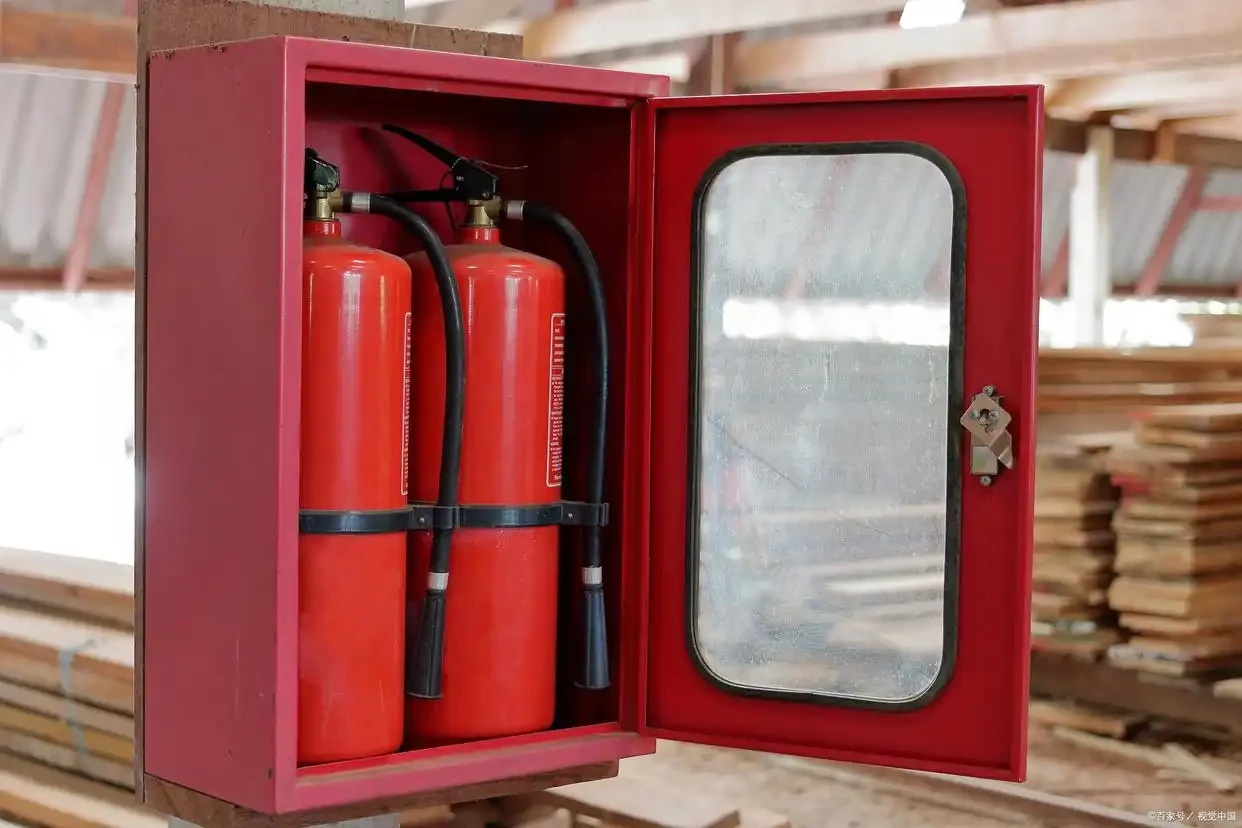
A fire extinguisher cabinet is a protective enclosure for a portable extinguisher, not a substitute for proper extinguisher placement, inspection, or code review. Its role is to store and protect the extinguisher while keeping it visible, accessible, and easy to inspect. In workplaces where portable extinguishers are provided for employee use, OSHA requires them to be mounted, located, and identified so they are readily accessible to employees; the cabinet should support that requirement, not create a barrier.
A cabinet can help protect the extinguisher from impact, tampering, dust, unauthorized handling, or selected environmental exposure, depending on the cabinet type, material, and installation location. It should not block the pressure gauge, inspection tag, operating label, pull pin, hose, or removal path. Whether a cabinet is required depends on facility requirements, local code, project drawings, AHJ interpretation, or owner specifications. The cabinet is an enclosure and storage-protection product; it does not improve the extinguisher’s extinguishing performance.
Main Fire Extinguisher Cabinet Types by Mounting Method
Fire extinguisher cabinet types are usually selected first by mounting method, because installation affects wall projection, construction cost, and accessibility. A cabinet that works in a utility room may create clearance concerns in a corridor. Before comparing materials or door styles, confirm the wall structure, construction stage, traffic path, and any projection limit that applies to the installation area.
| Cabinet Type | Installation Method | Main Advantage | What to Check | Typical Use |
| Surface-mounted | Mounted directly on the wall surface | Easier installation and replacement | Final wall projection, mounting height, traffic path, and required clear width | Utility rooms, storage areas, mechanical spaces, and locations where projection is acceptable |
| Semi-recessed | Partly recessed into the wall | Reduces projection compared with surface-mounted cabinets | Available wall depth, rough opening, trim projection, and finish coordination | Corridors, commercial interiors, and areas where projection must be controlled but full recess is not feasible |
| Recessed | Installed mostly flush with the wall | Minimal projection into circulation space | Wall depth, framing layout, rough opening, wall rating, and installation cost | New construction, finished corridors, public routes, and space-limited areas where wall conditions support recessed installation |
Mounting type should be decided before material selection because it affects whether the cabinet can be installed at all. Surface-mounted cabinets are easier to add later, but they may project farther into corridors or circulation paths. Semi-recessed cabinets can reduce projection, but they require enough wall depth and a prepared opening. Recessed cabinets are often selected for finished corridors or tight routes, but wall framing, fire-rated wall requirements, and installation cost must be checked.
As a reference under ADA protruding-object rules, wall-mounted objects with leading edges more than 27 in. (685 mm) and not more than 80 in. (2030 mm) above the finished floor are generally limited to 4 in. (100 mm) maximum horizontal projection into circulation paths. Final compliance depends on the installed cabinet projection, including trim, frame, handle, or latch where applicable.
Outdoor Cabinets and Environment-Based Selection
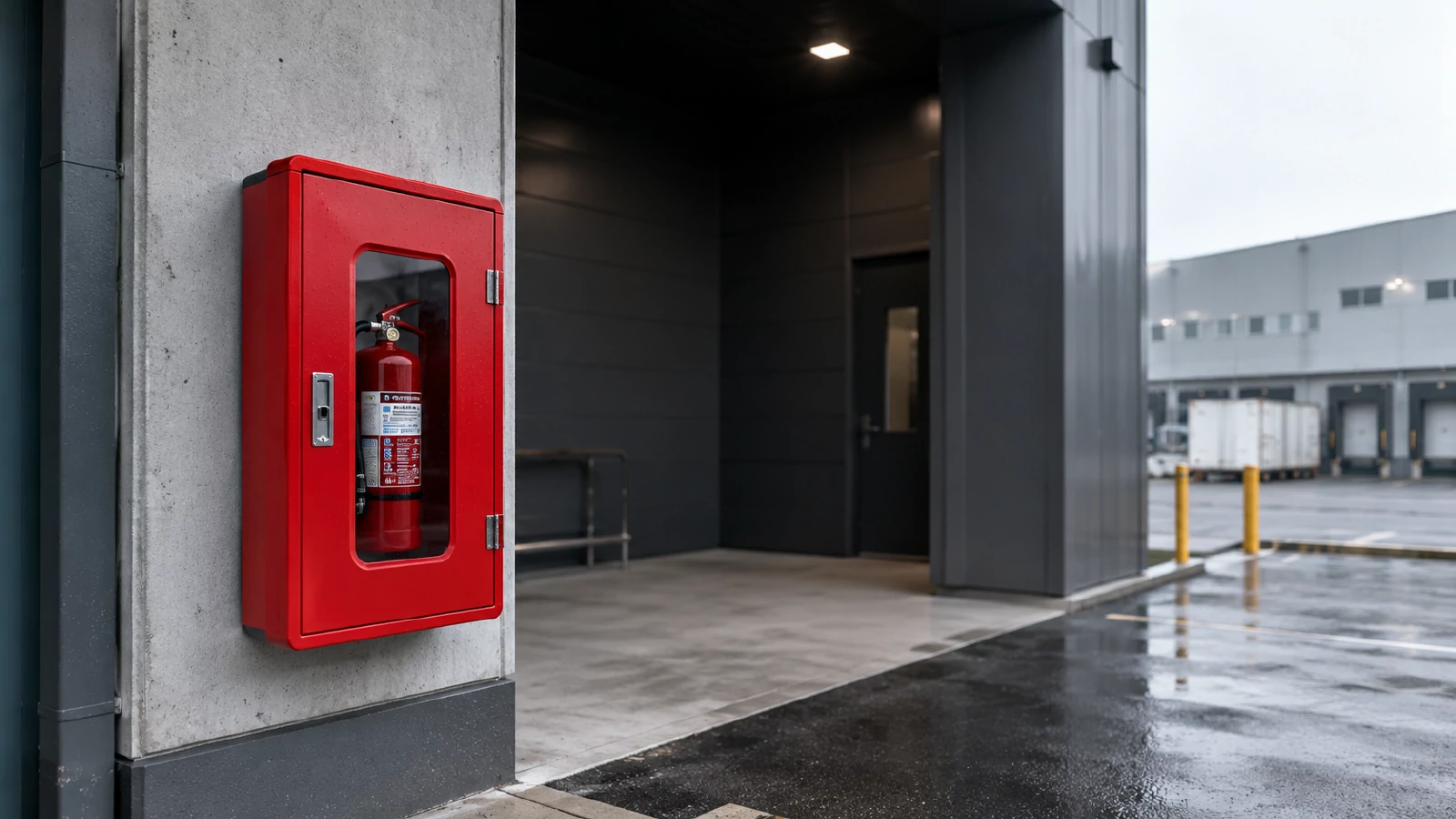
Cabinets used outdoors or in semi-outdoor areas should be treated as an environment-based selection, not as the same type category as recessed, semi-recessed, or surface-mounted cabinets. A cabinet can be surface-mounted and still be used outdoors, or it may be installed in a sheltered exterior area with lower exposure. The key question is what the cabinet must resist at the actual location: rain, UV exposure, humidity, salt air, temperature change, impact, tampering, dust, cleaning chemicals, and maintenance conditions.
Outdoor or corrosive environments require the cabinet material, surface finish, door protection, hardware, fasteners, and mounting method to be checked against actual exposure. Fiberglass / FRP may be useful where corrosion resistance and weather exposure matter, but UV stability, impact resistance, and long-term durability depend on resin grade, wall thickness, cabinet design, and supplier data. Stainless steel can offer better corrosion resistance than painted steel, but grade, finish, cleaning conditions, and chloride exposure still matter. Coated mild steel may be suitable for sheltered or controlled areas, but coating damage can increase corrosion risk.
Outdoor selection must also preserve extinguisher visibility, inspection access, and emergency removal. A cabinet that resists corrosion but hides the gauge, blocks the label, traps water, or makes the extinguisher difficult to remove is still a poor selection.
- Check whether the cabinet is fully outdoor, sheltered outdoor, or semi-outdoor.
- Review rain exposure, drainage path, humidity, temperature range, and direct sunlight conditions.
- Confirm UV stability, impact resistance, corrosion-resistance data, and hardware durability through supplier documentation where available.
- Consider salt air, cleaning chemicals, dust, vandalism risk, and maintenance frequency before choosing material.
- Avoid treating “outdoor” as universal suitability for every exposed environment.
- Make sure the extinguisher remains visible, identifiable, accessible, and easy to inspect.
Fire Extinguisher Cabinet Materials Compared
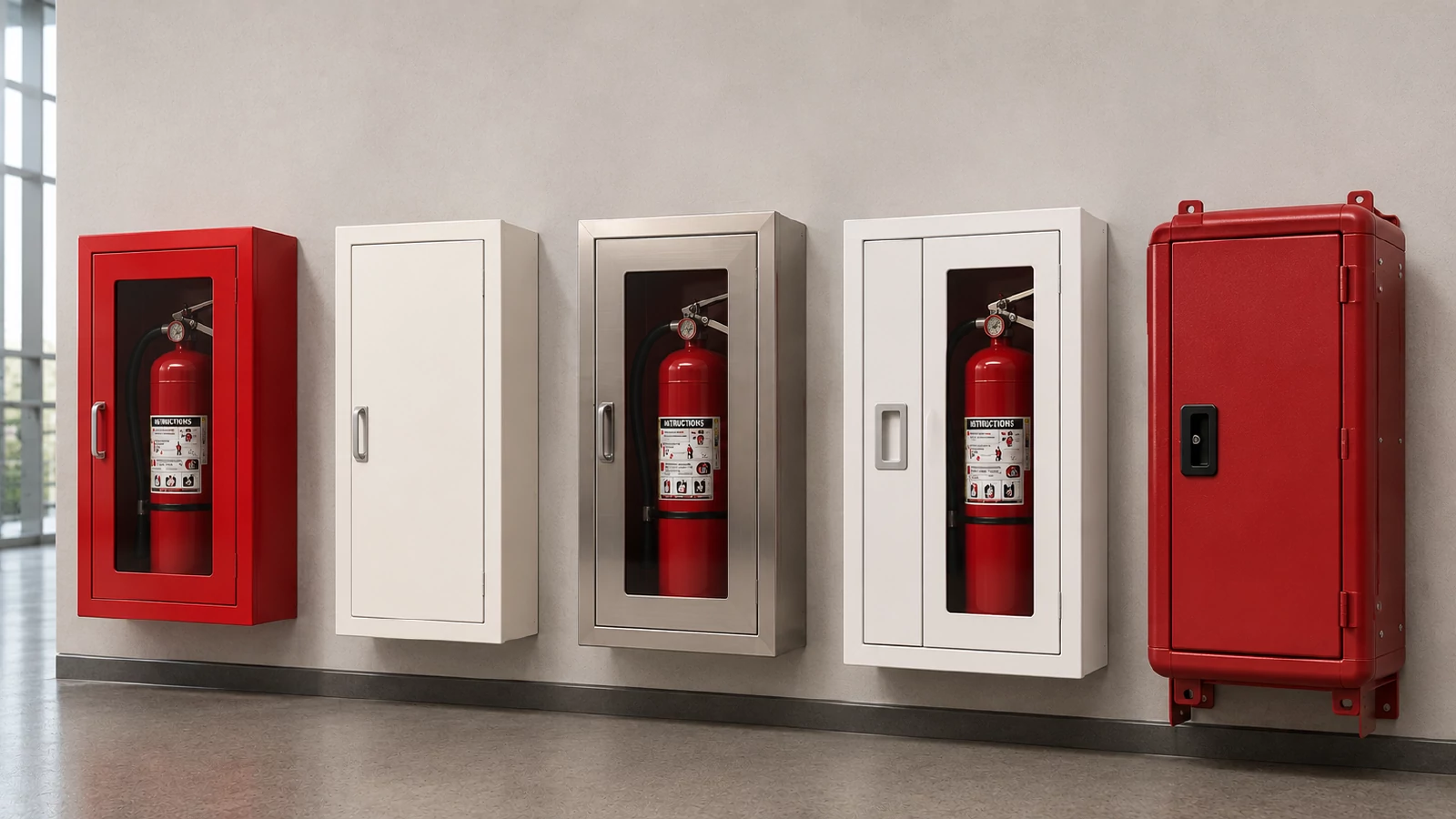
Cabinet material should be selected by installation environment and maintenance risk, not by a general claim that one material is always better. Indoor corridors, outdoor walls, humid rooms, washdown areas, coastal sites, and high-traffic industrial spaces place different demands on corrosion resistance, impact tolerance, cleaning, appearance, budget, and project specifications. Material name alone is not enough; cabinet gauge, wall thickness, resin system, coating, door hardware, fasteners, and mounting method all affect actual performance.
| Material | Typical Use | Reference Technical Data to Check | Main Advantage | Key Limitation |
| FRP / fiberglass | Selected outdoor, humid, washdown, or corrosive environments | Ask for resin system, reinforcement type, wall thickness, UV-resistance data, gasket design, hinge / latch material, and impact information. FRP cabinet wall thickness is supplier-specific; do not assume impact strength from “fiberglass” alone. | Non-metallic corrosion resistance and lighter handling in many applications | UV stability, impact resistance, color retention, and long-term weather performance vary by resin grade, reinforcement, wall thickness, and cabinet design |
| Painted mild steel | General indoor commercial areas, offices, schools, corridors, and controlled interior spaces | As a reference, steel cabinet tubs and doors may commonly use about 22–14 ga. sheet metal, approximately 0.8–2.0 mm depending on gauge, model, and component. Powder coating may commonly be specified around 60–100 μm, but actual coating system, edge protection, and test data should be confirmed by supplier documentation. | Cost-effective, rigid, familiar for standard installations, and suitable for many dry indoor applications | Corrosion risk increases if coating is scratched, cut edges are exposed, humidity is high, or cleaning chemicals contact the surface |
| Stainless steel | Humid, washdown, healthcare, food-related, coastal, or cleaning-intensive environments | Confirm stainless grade, surface finish, sheet thickness, fasteners, hinge / latch material, and chloride exposure. 304 stainless steel is commonly used for many indoor or cleaner environments, while 316 is often considered for higher chloride, marine, or coastal exposure. #4 brushed finish is common in architectural stainless cabinets, but final finish should follow project specification. | Better corrosion resistance and cleanability than coated mild steel in many applications | Higher cost, possible scratching, and not corrosion-proof in all environments, especially where chlorides, harsh cleaners, or poor maintenance are present |
For procurement, material comparison should start from the installation environment rather than the catalog description. FRP / fiberglass may be suitable where moisture or corrosion exposure is a concern, but performance depends on resin system, reinforcement, UV exposure, wall thickness, cabinet design, hardware, and impact conditions. If UV aging, salt spray, temperature range, or impact data is important, use manufacturer-reported test data or project specifications rather than a generic material claim.
Painted mild steel is common for indoor commercial cabinets, but it needs a reliable coating or finish, especially where scratches, humidity, or cleaning contact are expected. Stainless steel can be a stronger option for humid, clean, or corrosion-sensitive environments, but grade, finish, cleaning chemicals, fasteners, and chloride exposure still matter. Structural performance, mounting strength, and service life should not be assumed from material alone; they depend on cabinet construction, mounting hardware, wall substrate, fastener spacing, exposure conditions, maintenance, and supplier documentation or test data where required.
How to Match Cabinet Type, Material, and Installation Conditions
The safest selection method is to confirm the extinguisher, installation location, wall condition, and project requirements before comparing cabinet appearance or price. A fire extinguisher cabinet should be checked by actual fit, installed projection, mounting dimensions, material specification, access design, and approval requirements.
Common cabinet capacity categories may include 5 lb, 10 lb, and 20 lb extinguishers, but actual compatibility depends on usable inside width, inside depth, inside height, cylinder diameter, overall extinguisher height, hose or nozzle layout, valve position, handle clearance, and door closing clearance. For semi-recessed or recessed cabinets, the rough opening size, wall depth, trim projection, outside dimensions, framing condition, and wall assembly should be confirmed before purchase.
- Confirm extinguisher height, cylinder diameter, hose layout, valve position, handle clearance, gauge visibility, and removal path.
- Check inside cabinet dimensions against usable extinguisher clearance, not only nominal capacity labels.
- Review outside dimensions, wall projection, trim projection, mounting height, and corridor or circulation-path clearance.
- For recessed models, verify rough opening size, wall depth, framing conflicts, fire-rated wall conditions, and manufacturer installation instructions.
- Match material to the environment with reference data, not material name alone. As a broad reference, painted steel cabinets may commonly use about 22–14 ga. sheet metal, approximately 0.8–2.0 mm depending on component and model. Powder coating may commonly be around 60–100 μm, but coating system and test data should be confirmed by supplier documentation.
- For stainless steel cabinets, confirm grade, sheet thickness, surface finish, and hardware material. 304 stainless steel is commonly used for many indoor or cleaner environments, while 316 is often considered for higher chloride, marine, or coastal exposure.
- For FRP / fiberglass cabinets, confirm resin system, reinforcement, wall thickness, UV-resistance data, impact information, gasket design, and hinge / latch material. Do not assume weather or impact performance from the fiberglass name alone.
- Review door type, latch, hinge, window material, break-glass panel where specified, and emergency access method.
- Confirm signage need, extinguisher visibility, inspection tag access, pressure gauge readability, and operating label visibility after installation.
- Verify supplier drawings, local code, project specifications, facility policy, and AHJ requirements before final selection.
Supplier drawings and project specifications should confirm the final cabinet model, mounting method, usable internal space, material details, hardware, finish, and installation constraints before approval. Where load, corrosion, UV, impact, or fire-rated performance is important, use manufacturer-reported data, listing information, test reports, or approved project documents rather than a generic cabinet description.
Before selecting a fire extinguisher cabinet, confirm the installation location, extinguisher size, usable cabinet clearance, mounting type, wall condition, and projection limits first. Material and finish should then be matched to the environment, including moisture, corrosion risk, impact exposure, cleaning frequency, and indoor or outdoor use.
Do not approve the cabinet by type name or material name alone. Final selection should be checked against supplier drawings, project specifications, fire-resistance-rated wall conditions where applicable, visibility and signage needs, local code, facility requirements, and AHJ review.
Frequently Asked Questions
Find quick answers about product selection, installation, compliance, and customization.
What is the best material for a fire extinguisher cabinet?
There is no single best material for every installation. Painted mild steel is commonly used for dry indoor commercial areas; as a broad reference, steel cabinet components may fall around 22–14 ga. / 0.8–2.0 mm depending on model and component. FRP / fiberglass may suit selected humid or corrosive environments, while stainless steel is often used where corrosion risk, cleaning frequency, or appearance requirements are higher.
Is FRP good for outdoor fire extinguisher cabinets?
FRP may be suitable for selected outdoor, humid, or corrosive fire extinguisher cabinet applications, but it is not automatically suitable for every exposed location. Performance depends on resin system, reinforcement, wall thickness, UV exposure, impact risk, temperature range, gasket design, and hardware. Ask for supplier data, UV aging information, impact data, or project-specific confirmation where outdoor exposure is significant.
What is the difference between recessed and surface-mounted fire extinguisher cabinets?
A surface-mounted fire extinguisher cabinet is installed on the wall surface, so installation is usually simpler but wall projection is greater. A recessed cabinet is installed into the wall, reducing projection but requiring wall depth, rough opening dimensions, framing coordination, and finish work. Installed projection, accessibility, and wall conditions should be checked before selection.
Are fire extinguisher cabinets required by code?
Portable extinguishers generally need to be properly mounted, located, identified, and accessible for use, but a cabinet is not automatically required in every commercial building. Whether a cabinet is required depends on local code, facility policy, project drawings, owner requirements, AHJ interpretation, and the specific installation condition.
Can stainless steel fire extinguisher cabinets rust?
Yes. Stainless steel is corrosion resistant, not corrosion-proof. 304 stainless steel is commonly used for many indoor or cleaner environments, while 316 is often considered for higher chloride, marine, or coastal exposure. Corrosion risk still depends on surface finish, chloride exposure, cleaning chemicals, humidity, ventilation, fasteners, hardware material, and maintenance.
How do I choose the right size fire extinguisher cabinet?
Do not choose only by 5 lb, 10 lb, or 20 lb capacity labels. Confirm the extinguisher’s actual height, cylinder diameter, hose or nozzle position, valve layout, handle clearance, door swing, and usable inside cabinet clearance. Final fit should be checked against the supplier catalog, product drawing, extinguisher data sheet, or sample confirmation before purchase.