
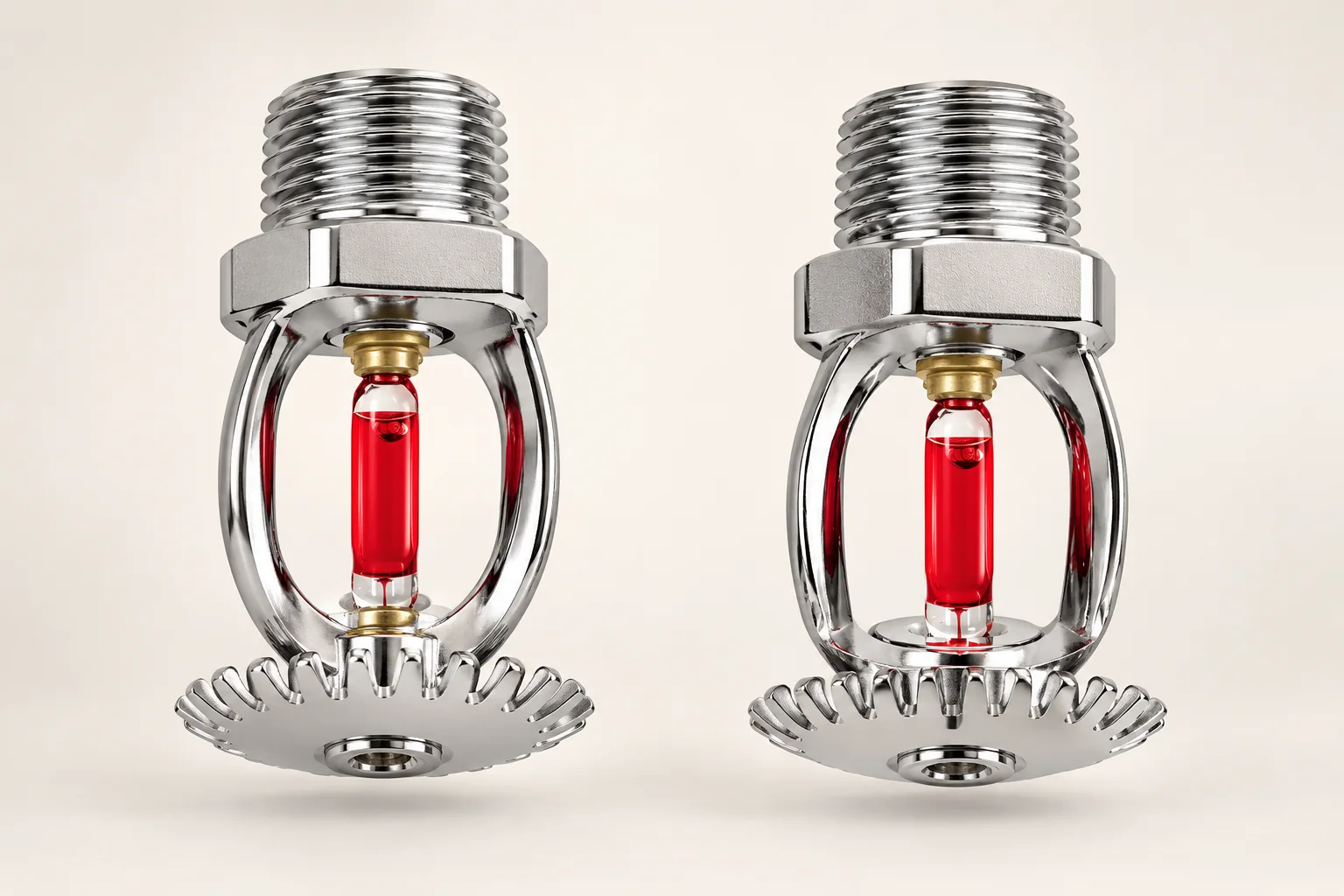
Quick-response sprinklers have more thermally sensitive operating elements than standard-response sprinklers. Under the same heating and installation conditions, they operate earlier. That difference is separate from the nominal temperature rating: two sprinklers can both be rated 155°F (68°C) and still have different response classifications. For a new design, response is a selection requirement; for an existing system, changing it can turn a replacement into a change to the protection design.
Compare Response, Temperature, and Water Delivery
The response classification describes the sprinkler’s sensitivity to heat. The temperature rating identifies its nominal operating temperature. Water delivery depends on other characteristics, including K-factor, pressure, distribution, and the application for which the sprinkler is listed.
| Characteristic | Quick Response (QR) | Standard Response (SR) |
|---|---|---|
| Thermal response | A type of fast-response sprinkler; operates earlier under otherwise equal conditions | Less thermally sensitive under the same conditions |
| Thermal-element response time index (RTI) | 50 (m·s)½ or less | 80 (m·s)½ or more |
| Nominal temperature | Specified separately from response | Specified separately from response |
| K-factor, coverage, and orientation | Selected for the particular sprinkler and application | Selected for the particular sprinkler and application |
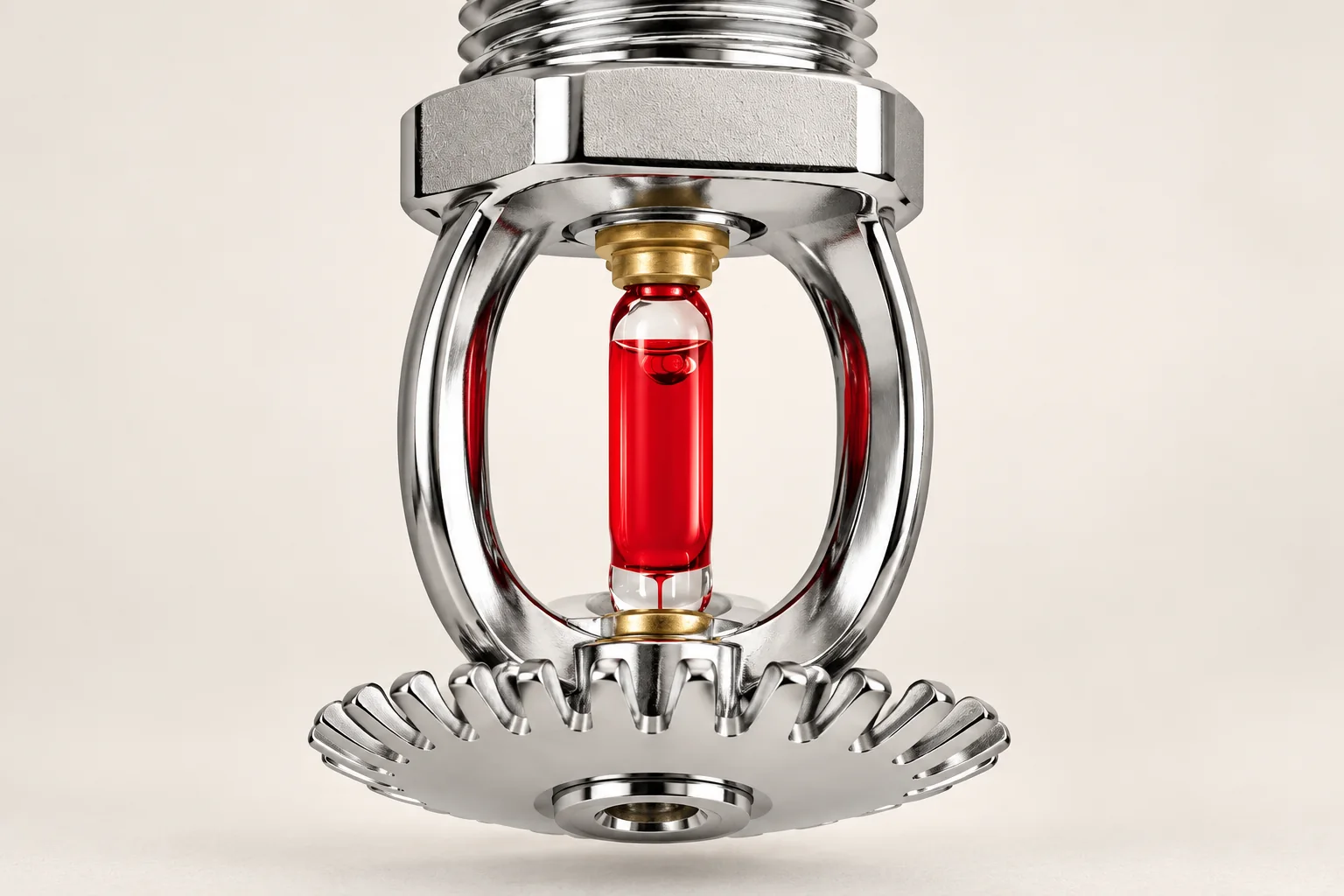
RTI describes how the heat-responsive element reacts to a heated airflow; its unit is the square root of meter-seconds, not seconds. A lower RTI means greater thermal sensitivity. Hot gases transfer heat to the element, which must reach its operating condition before the sprinkler opens. Ceiling height, sprinkler position, ambient temperature, and fire exposure affect that process, so the RTI thresholds do not translate into fixed opening times. NFPA’s explanation of sprinkler thermal characteristics distinguishes this sensitivity from temperature rating.
Consider a specification comparison between a QR sprinkler rated 155°F (68°C) and an SR sprinkler with the same rating. Both have the same nominal operating temperature, but their elements respond differently as they absorb heat. The QR element can reach its operating condition sooner under otherwise equal exposure. Matching the 155°F marking does not match thermal response.
Quick response is one type of fast response. Residential sprinklers also belong to the fast-response family, but their performance characteristics and design parameters differ. Response alone does not identify the correct water distribution, coverage, or mounting arrangement. For the mounting distinction, see upright vs. pendent sprinkler heads.
Match Thermal Response to the Fire-Protection Design
Earlier operation can start fire control sooner. In light-hazard occupancies, where the quantity and combustibility of contents are relatively low, this is a useful part of the protection strategy. The hazard classification follows the actual contents and conditions; a building name such as “office” does not classify every space within it.
Earlier operation can also change how many sprinklers demand water. In certain storage applications, an unsuitable change to fast-response sprinklers can cause more heads to open than the system was designed to supply. A limited water supply must then serve more outlets, reducing the available pressure and flow at individual sprinklers and potentially delivering less water over the fire. This is why the response type must fit the storage protection design. It does not mean that every warehouse needs standard response: ESFR sprinklers, for example, have their own application and design requirements and are not interchangeable with ordinary QR sprinklers.
For a new system, hazard and application, the protection design, applicable requirements, and the sprinkler’s listing determine the response selection together. The temperature rating must also suit the maximum ambient ceiling temperature and nearby heat sources. Choosing a lower temperature rating to make an SR sprinkler open sooner changes the temperature selection; it does not create a QR sprinkler.
Separate a Single Replacement from a Response Conversion
Replacing One Existing Sprinkler
A single replacement starts with the characteristics required by the existing design: response, K-factor, nominal temperature, coverage and application, orientation, connection, and the required listing or approval. K-factor affects flow at a given pressure; the coverage and application determine where the sprinkler can provide its intended protection. A matching thread addresses only the connection.
Suppose a maintenance list identifies an existing SR sprinkler rated 155°F (68°C), while the proposed replacement is QR, also 155°F, with the same thread. Those matches do not make it a like-for-like replacement. The new head changes thermal response even though its temperature marking and connection agree. Use the existing sprinkler identification number (SIN) and model to locate the original specifications, then match the relevant characteristics against the replacement configuration.
Existing light-hazard systems with SR sprinklers have specific provisions for replacing individual heads with new SR sprinklers. A maintenance replacement and a conversion to QR are different tasks; an existing SR head does not by itself establish a requirement to upgrade the compartment. A qualified sprinkler contractor or designer should resolve the replacement under the project’s applicable requirements and identify any proposed change to the original design.
Converting a Compartment to Quick Response
Changing response can change which sprinklers open first and the resulting demand on the water supply. A conversion therefore needs to address the protected compartment as a coordinated group. In an existing light-hazard system being converted to QR or residential sprinklers, the work involves changing the sprinklers throughout that compartment rather than introducing a different response one failed head at a time.
A compartment is a defined space within the protection design. It is not automatically the entire building or every sprinkler connected to the same piping. Its boundaries come from the applicable design and requirements; a decorative divider or ceiling-height change alone does not establish a separate compartment for response selection.
Keep Response Types Consistent Within the Compartment
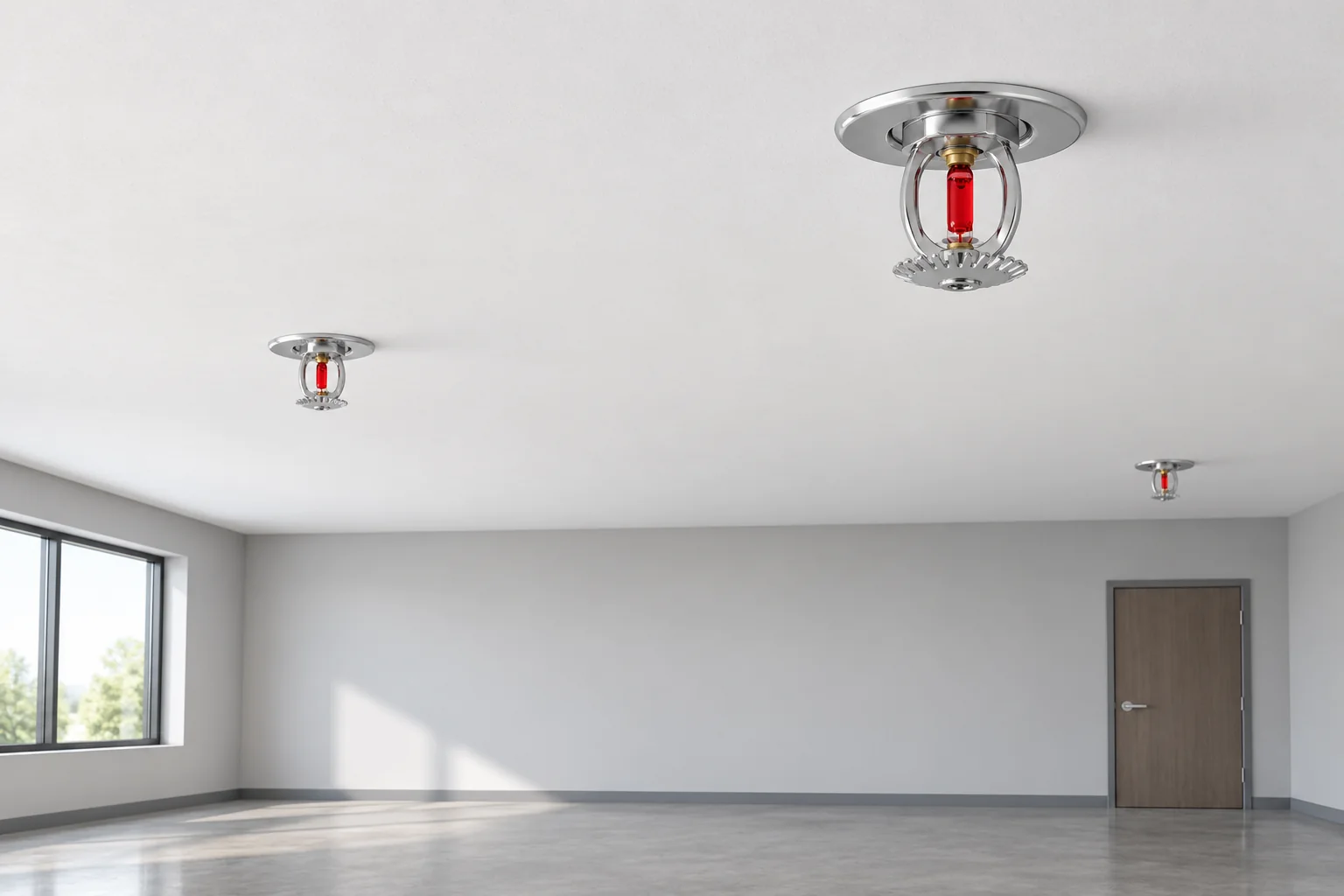
In a compartment designed for QR sprinklers, select heads to maintain that response design. Mixing QR and SR can change the expected operating pattern: a more sensitive sprinkler farther from the fire may open before a less sensitive sprinkler closer to it. This effect, often called skipping, can move water demand away from the immediate fire area and alter system performance.
The application matters when evaluating exceptions. Where no listed QR sprinkler is available in the required temperature range, provisions permit SR sprinklers. In-rack sprinklers are excepted from the compartment response-consistency requirement and follow the storage protection design. Outside light-hazard occupancies, another provision addresses a sprinkler with both QR and SR listings at different coverage areas: the same sprinkler can be used at the spacing associated with each listing. That dual listing is not permission to combine any two QR and SR models.
These conditions are evaluated within the compartment and its protection scheme, rather than by applying one response label to every system in a building. Temperature selection remains a separate decision: a location exposed to a heat source may need a different temperature rating without changing the intended response classification.
Identify the Response Classification Before Ordering
Bulb color indicates a glass-bulb sprinkler’s temperature rating, not its QR or SR classification. A 3 mm bulb is a common QR construction and a 5 mm bulb is common in SR designs, but diameter is not a universal identification rule. Quick-response sprinklers can also use fusible links.
Use the SIN and model to find the actual listed or approved configuration and its application. The assembly can matter as much as the visible thermal element: some concealed sprinkler combinations have different response classifications depending on the cover assembly and approval involved. The distinctions between recessed and concealed sprinkler configurations help identify which components belong in that match.
For a new project, pass on the design’s required response and application when sourcing fire sprinkler heads. For a replacement, include the existing identification, response, nominal temperature, K-factor, coverage, and relevant assembly details. Those specifications let the supplier match the required configuration instead of treating the word “quick” as an upgrade instruction.