

For firefighters, confronting heat, flame, toxic smoke, corrosive liquids, and sharp debris is routine—and feet are often the first point of contact. Firefighter Boots that are not purpose-built or compliant may offer only temporary protection; at worst, they introduce irreversible risk. In the U.S., Firefighter Boots are engineered in distinct categories—structural firefighting or proximity boots certified to NFPA 1970 (which replaced earlier standards in 2024) and wildland fire boots certified to NFPA 1950 (formerly NFPA 1977)—with third-party certification commonly provided by SEI. Key performance elements include thermal and fire resistant materials, puncture and slip resistance, electrical-hazard protection and a protective toe (often meeting ASTM F2413), moisture barriers to resist water and common fireground contaminants, secure closures, and ladder/shank support. The goal is simple: match the boot to the incident so protection and mobility start from the ground up.
Firefighter Boots

Firefighter Boots are a specialized category of protective footwear engineered for the hazards of fire suppression, rescue, and structural firefighting operations. Unlike general-purpose safety boots, which may meet only basic impact or slip-resistance requirements, Firefighter Boots provide advanced thermal insulation capable of withstanding temperatures up to 500°F (260°C) under NFPA testing protocols. They feature fire resistant construction and a full length shaft that integrates with turnout pants to form a sealed barrier against flame, embers, hazardous liquids, and debris.
Common materials include fire resistant vulcanized rubber for structural bunker boot designs and leather boots—especially leather structural models—for durability, ergonomic fit, and mobility during extended wear.
In the U.S., all Firefighter Boots must comply with NFPA 1970 for structural and proximity firefighting or NFPA 1950 for wildland fire boots, meet ASTM F2413 protective toe and sole requirements, and carry third-party certification from the Safety Equipment Institute (SEI) to verify compliance.
Types of Firefighter Boots
Firefighter Boots are generally classified into three operational categories: structural bunker boots, wildland fire boots, and station boots. Each type differs in height/fit, materials, and certification requirements to match its environment.
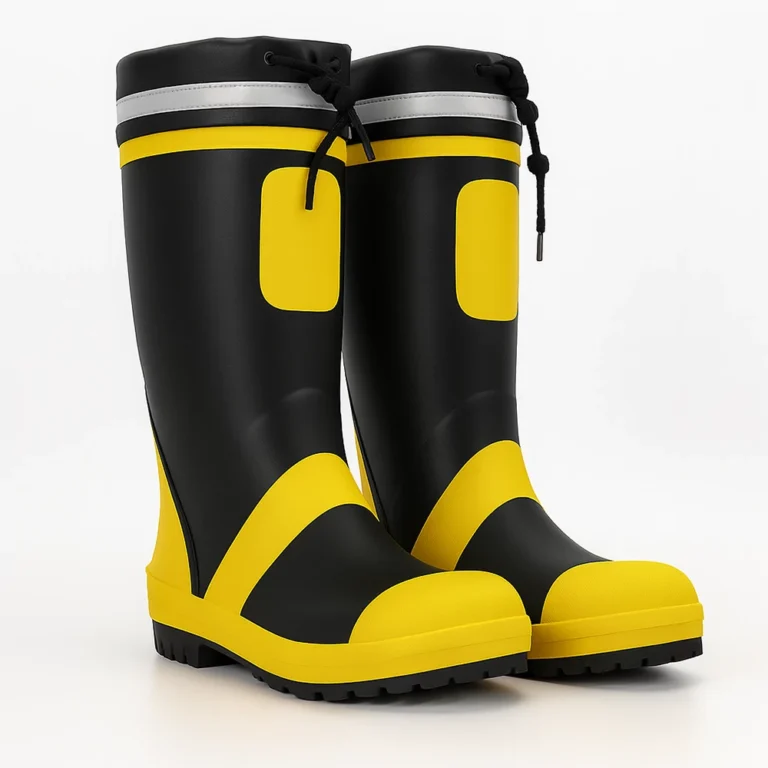
Structural Bunker Boots
Built for structural firefighting and interior attack, rubber firefighting boots typically meet NFPA 1970 and are third-party certified (e.g., SEI). They feature a full length shaft (≈14–15 in) that interfaces with bunker pants to create a sealed barrier. Constructions include fire resistant vulcanized rubber pull-ons and leather structural designs with zipper-lace systems protected by heat shields. Common elements: moisture barriers (e.g., CROSSTECH-type laminates) for blood-borne pathogen and water resistance, composite or steel safety toes, puncture plates, ladder shanks for rung stability, and heat- and slip-resistant lug outsoles. Example models include the Globe Supreme 14″ Structural Boot (premium full-grain leather with robust ladder support) and Thorogood 14″ Rubber Bunker (classic pull-on rubber with thermal and chemical resistance).

Wildland Fire Boots
Designed for extended hiking and line work under NFPA 1950, these emphasize mobility and heat management in grass/brush/forest fires. Typical heights run 8–10 in with a secure lace-up fit to control heel slip on uneven terrain. Uppers are full-grain leather boots with minimal seams to limit heat transfer and ember catch; soles are high-heat, aggressive-lug designs for scree, duff, and rock. Many agencies reference traction in “fire ice” conditions—periods when surfaces are both hot and slippery due to ash, fine dust, or melt—so outsoles favor deep lugs and heat-stable compounds. Representative wildland fire boots options include the Danner Wildland Tactical Firefighter (athletic last with NFPA compliance) and White’s Smokejumper (stitch-down leather with rebuildable construction for long service life).
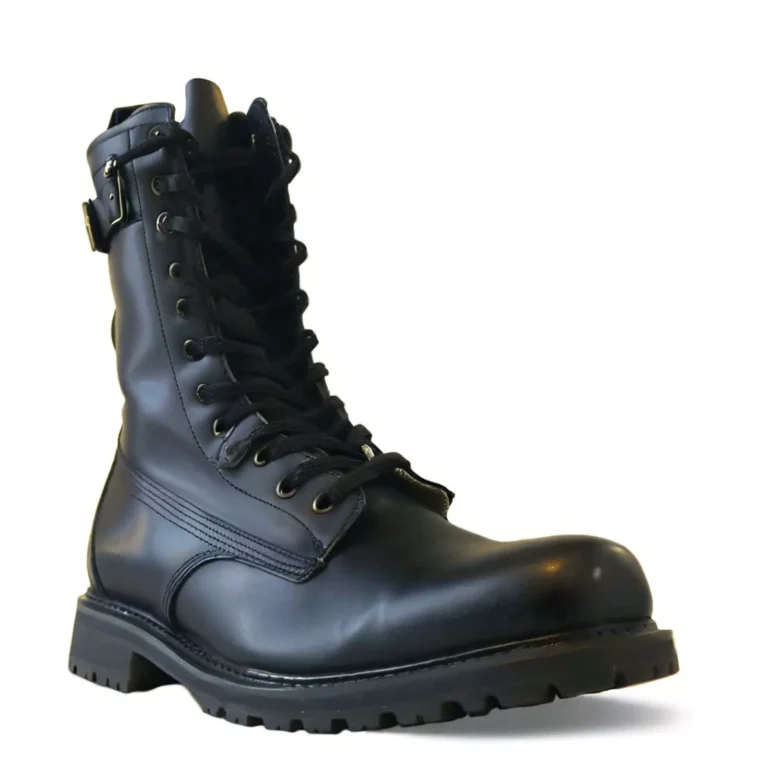
Station Boots
Intended for non-emergency duties, station wear, and training evolutions—not interior fire attack. They commonly feature 6–8 in shafts, polishable leather, side-zip convenience, and ASTM F2413 safety toes/plates. While certain models add water resistance and electrical-hazard ratings, station boots are not NFPA-certified for firefighting and should be swapped for certified bunker or wildland boots before response. Examples include Haix Airpower XR1 Pro (duty comfort with rescue-oriented features) and Redback USAF (slip-on duty boot with durable PU outsole).
Firefighter Boots Construction
Firefighting boots are not built in a single way. Depending on mission demands, manufacturers use different firefighting boots construction methods such as Goodyear welt, cemented bonding, direct injection, stitched-down, or vulcanized rubber. Each approach influences durability, waterproofing, weight, and comfort, shaping how boots perform under NFPA safety standards in structural, wildland, or station environments.
Tier Selection of Firefighter Boots
Selecting Firefighter Boots comes down to hazards, duty cycle, and budget. Regardless of price, confirm NFPA/ASTM compliance and an active SEI listing before purchase.
Tier 1 — Premium / Flagship
“Price isn’t the boot’s flaw—it’s mine.” In other words, you’re paying for top quality construction, third-party certification, and longevity. Expect $450–$700+ per pair, full length designs around 6.5–9.0 lb/pair, and typical service life 3–5 years with proper care; some wildland fire boots are rebuildable for longer life. Representative picks:
- L’INCENDIE Luxembourg – Vanguard Series (structural bunker boot): leather structural upper, moisture barrier, ladder shank, and NFPA 1970/ASTM F2413 targets; verify current SEI listing prior to purchase.
- HAIX Fire Eagle Air (14″): CROSSTECH® liner, steel ladder shank, NFPA structural firefighting certification, athletic fit; commonly retails around mid-$400s.
Best for: large urban departments and heavy interior attack where certified performance, fit options, and durability offset higher upfront cost.
Tier 2 — Performance-to-Price Leaders
Balanced builds with full certification, usually $280–$450, weights 5–7 lb/pair, and service life 2–4 years.
Thorogood 14″ Rubber Bunker (structural bunker boot): traditional pull-on rubber with solid fire resistant and chemical protection plus NFPA structural firefighting certification.
- Danner Wildland Tactical Firefighter (8″): NFPA wildland fire boots, EH rated (ASTM F2892), Vibram® S587 fire ice outsole for grip on hot, slip-prone surfaces (ash, melt). Height and weight suit long hikes.
- Best for: combination and volunteer departments, mixed call volumes, and agencies seeking certified protection without top-tier pricing.
Tier 3 — Budget-Only / Short-Term
Generally <$200–$250, often not NFPA-certified or only minimally compliant. Common issues include early outsole softening/delamination under heat, thinner moisture barriers, inconsistent EH performance, and poor fit. Suitable only for short-term, light training, or as station boots—never for interior fire attack or extended wildland ops. Verify labels and listings before relying on these boots.
Best for: temporary use, loaner gear, or while awaiting certified replacements.
Brands to Approach with Caution (How to Spot Red Flags)
- Rather than naming specific labels (lists change and claims are contested), avoid:
- “No-name” marketplace brands without a verifiable SEI listing.
- Products whose labels omit the NFPA edition (e.g., “meets NFPA” with no year).
- Sites lacking test data or misusing certification logos.
Always confirm in the SEI Certified Product List and review NFPA 1970/1950 applicability for your incident types.
Matching Fire Boots to Operational Risk

Structural Firefighting: High Heat, Full Protection Required
In interior fire attack and high-risk rescue scenarios, structural fires expose personnel to extreme radiant heat (>500°F), molten debris, puncture hazards, electrical shock risk, and prolonged exposure to toxic chemicals. These missions demand NFPA 1971-compliant structural bunker boots equipped with a flame- and cut-resistant rubber or leather shell, steel or composite toe caps, and puncture-resistant plates (usually ASTM F2413). Insulation should meet thermal protective performance (TPP) values of 35 or higher, while the boot shaft should integrate tightly with turnout pants to prevent embers or water ingress. Slip resistance under wet and uneven surfaces is also critical, particularly when working on compromised flooring or rooftops.
Wildland Firefighting: Lightweight Endurance for Rugged Terrain
In contrast, wildland firefighting requires long treks over steep, unstable terrain with exposure to lower but more sustained thermal environments (e.g., <350°F surface heat, direct sun exposure). For this, NFPA 1977-certified wildland fire boots are the optimal solution. These boots prioritize light weight (typically under 3.5 lbs per boot), breathable flame-resistant leather, and Vibram-style heat-resistant outsoles. They are built for mobility and extended wear time rather than maximum protection from structural collapse or electrical hazards. Key design parameters include minimum 8-inch shaft height, reinforced heel and toe zones, and water-shedding construction for all-weather performance.
Station & EMS Calls: Lightweight Protection for Low-Risk Response
For daily station wear, administrative duties, and low-risk calls like EMS runs or fire alarms, station boots (often NFPA 1999-certified or ASTM F2913 slip-resistance rated) offer the ideal balance of flexibility and basic protection. While they aren’t built for high-heat conditions, modern designs often include BBP-resistant linings, anti-slip soles, and electrical hazard protection for incidental contact (<18kV). These boots often feature side zippers or pull-on styles for rapid donning, ideal for time-sensitive deployments where seconds matter.
Ultimately, the type of fire boot a crew wears should reflect a thorough hazard assessment of the operational environment. Factors such as ambient temperature, duration of deployment, likelihood of flashover or backdraft, terrain stability, and access to decontamination all play a role. Matching these variables to certified boot features ensures compliance with OSHA standards and maximizes firefighter safety and performance on every call.
From structural emergencies to wildland operations and station duties, the right Firefighter Boots are a frontline defense for safety, performance, and comfort. Knowing the types, standards, and quality tiers ensures every step is protected.
In Poseidon, a dedicated manufacturer of professional fire safety gear, offering a full range of Firefighter Boots and foot protection solutions. Connect with our experts today to elevate your safety performance and strengthen your operational readiness.