

For firefighters, operating in heavy PPE—multi-layer turnout gear, a helmet, and bunker boots—quickly becomes second nature on the fireground. That “armor,” however, is heavy and fatiguing. When the incident ends and crews return to the fire station, departments adopt a different dress code to protect long-term health and comfort during daily duty.
Station boots are the footwear for those non-firefighting tasks: lighter, more breathable, and easier to don than bunker boots, while still professional in appearance. Typically 6–8 inches in height with lace or side-zip designs, they often feature polishable leather uppers, cushioned midsoles with arch support, slip resistant outsoles, and options with steel toe or composite toe protection. Importantly, station boots do not carry NFPA structural firefighting certification (e.g., NFPA 1970) and are not intended for interior attack; instead, many follow ASTM F2413 impact/compression (and EH) safety standards for routine station work, apparatus checks, training, and other non-IDLH tasks per department policy.
What Shoes Do Firefighters Wear?
Firefighter footwear typically falls into two categories: duty boots and station boots (or shoes). Duty boots, which prioritize protective performance, often weigh upwards of 4 kg; just as you wouldn’t want to strap weighted sandbags to your legs to build muscle during your off-hours, the same applies to firefighters. Consequently, during non-operational periods, firefighters typically wear station boots for their daily duties and commuting.
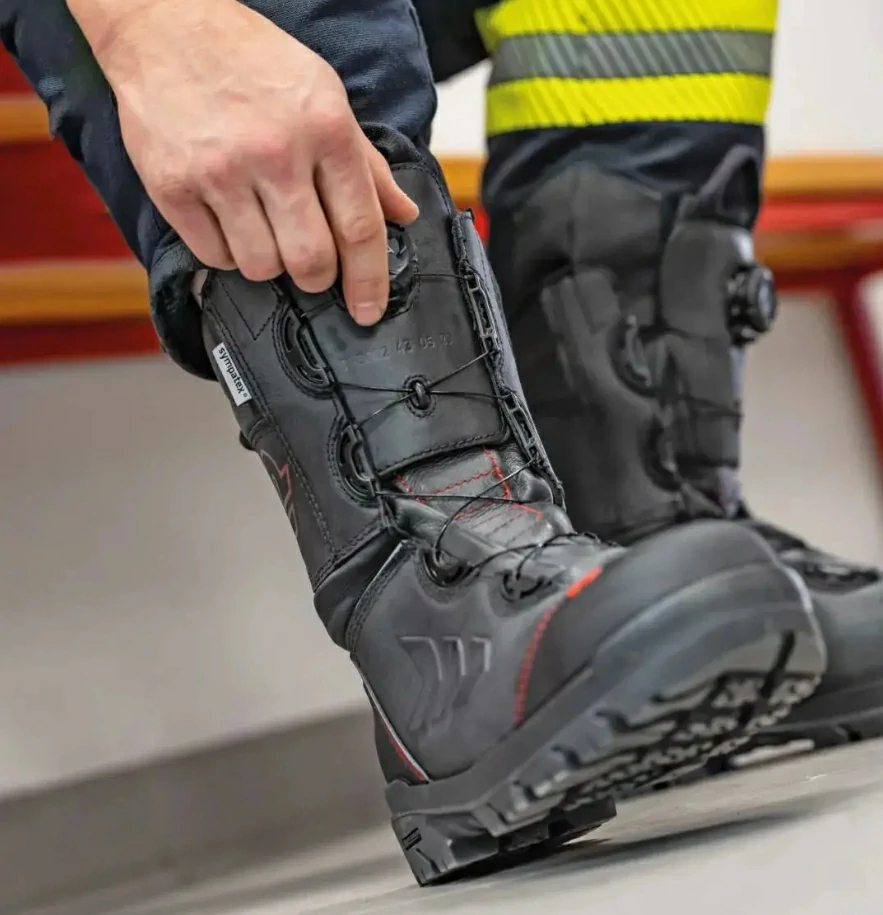
Duty Boots
Duty boots are protective footwear designed for firefighting operations. Depending on the specific type of mission, they are categorized into structural firefighting boots, wildland firefighting boots, and water rescue boots.
Structural Firefighting Boots: These typically feature a 14-inch height, a slip-on design, and construction utilizing either all-leather or rubber materials. They incorporate steel toe caps and multi-layered soles to ensure complete protection within a fireground environment. Due to these rigorous protective requirements, each pair of boots often weighs over 4 kg and feels quite rigid underfoot. Common models include the HAIX Fire Eagle, the Honeywell Ranger Series, and the Rosenbauer BOROS B4.
Wildland Firefighting Boots: These utilize either a lace-up or BOA closure system and stand 8 to 10 inches tall. They are designed to provide stability on uneven terrain while offering heat resistance. Common models include the Danner Wildland Tactical and the HAIX Missoula 2.1.
Water Rescue Boots: Specifically designed for professional rescue teams conducting water-based operations, these boots feature a dive-grade neoprene lining and insole to minimize heat loss during prolonged water rescue missions. Common models include the NRS Workboot Wetshoe and the Astral Brewer 2.0.
Station Boots (Shoes)
During off-duty hours, lightweight professional work boots are an essential piece of equipment for firefighters. Unlike the structural firefighting boots used for interior fire suppression, station boots prioritize all-day comfort, breathability, and rapid access features (such as side zippers), while still providing necessary protective elements—such as slip-resistant soles, safety toe caps, and water resistance. Common brands and models include the HAIX Airpower XR1 and the 5.11 ATAC Series.
Firefighter Station Boots
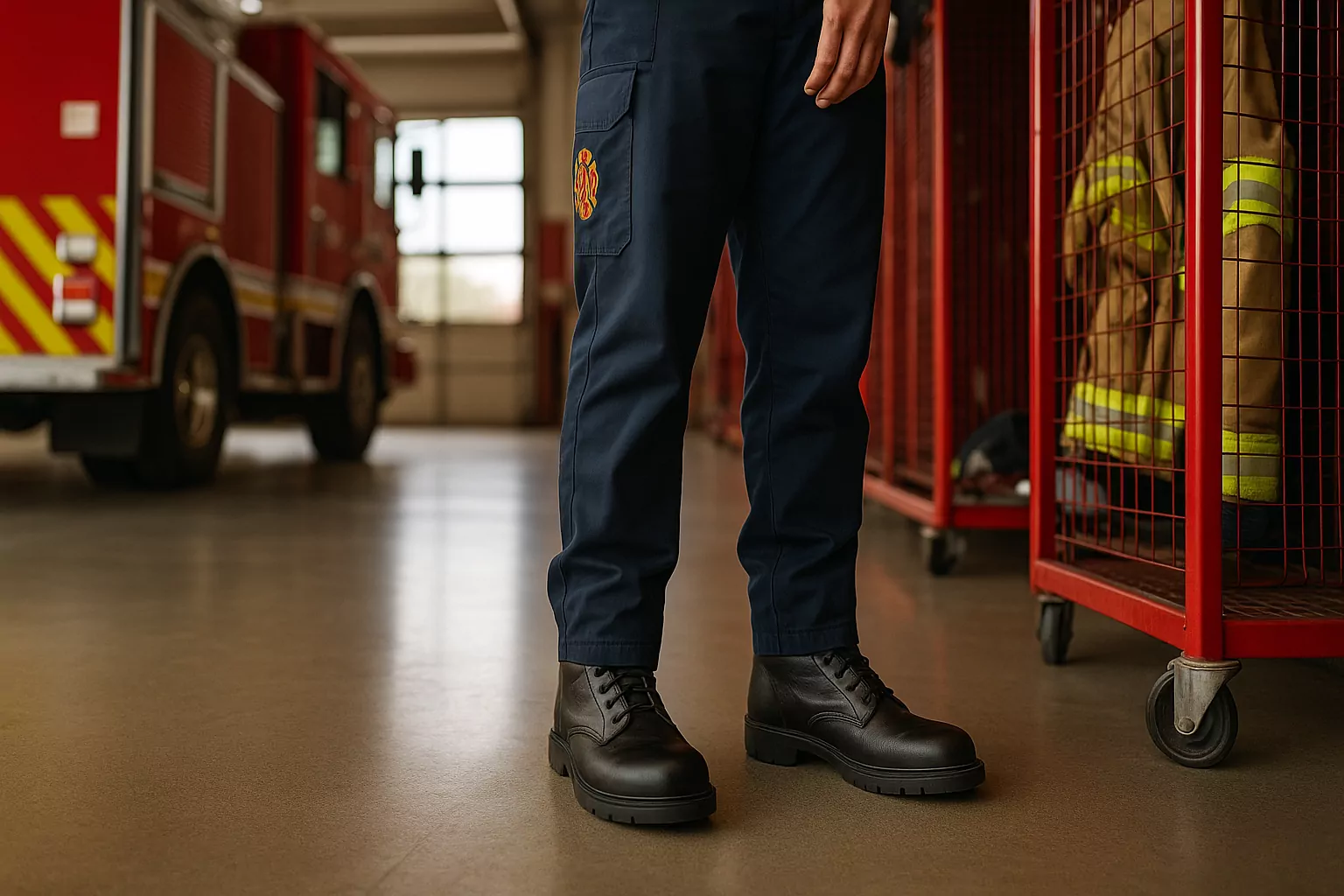
Firefighter station boots are duty footwear for the fire station and other non-IDLH activities. They complement the PPE system but are not combat footwear for interior attack. Unlike structural bunker boots, station boots emphasize daily comfort and professional appearance while maintaining workplace safety for routine tasks.
Typical shaft height is 6–8 inches for slip on and quicker donning (lace or side-zip). Uppers are usually polishable leather or leather/Cordura® hybrids to balance durability, breathability, and uniform standards. Weight is lighter than bunker boots to reduce fatigue over long shifts. Common safety options include steel toe or composite toe caps, slip resistant rubber outsoles for wet bay floors, cushioned midsoles with arch support, moisture-wicking linings, and (where policy requires) puncture-resistant plates. Fire department boots typically comply with ASTM F2413 safety standards (impact, compression, and EH ratings); they do not carry NFPA 1970 structural firefighting certification and are not intended for interior fire attack.
Per department policy, station boots are worn for apparatus checks, station maintenance, training evolutions, community events, and many EMS/non-fire responses. Switching to fire department boots between calls reduces fatigue, improves foot health, limits cross-contamination from fireground debris, and preserves bunker boots for incidents that truly require them.
Station Boots vs. Bunker Boots
Fire department boots focus on comfort and everyday safety in the fire station, while bunker boots deliver full NFPA-certified protection for the fireground.
| Feature / Aspect | Station Boots | Bunker Boots |
| Purpose | Daily duty, EMS, fire station tasks | Structural firefighting, fireground hazards |
| Height | 6–8 inches | ~14 inches, full-length shaft |
| Standards | ASTM F2413 (I/75, C/75, EH 18 kV) | Must meet or exceed NFPA 1970 (heat/flame, liquid, slip, EH) |
| Materials | Leather or hybrid | Rubber insulated or leather structural |
| Key Features | Slip resistant outsole, arch support, steel/composite toe | Puncture resistant plate, ladder shank, thermal/moisture barriers |
| Storage/Readiness | Worn at fire station | Stored with turnout gear, donned during alarms |
Types of Firefighter Station Boots
Traditional Leather EMS Boots
Traditional leather EMS boots, typically standing 6–8 inches tall, remain a classic and highly respected choice across U.S. fire departments. Built from polishable leather, they provide a professional appearance suitable both inside the fire station and during public-facing duties. These boots usually incorporate steel or composite safety toes, cushioned midsoles with proper arch support, and slip-resistant outsoles to ensure stability during long hours of duty. Depending on manufacturer preference, they are often constructed using the Goodyear welt method, which allows resoling and long-term serviceability, or cemented construction, which reduces weight and speeds up the break-in process. With typical weights ranging from 2.8–3.5 pounds per boot, they deliver a balance of durability, comfort, and formality, making them ideal for everyday EMS calls, training, and station tasks.
Tactical-Style Station Boots
Tactical-style station boots have grown increasingly popular among departments with heavy EMS or rescue workloads. Drawing design cues from military and law enforcement footwear, they prioritize agility, breathability, and speed. These boots generally stand 6–8 inches in height, weigh around 2.2–3.0 pounds per boot, and are frequently equipped with side zippers for rapid donning in emergency response situations. They also meet ASTM F2413 safety standards, often with optional EH ratings, and feature rugged, slip-resistant rubber outsoles for traction on wet or oily surfaces. From a construction perspective, tactical boots are commonly built using cemented bonding or Strobel stitch methods, which enhance flexibility and reduce weight, aligning them with the athletic, quick-moving profile required for demanding EMS and technical rescue operations.
Slip-On Station Boots
Slip on firefighter station boots are valued for their rapid donning capability, allowing firefighters to respond within seconds of an alarm without the delay of lacing or zipping. Typically 6–8 inches tall and weighing 2.5–3.2 pounds per boot, Slip on firefighter station boots sacrifice some adjustability but make up for it with firm heel construction and reliable traction. Slip on firefighter station boots are usually manufactured with cemented or direct-injection construction, producing a one-piece bond between upper and sole for durability and waterproofing. While slip-ons are practical in busy environments where seconds matter, they are less common in large municipal departments, which often prioritize adjustable fits for better ankle stability. They are, however, a practical choice in smaller volunteer firehouses or stations emphasizing speed above all else.
Hybrid or Composite-Material Station Boots
Modern innovations have produced hybrid station boots that combine traditional leather uppers with advanced fabrics such as Cordura® nylon or aramid blends. These designs reduce weight while maintaining durability and frequently integrate moisture-wicking linings to enhance comfort during extended duty shifts. With typical weights between 2.0–2.8 pounds per boot, hybrids are lighter than full-leather models yet remain compliant with ASTM F2413 safety standards, incorporating steel or composite toes, puncture plates, and enhanced cushioning. From a construction standpoint, hybrid boots often rely on cemented or direct-injection methods to accommodate multi-material integration while keeping the boot structurally sound. These models appeal strongly to firefighters who face long EMS shifts or high call volumes, where fatigue management is as critical as protective performance.
Safety-Toe Work-Boot Crossovers
Some departments and individual firefighters select safety-toe crossover boots as a budget-friendly station footwear solution, particularly for administrative work, inspections, and non-emergency duties. These boots, generally 6 inches in height and weighing 2.0–2.8 pounds per boot, are not designed for fireground hazards but are still required to meet ASTM F2413 standards, providing steel or composite safety toes, optional electrical hazard ratings, and in some cases puncture protection for maintenance tasks. They are usually built with cemented construction, which keeps costs low while maintaining acceptable durability for light-duty applications. While they cannot replace structural firefighting boots or wildland firefighting boots, crossovers provide practical everyday protection for fire station work, ensuring compliance with safety standards without overspending on specialized firefighter PPE.
Closure Systems
Firefighter station boots typically use three closure configurations:
Slip-On (Pull-On / BAO Type): This firefighter station boots slip-on design features a seamless shaft with no mechanical fasteners, relying on a reinforced upper and pull loops. It enables rapid donning (≈ 4–6 s) and easier cleaning after station duty. Preferred by fire station and EMS station boots users seeking low-maintenance footwear that remains slip resistant on wet bay floors.
Side-Zip: Uses a side zip or front zipper—often paired with partial lacing—to deliver micro-adjustable tension and better ankle retention during long shifts or vehicle operations. Many models include a safety toe or composite toe for impact protection, requiring regular inspection once zipper fatigue or drag appears.
Lace-Zip Hybrid: Combines full lacing with a central zipper for both speed and personalized fit—common in wildland or dual-duty station applications.
Under NFPA 1970 (2024 Edition), structural firefighting footwear must be pull-on only to preserve barrier integrity. Firefighter station boots, typically certified to ASTM F2413 and NFPA 1999, may use any closure that meets tensile-strength (≥ 300 N), heat, and liquid-penetration test criteria. Selecting the right closure system directly impacts fit stability, decon time, and fatigue control throughout station operations.
Care and Maintenance
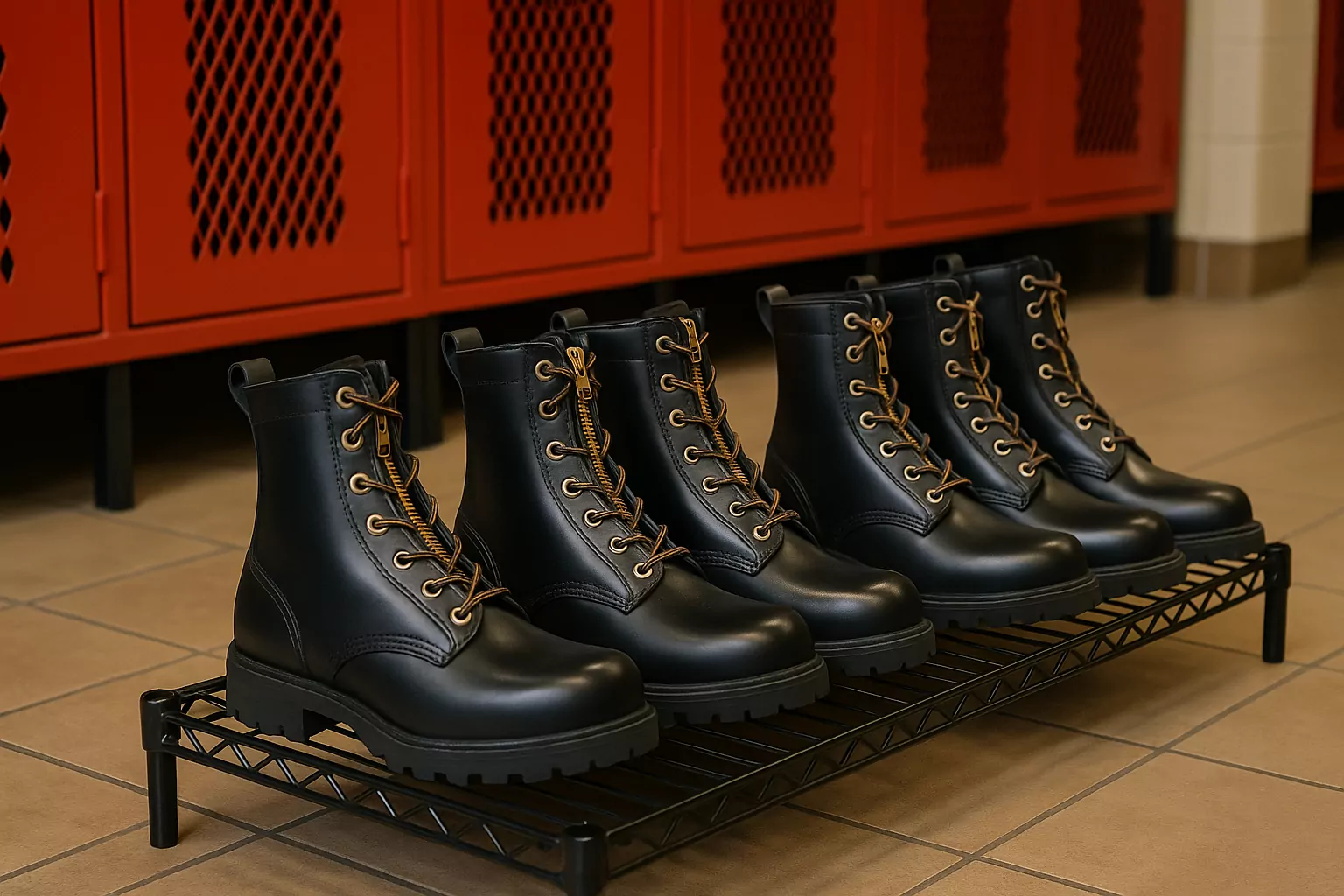
Proper care and maintenance of firefighter station shoes are essential to ensure safety, comfort, and compliance with safety standards in the fire station. While firefighter station shoes are not exposed to the same level of hazards as wildland firefighting boots or structural firefighting gear, departments across the U.S. still apply many of the principles outlined in NFPA 1851: Standard on Selection, Care, and Maintenance of Protective Ensembles to guide their upkeep.
Cleaning and Decontamination
After daily use, boots should be wiped with a damp cloth to remove dust, dirt, or light debris. For deeper cleaning, mild soap and water are recommended, followed by thorough drying. When exposed to blood, body fluids, or other biohazard contaminants, OSHA requires that boots and shoes be cleaned and disinfected with department-approved or NFPA-compliant products.
Conditioning and Protection
Leather station boots should be treated with department-issued conditioners to maintain flexibility and prevent cracking. For models with composite toe construction or synthetic panels, conditioning should follow manufacturer guidance to preserve durability and slip resistant performance.
Inspection and Replacement
Firefighters should regularly inspect for worn soles, damaged seams, or compromised steel toe or safety toes. NFPA and OSHA guidelines emphasize documentation of inspections and replacements. Many departments use a 12–24 month replacement cycle, though high call volumes or EMS-heavy workloads may require shorter intervals.
Storage
Firefighter station shoes should always be stored in a cool, ventilated area. Wet boots should never be left inside closed lockers at the fire station; instead, they should be air-dried overnight. Direct heat sources should be avoided to prevent material breakdown.
Best Practices
Rotate between pairs of station boots to extend service life.
Ensure arch support and slip resistant outsoles remain effective after months of wear.
Follow department and manufacturer guidelines for cleaning and replacement to maintain compliance with safety standards.
Firefighters face different foot protection needs depending on the task, and Firefighter Station Boots provide the right balance of comfort, light weight, and essential safety for daily duty outside the fireground. Compared to heavy Bunker Boots, they help maintain foot health and readiness during non-emergency work.
Poseidon offers a wide range of Firefighter Station Boots and custom OEM solutions. As a professional manufacturer of firefighter boots, we deeply understand the foot protection risks firefighters face. Connect with our experts today to explore the latest professional solutions in firefighter footwear.