

Firefighters wear different boots for different duties. Interior structural firefighting requires protective footwear designed for the structural firefighting ensemble, while wildland operations require footwear suited to long-duration movement over heat-affected and uneven terrain. Station boots are intended for routine duty, and specialty rescue or hazardous-material operations can require separate footwear.
Under the current NFPA framework, structural and proximity firefighting footwear is addressed within NFPA 1970, while wildland and urban-interface PPE is addressed within NFPA 1950.
The correct choice therefore begins with the mission and hazard, followed by the applicable standard, construction, protective features, fit, and required certification or test documentation.
How Firefighters Choose Boots by Mission

Boot selection starts with the environment in which the footwear will actually be used.
Structural firefighting boots prioritize the protection required for interior fireground operations. Wildland boots prioritize mobility, terrain stability, and extended wear. Station boots prioritize routine-duty comfort and workplace protection but are not structural firefighting footwear. Specialty rescue and chemical-protective footwear should be selected against the hazards and requirements of those operations.
No single firefighter boot is appropriate for every mission.
The Four Main Types of Firefighter Boots

Structural Firefighting Boots
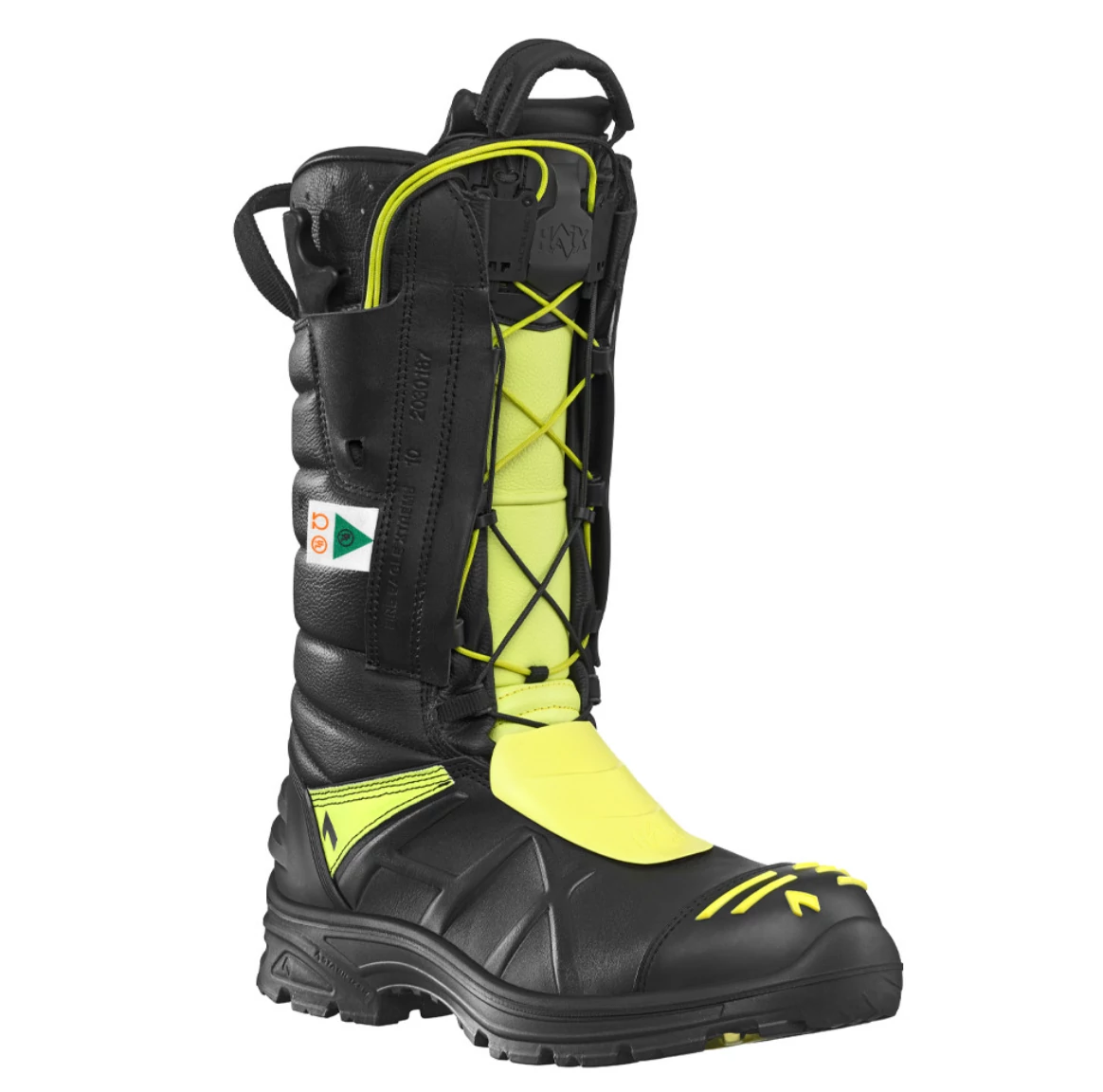
Built for interior fire attack, structural firefighting boots are the heaviest-duty options, typically 5–7 lb per pair with a ~14 in. shaft to interface with turnout pants. Uppers use heat-tolerant leather or engineered textiles over moisture/chemical barriers; bottoms pair slip resistant rubber outsoles with ASTM F2413 steel toe (or safety toe) and puncture protection.
To achieve durability and liquid integrity, makers commonly use Goodyear welt construction (serviceable, rebuildable) or direct injection (sealed bond, easy decon); some hybrids add cemented toe/heel rands. Structural boots are specified where radiant/conductive heat, water, and debris hazards meet stringent current NFPA 1970 requirements for thermal and liquid performance.
Wildland firefighting boots
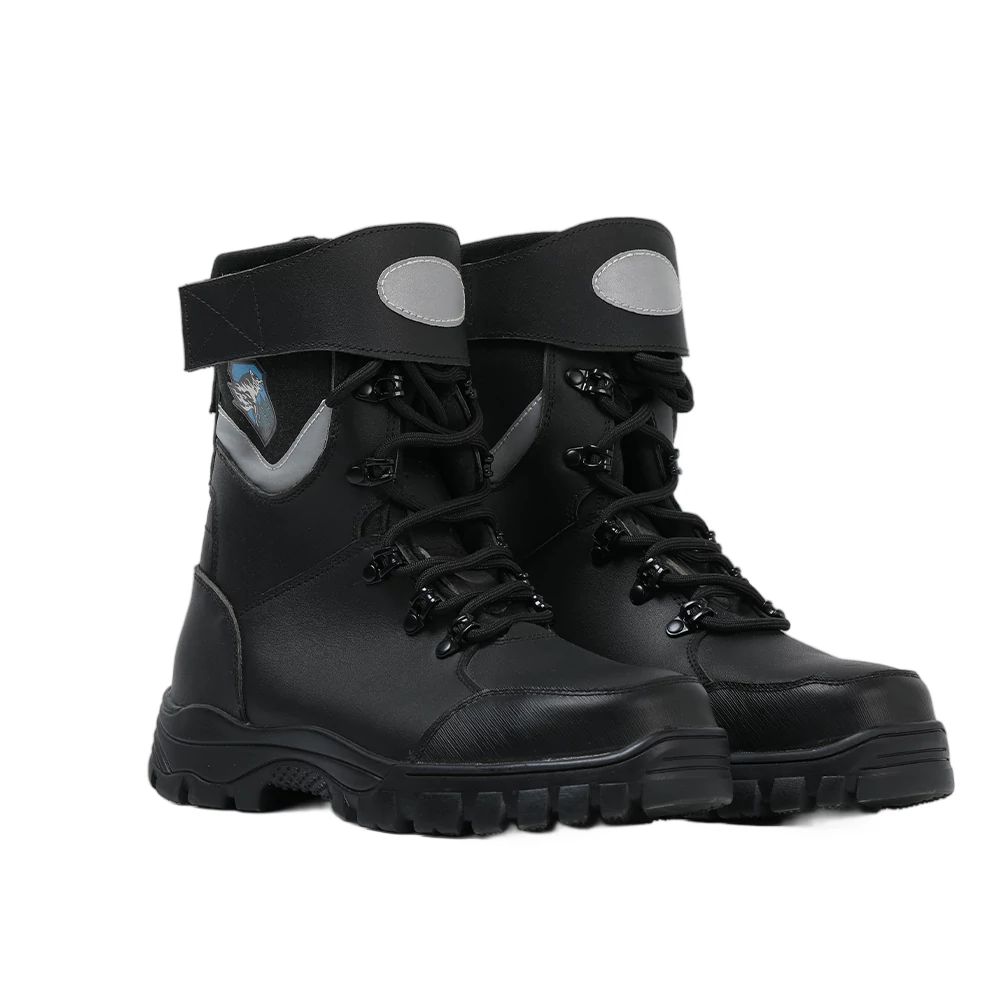
Optimized for miles on rugged terrain, wildland firefighting boots are lighter—often 3–5 lb per pair—and ≥8 in. tall per standard. They favor full-grain upper leather (commonly ≥2.0 mm thick) for support and field repairability, with stitched-down or welted construction to maximize forefoot flex and edge stability on slopes.
Outsoles emphasize heat and abrasion resistance with deep lugs for soil/rock/ash. Breathability and weight reduction take priority over heavy waterproof packages, making them the choice for extended line work, hiking, and saw operations where mobility and endurance matter more than liquid immersion.
Firefighter Station Boots
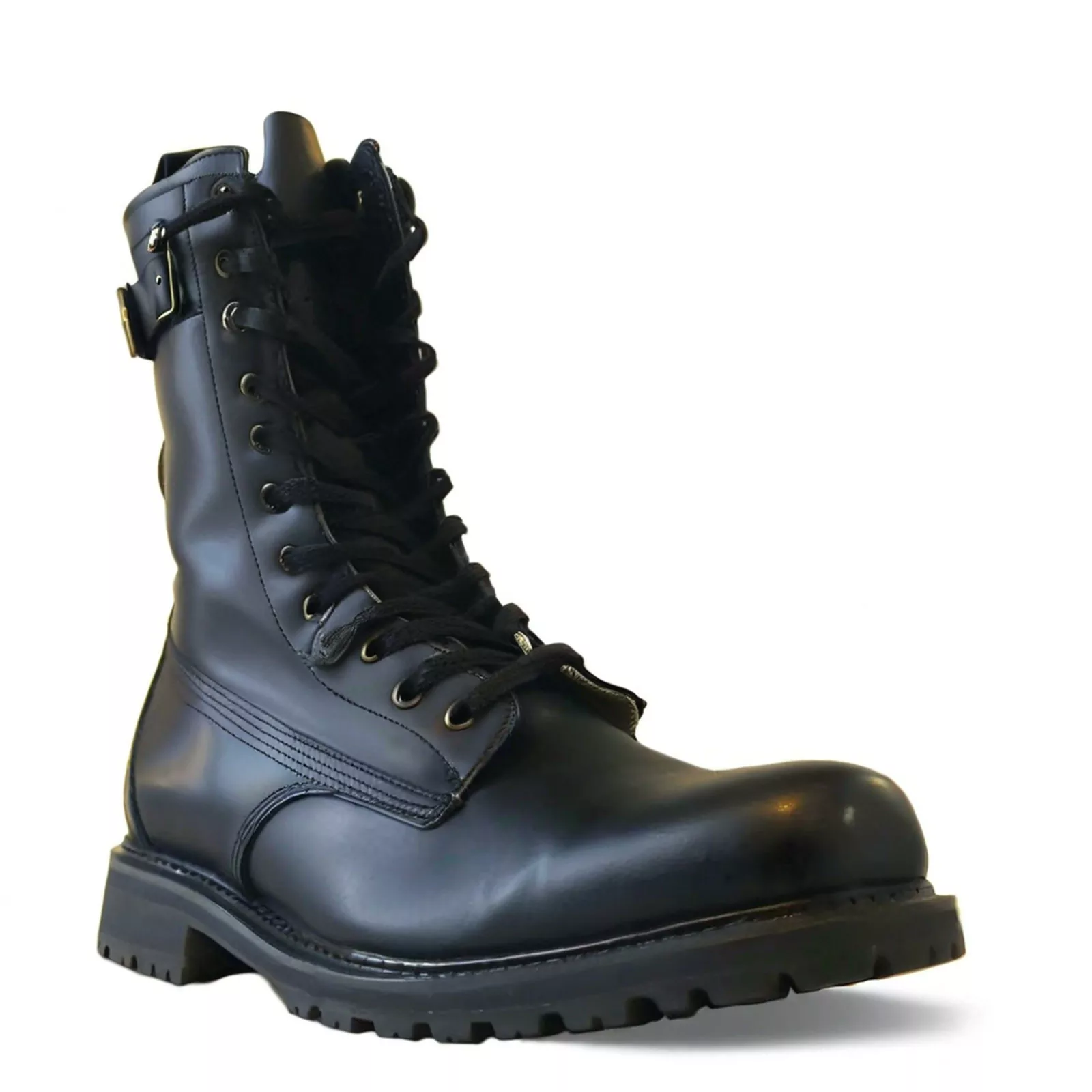
For daily station wear and non-IDLH calls, departments issue lighter, lower-cut firefighter station boots—typically 2.5–4 lb per pair—that still meet ASTM F2413 safety toe and slip resistant requirements. Construction skews to direct injection or cement for comfort and cost efficiency; features often include cushioned footbeds and arch support for long shifts.
Optional waterproof membranes address routine wet tasks, but these boots are not intended to substitute for certified structural or hazmat footwear. Their role is to deliver high quality comfort and protection, helping firefighters stay safe during long hours around the station.
Technical Rescue Boots
Purpose-built for chemical splash, decon lines, flood and rescue scenes, Technical rescue boots use liquid-tight uppers (e.g., vulcanized rubber, PVC, butyl, or CBRN laminates) with sealed seams and ASTM F903-type penetration/permeation performance.
Many employ direct injection or vulcanized bonds to create monolithic shells; protective toes are often composite rather than steel toe to reduce weight while meeting impact criteria. They’re deployed where chemical exposure and contaminated water present risks equal to—or greater than—flame.
| Boot Type | Standards / Documentation | Primary Use |
|---|---|---|
| Structural Boots | Applicable NFPA 1970 requirements and model-specific certification documentation | Interior structural and proximity firefighting |
| Wildland and Urban-Interface Boots | Applicable NFPA 1950 requirements and model-specific certification documentation | Wildland and urban-interface firefighting |
| Station Boots | Model- and department-specific workplace footwear requirements | Routine station duty and other non-IDLH work |
| Technical Rescue / Hazard-Specific Boots | Applicable requirements depend on the rescue mission, hazard, and exact footwear configuration | Technical rescue, hazardous-material, flood, decontamination, or other specialized operations |
Station vs. Fireground Boots
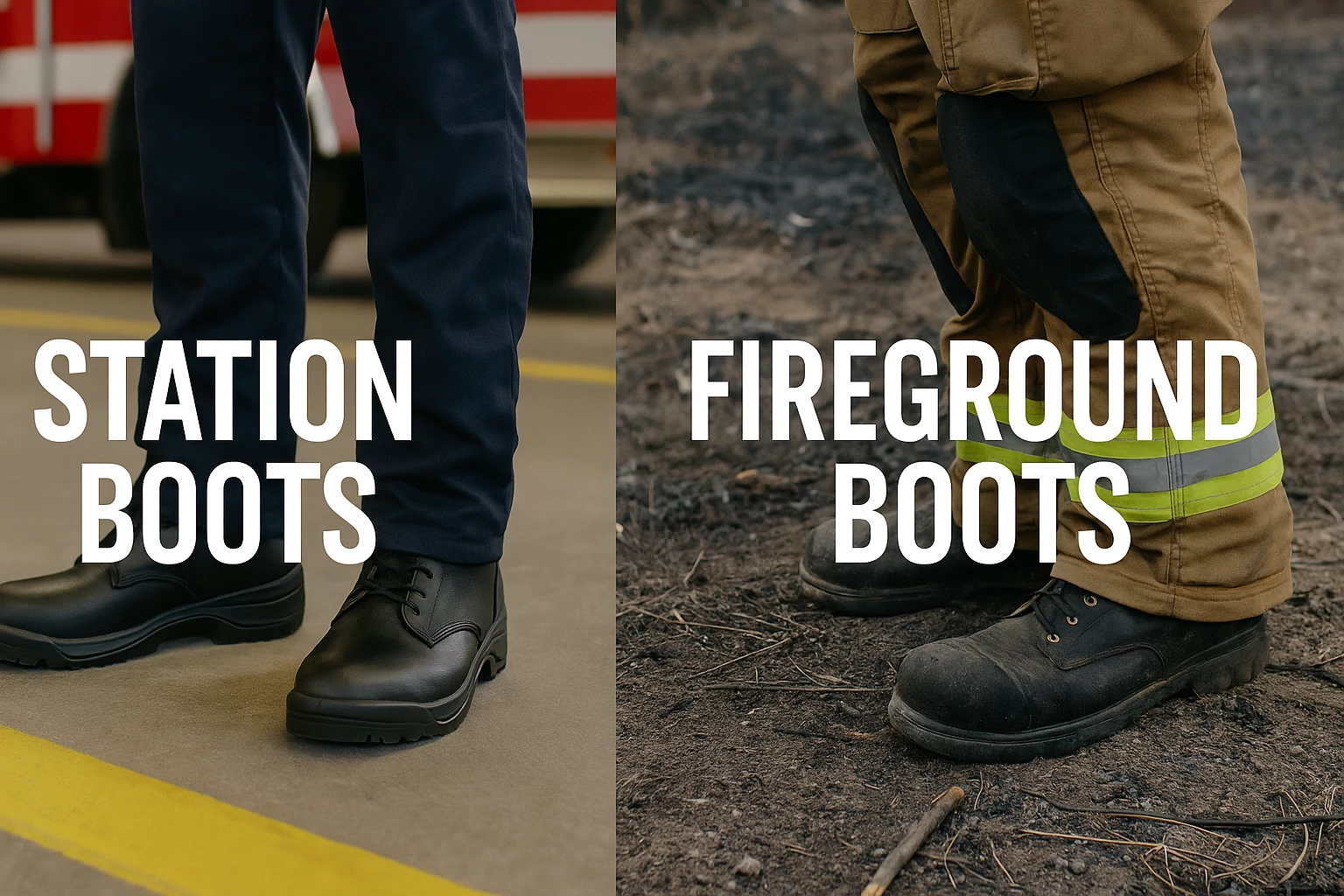
Station boots and fireground boots serve different operating environments.
Station boots are intended for routine duty and other non-IDLH activities. Their exact safety-toe, slip-resistance, electrical-hazard, or other performance claims should be verified against the documentation for the specific model.
Structural firefighting boots form part of the structural or proximity firefighting PPE system and should be selected against the applicable NFPA 1970 requirements and model-specific certification documentation.
Wildland and urban-interface footwear is addressed within NFPA 1950 and is designed around a different combination of terrain, mobility, thermal exposure, and extended operating time.
For technical rescue, hazardous-material response, flood operations, or other specialized missions, select footwear according to the actual hazard and the applicable requirements for the exact product and operation.
Do not assume that a station, structural, wildland, or specialty rescue boot can substitute for another category simply because each is marketed for fire-service use.