
Since the dawn of human civilization, fire has been both a driving force for progress and a potential risk. If we were to sum it up in a lighthearted way, “the essence of human civilization is ‘boiling water’ and ‘throwing bricks.'” While this may be humorous, fire has always been a symbol of human advancement, yet it’s also a double-edged sword. Controlled flames have propelled progress, but uncontrolled fires have threatened civilizations, as evidenced by the Great Fire of Rome in 64 AD. Understanding the mechanisms of fire is crucial for managing its risks, and the concept of the Fire Triangle is foundational to fire safety. Fire elements basic principle helps explain how fires start and provides the key to preventing and controlling them.
What is Triangle of Fire?
The Fire Triangle consists of fuel, heat, and oxygen, which must exist together for combustion to occur and continue. These elements interact dynamically: fuel provides the material that burns, heat raises that material to ignition, and oxygen sustains the chemical reaction. Fire behavior, intensity, and spread are determined by how these three factors combine in a given environment.
Fuel includes both natural and manufactured combustible materials, ranging from vegetation and structural contents to flammable liquids and gases. In operational firefighting, fuel characteristics such as type, size, arrangement, and moisture content directly influence flame length, rate of spread, and suppression effectiveness.
Heat is the energy source that initiates and maintains ignition. It can originate from flame, sparks, electrical faults, mechanical friction, or radiant exposure. Suppression tactics such as water application focus on heat removal, cooling the fuel below its ignition temperature and interrupting combustion.
Oxygen supports the combustion process by enabling the chemical reaction between heat and fuel. In most fire scenarios, oxygen is supplied by ambient air at approximately 21% concentration, which is sufficient to sustain active burning. Smothering techniques and specific extinguishing agents work by reducing or displacing available oxygen, weakening or stopping the reaction.
Together, these three elements explain why fires ignite, how they grow, and how they can be controlled or extinguished. All fire suppression strategies—whether cooling, smothering, or fuel removal—are based on breaking at least one side of the Fire Triangle.
What Are The 3 Components Of The Fire Triangle?
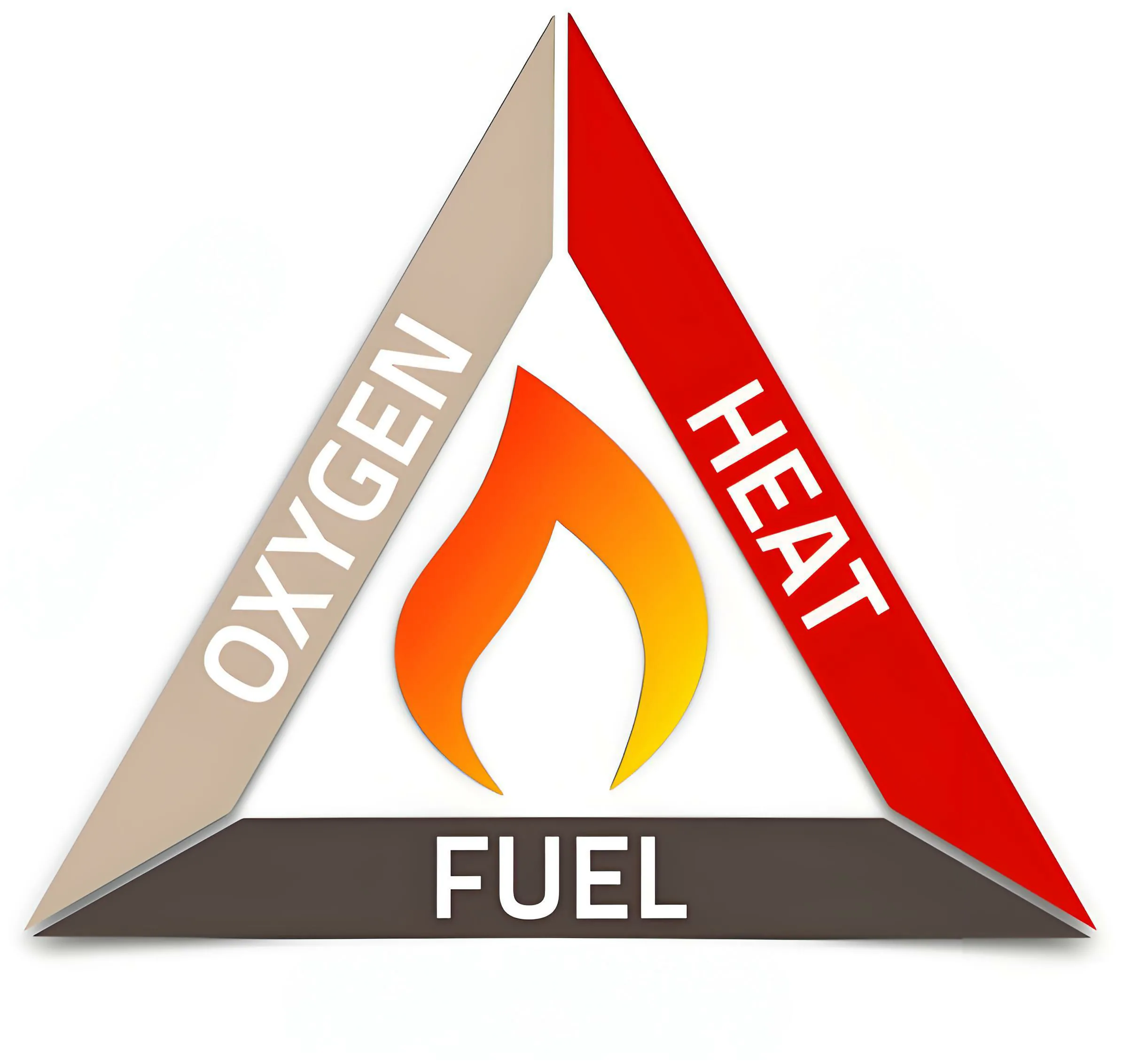
The Fire Triangle is a foundational concept in fire safety, explaining the three essential components needed for a fire to ignite and sustain itself: heat, fuel, and oxygen. Heat is the energy required to raise a material to its ignition point, making it combustible. Fuel refers to any material that can burn, including solids like wood, liquids such as gasoline, and gases like propane. Oxygen supports combustion by reacting with the fuel in the presence of heat. These three elements must be present for a fire to occur, and removing one of them will extinguish the flame. Understanding the Fire Triangle is essential in firefighting and fire prevention, as it helps professionals target the removal of one of these elements to control and extinguish fires.
Heat
The Catalyst for Combustion

Heat is the energy required to ignite a fire and sustain its combustion. It comes from various sources, both natural and man-made, such as open flames, electrical sparks, and friction. Once a fire starts, it continues to produce heat, causing it to spread and intensify. This heat can also cause burn injuries or ignite other combustible materials in the vicinity.
Heat is also crucial in determining the flash point and fire point of materials. The flash point is the temperature at which a material will ignite, while the fire point is the temperature at which the material will continue to burn. These points are important for understanding the fire hazards of specific chemicals and materials, allowing for better fire prevention strategies.
Heat sources can be natural, like the sun or lightning strikes, or man-made, such as welding equipment, cooking appliances, or matches. It is essential to be cautious when using these heat sources to prevent igniting flammable materials nearby.
Fuel

Fuel is the second essential element in the Fire Triangle. It refers to any material that can burn or sustain combustion when exposed to heat and oxygen. Without fuel, fire cannot exist, as it provides the substance needed for the fire to continue. Fuels can be found in various forms, including solids like wood, paper, and fabrics, liquids like gasoline, oils, and alcohol, and gases like propane and natural gas. The combustion process varies depending on the fuel type. For example, solid fuels, like wood, typically burn slower than liquids like gasoline, which can ignite quickly due to their low flash points.
Understanding the different types of fuel and their ignition characteristics is crucial for both fire prevention and firefighting. Flashover, a rapid fire phenomenon, can occur when all combustible materials in a room reach their ignition temperature at once. This leads to a violent burst of flames engulfing the entire room. Another dangerous phenomenon is backdraft, which happens when an oxygen-deprived fire is suddenly exposed to fresh air, resulting in an explosive reaction. Both flashover and backdraft are linked to the availability and types of fuel in the environment.
The availability of fuel significantly influences how fires spread. For instance, in industrial settings, chemical and flammable liquid fuels can cause fires to spread rapidly. In residential areas, common fuels like wood and paper can lead to slower but sustained fire growth. Firefighters use various strategies to remove or control the fuel source, such as creating firebreaks in wildfires or clearing flammable materials in building fires, to effectively contain and extinguish fires.
Fuel Type | Examples | Characteristics | Flammability Class | Extinguishing Methods |
Solid Fuels | Wood, paper, textiles, plastics | Require pyrolysis (thermal decomposition) to release flammable vapors. | Class A | Water, foam extinguishers. |
Liquid Fuels | Gasoline, diesel, alcohol, kerosene | Vaporize when heated. Highly volatile with flash points ranging from: | Class B | Foam, CO₂, or dry chemical extinguishers to suppress vapors and cut off oxygen. |
Gaseous Fuels | Propane, methane, hydrogen | Pre-vaporized, making them extremely flammable. Ignition limits: | Class C | Isolate gas supply; use CO₂ or dry chemical extinguishers. |
Combustible Metals | Magnesium, titanium, sodium | React with oxygen violently. May ignite at low temperatures. | Class D | Specialized dry powder extinguishers. |
Cooking Oils | Vegetable oils, animal fats | High flash points; oils ignite easily and burn intensely. | Class K | Wet chemical extinguishers (saponification forms a protective soapy layer to prevent re-ignition). |
Oxygen

Oxygen is the third and final element in the Fire Triangle, playing a critical role in sustaining combustion. It acts as an oxidizer, helping to break down fuel molecules into smaller, combustible compounds. This reaction releases energy in the form of heat and light, which sustains the fire. Oxygen is necessary for the chemical reactions that occur during combustion, and without it, fire cannot exist.
Oxygen supports combustion by reacting with the fuel when enough heat is present. The more oxygen available, the hotter, brighter, and faster the fire can burn. In most cases, oxygen is supplied by the surrounding air, which contains about 21% oxygen. However, in certain environments, the oxygen concentration can be altered, leading to more intense and rapid fires, such as in industrial settings or with pure oxygen systems.
During a fire, oxygen continuously diffuses from the surrounding air to feed the flames. The rate and intensity of the fire depend on the amount of oxygen available. By limiting or removing oxygen from the fire, such as by smothering the flames or using fire suppression systems, the fire can be extinguished. In wildfires, the concentration of oxygen, along with factors like moisture and wind, plays a key role in determining the fire’s intensity and how quickly it spreads.
The 3 elements of fire—heat, fuel, and oxygen—are the foundation of the components of fire triangle. Removing or disrupting any one of these parts of a fire effectively extinguishes the flames. This interdependence highlights the importance of understanding how the fire triangle includes fuel, an oxidizer, and heat for developing effective fire prevention and suppression strategies.
Modern fire science expands this model into the fire tetrahedron, which incorporates the chemical chain reaction. This deeper understanding allows professionals to mitigate fire risks across diverse environments, from residential kitchens to industrial facilities.
4th Fire Element

The fire triangle—heat, fuel, and oxygen—has long been a cornerstone of fire science. However, modern advancements have introduced a critical 4th element of fire, the chemical chain reaction, completing the fire tetrahedron model. This expanded model explains how the four components of fire interact to sustain combustion and why simply removing one essential element can effectively put out fire.
What Is the Chemical Chain Reaction?
The chemical chain reaction is a self-sustaining process in which heat oxygen and fuel sources interact to generate free radicals. These highly reactive particles accelerate combustion by breaking molecular bonds and releasing energy, creating a feedback loop that sustains the fire.
How It Works:
- Heat and Oxygen: These elements of the fire triangleinitiate the breakdown of combustible material into flammable vapors.
- Free Radical Generation: Flammable vapors react with oxygen to create free radicalssuch as hydroxyl (OH) and hydrogen (H).
- Energy Feedback Loop: Free radicals release energy, which further decomposes fuel, perpetuating the combustion cycle.
Without the chemical chain reaction, even the presence of fuel and oxygen would fail to sustain the fire. This dynamic process makes the chain reaction a critical target in fire protection and fire safety practices.
The Fire Tetrahedron

The fire tetrahedron model expands the fire triangle by adding the fourth element: the chemical chain reaction. This addition transforms the understanding of combustion, illustrating how the fire tetrahedron consists of interdependent elements that create a self-sustaining fire.
Model | Elements | Description |
Fire Triangle | Heat, Fuel, Oxygen | Basic essential elements needed to ignite and maintain a fire. |
Fire Tetrahedron | Heat, Fuel, Oxygen, Chemical Chain Reaction | Shows how the fire tetrahedron includes the chain reaction that sustains and propagates fire. |
This advanced model helps identify the following elements of the fire tetrahedron—heat, fuel, oxygen, and chemical chain reaction—and explains their roles in fire dynamics. For example, the flash point of a liquid fuel is the temperature at which vapors ignite, initiating the chain reaction. Understanding these interactions is critical for ensuring fire safety.
Why Is the 4th Element Important?
The 4th elements of fire are interdependent, but the chemical chain reaction introduces unique challenges and opportunities for modern fire protection:
Targeted Suppression: The fire tetrahedron model highlights that disrupting the chain reaction is essential for extinguishing a fire efficiently, especially in complex scenarios.
Specialized Agents: Clean agents like FM-200 and fire blankets disrupt the chain reaction without affecting heat or oxygen, making them ideal for sensitive environments like data centers and aircraft.
Industrial Applications: By focusing on the four components of fire, suppression systems in industrial and high-risk settings can neutralize fires more effectively.
In a petrochemical plant, an inert gas flooding system successfully suppressed a Class B fire by isolating combustible material and neutralizing free radicals, halting the chain reaction.
Applications of the Fire Tetrahedron
The fire tetrahedron has four elements, guiding fire suppression strategies across industries:
- Industrial Suppression: In oil refineries and chemical plants, inert gases displace oxygen and neutralize the chain reaction, preventing catastrophic fires.
- Aviation: Halon-based systems in aircraft suppress fires by targeting free radicals, ensuring safety without damaging critical systems.
- Residential and Commercial Fire Safety: Tools like fire extinguishersand fire blankets address multiple elements of the tetrahedron, ensuring fires are quickly controlled.
The 4 components of fire, represented in the fire tetrahedron, provide a comprehensive framework for understanding combustion. By recognizing the four elements of fire and targeting the fourth element, professionals can effectively control fires and improve fire safety in high-risk environments.
Modern fire science continues to evolve, showing how understand how fire sustains itself through the chemical chain reaction has revolutionized fire protection strategies, enabling faster and more efficient methods for extinguishing a fire and safeguarding property and lives.
How to Break the Fire Tetrahedron for Rapid Extinguishment
Effectively extinguishing a fire requires breaking one or more components of the fire tetrahedron—heat, fuel, oxygen, or the chemical chain reaction. Modern firefighting tools and systems are designed to target these elements, offering tailored solutions for various fire scenarios. Below, we explore how key products like fire extinguishers, fire blankets, and fire suppression systems are used to disrupt the fire tetrahedron.
Cutting Off Heat
Heat is the catalyst for combustion, and removing it can quickly reduce fire intensity. This is especially important in Class A fires involving combustible material like wood or textiles.
- Water-Based Systems: Sprinkler systems and water mist systems are commonly used in commercial and industrial facilities to lower the temperature of burning materials below their ignition point.
- Fire Blankets: For small-scale fires, fire blankets are a reliable solution. They smother flames by cutting off heat transfer and oxygen simultaneously, making fiberglass fire blankets ideal for kitchen fires or personal safety in emergency situations.
Removing Oxygen
Oxygen is critical to sustaining combustion, and its removal can stop a fire in its tracks. This approach is particularly effective in enclosed spaces.
- Inert Gas Suppression Systems: Inert Gas Suppression Systems Used in data centers, chemical plants, and aircraft, these systems flood the protected area with gases like nitrogen or argon, displacing oxygen while maintaining safety for occupants.
- CO₂ Fire Extinguishers: Portable CO₂ extinguishers are designed to suffocate fires by replacing the surrounding air with carbon dioxide, making them ideal for Class B and electrical fires.
Isolating Fuel
Fuel serves as the energy source for a fire. Preventing access to additional fuel sources is essential to controlling and extinguishing it.
- Fire-Resistant Barriers: Fire-rated doors, walls, and coatings are used in commercial and industrial buildings to isolate the spread of fuel sources to new areas.
- Wet Chemical Extinguishers: These are specifically designed for Class K fires, such as cooking oil fires. They work by forming a soapy protective layer over the burning oil, cutting off access to oxygen and preventing re-ignition.
Disrupting the Chemical Chain Reaction
The chemical chain reaction is the key to sustaining combustion. By targeting this process, fires can be extinguished quickly and efficiently.
- Clean Agent Suppression Systems: Products like FM-200 and Novec 1230 are widely used in high-value environments such as data centers and aviation. These Clean Agent Suppression Systems disrupt free radicals in the chain reaction without leaving any residue, protecting both people and sensitive equipment.
- Halon Fire Extinguishers: Although being phased out due to environmental concerns, halon systems remain effective in disrupting the chemical chain reaction in critical scenarios, such as military and aerospace applications.
Breaking the fire tetrahedron—whether by removing heat, isolating fuel, cutting off oxygen, or disrupting the chemical chain reaction—is the foundation of effective fire suppression. Each element requires a tailored approach, from portable fire extinguishers and fire blankets to advanced systems like clean agents and inert gas flooding.
By leveraging these technologies and understanding the dynamics of the 3 elements of fire, fire professionals and individuals alike can ensure faster suppression, reduced damage, and enhanced safety. Modern firefighting tools are no longer just about extinguishing flames—they are about protecting lives, property, and critical infrastructure in the most efficient way possible.