

Home » IG100 Fire Suppression System
IG100 Fire Suppression System
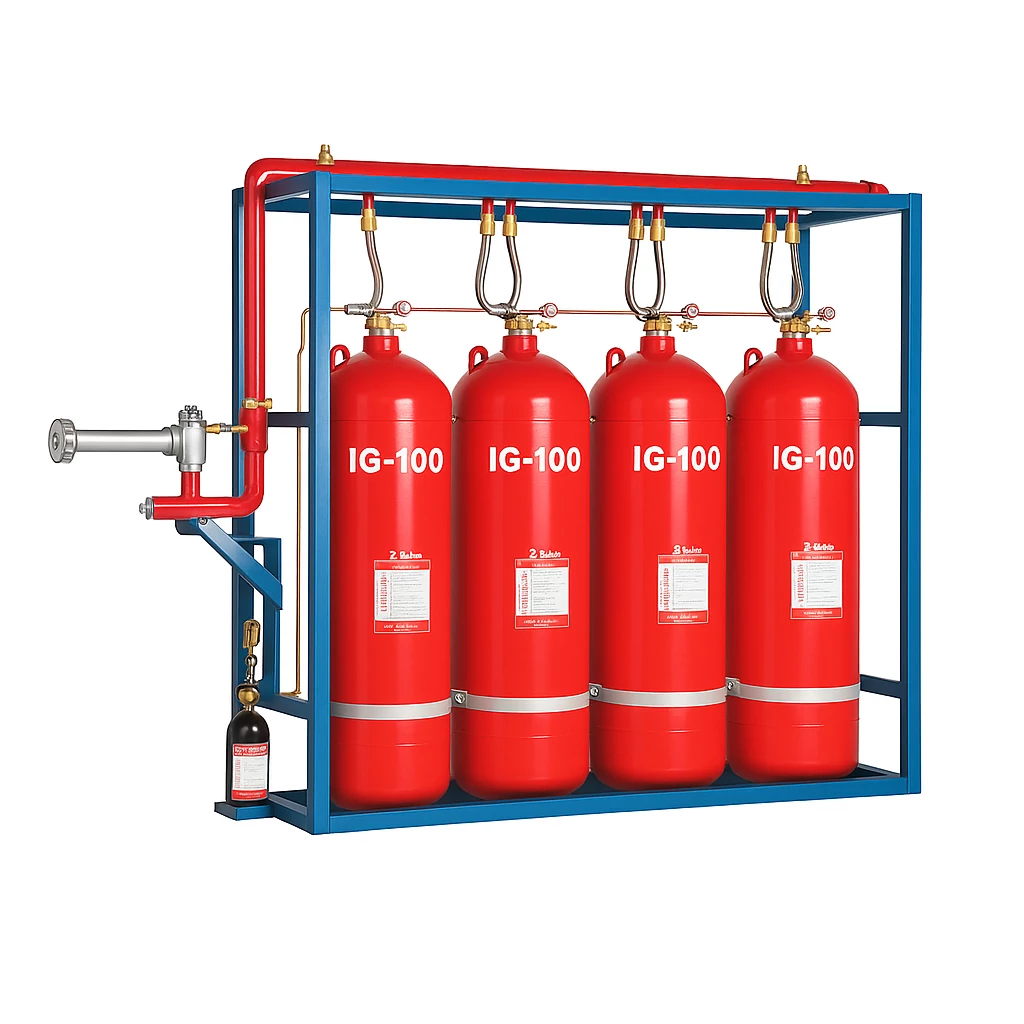
The IG-100 fire suppression system uses nitrogen as the extinguishing agent for enclosed hazards where water discharge or extinguishing-agent residue would be undesirable. IG-100 suppresses fire by reducing the oxygen concentration within the protected enclosure to a design level appropriate for the hazard.
As an inert-gas system, IG-100 is electrically non-conductive and leaves no extinguishing-agent residue after discharge. System design must account for the protected volume, hazard, design concentration, cylinder quantity, piping, nozzles, enclosure integrity, pressure relief, alarms, and personnel-safety requirements.
Applicable standards and any model-specific certification or listing should be verified for the exact system configuration required by the project. Compare system types in the clean agent system range.
Detail
The IG-100 system uses nitrogen as an inert extinguishing agent. Because nitrogen does not leave extinguishing-agent residue and is electrically non-conductive, inert-gas systems are commonly considered for enclosed areas containing equipment or materials where post-discharge cleanup should be minimized.
Fire suppression occurs by reducing the oxygen concentration in the enclosure. This same mechanism means occupancy, alarms, evacuation, enclosure integrity, pressure relief, and system design concentration must be addressed as part of the engineered system. Nitrogen should not be described simply as “safe for personnel” without those design conditions.
System Configurations
The appropriate IG-100 configuration depends on the number of protected enclosures, hazard volume, required design concentration, cylinder arrangement, piping network, and control strategy.
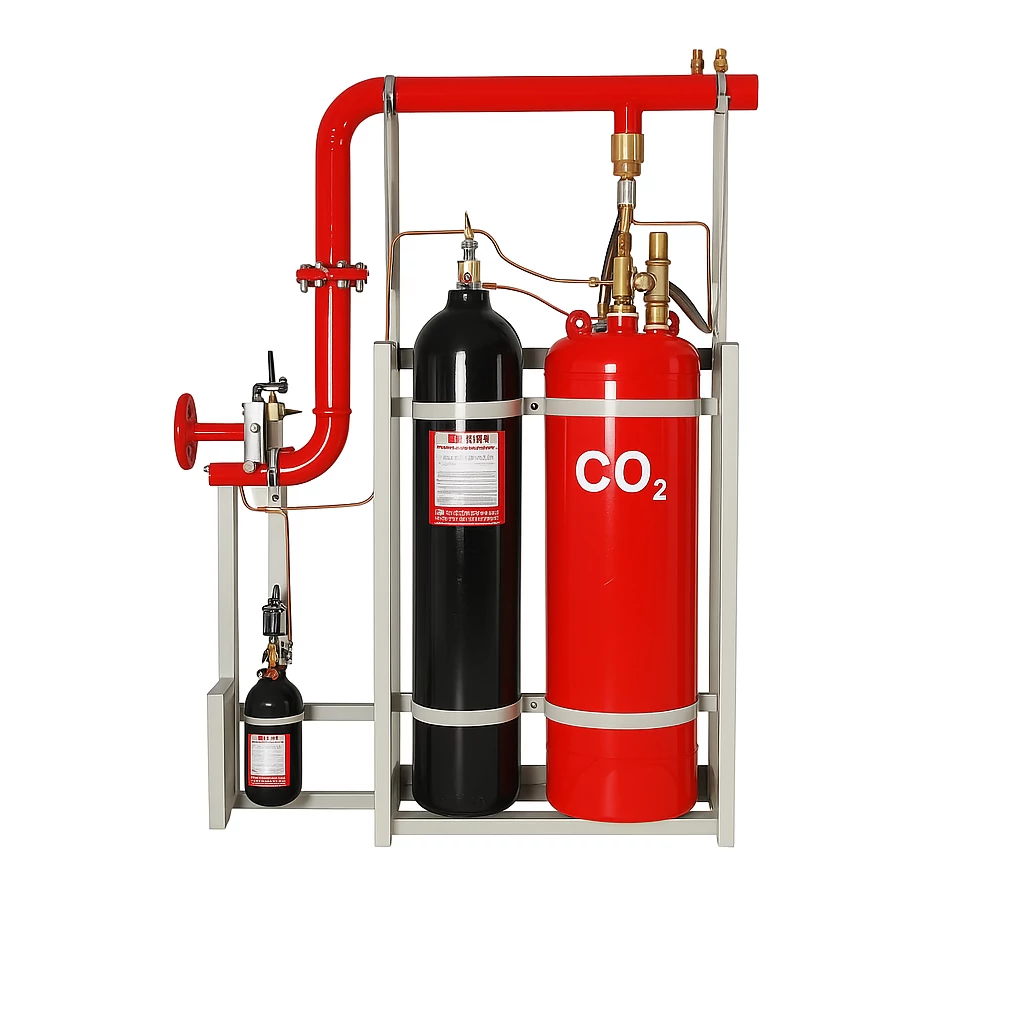
1. Dedicated Single-Zone System
A dedicated cylinder arrangement can protect one defined enclosure through a dedicated piping and nozzle network. System quantity and layout must be calculated for that enclosure.
2. Multi-Zone System
Where the system design and applicable requirements permit, a centralized cylinder bank can be configured to protect more than one hazard zone through the appropriate distribution and control arrangement.
3. Larger Enclosure or Multi-Cylinder System
Larger protected volumes can require additional cylinders, piping capacity, pressure-relief provisions, and hydraulic or flow calculations. Coverage should be established from the engineered system design rather than from a generic maximum-volume claim.
- Nitrogen Extinguishing Agent: Uses IG-100 nitrogen rather than water or dry chemical agent.
- No Agent Residue: Nitrogen leaves no extinguishing-agent residue after discharge.
- Electrically Non-Conductive Agent: Suitable for consideration where electrical equipment is present, subject to complete system design.
- Engineered Configuration: Cylinder quantity, piping, nozzles, and concentration are selected for the protected enclosure and hazard.
- Single- or Multi-Zone Design: System architecture can be configured according to the number and arrangement of protected spaces.
Applications
IG-100 can be considered for enclosed hazards where inert-gas total-flooding protection is appropriate and the enclosure can be engineered for the required design concentration, discharge, pressure relief, alarms, and personnel-safety measures.
- Data Centers and Electrical Equipment Rooms The electrically non-conductive, residue-free extinguishing agent can be considered where post-discharge contamination of electrical or electronic equipment should be minimized.
- Telecommunication and Control Rooms IG-100 can be considered for enclosed rooms containing communications, control, or switching equipment where gaseous suppression is appropriate.
- Archives and Enclosed Storage Areas Inert-gas protection can be considered where water or dry chemical residue would create additional damage, subject to the hazard and enclosure design.
- Industrial Equipment and Process Areas Enclosed equipment or process hazards can use an engineered IG-100 system where the fuel, hazard characteristics, design concentration, enclosure conditions, and applicable requirements support inert-gas suppression.
- Multiple Protected Enclosures Where permitted by the engineered design and applicable requirements, a centralized cylinder arrangement can serve multiple defined hazard zones through an appropriate distribution and control system.
Suitability cannot be established from the application name alone. The protected volume, fuel or hazard, occupancy, enclosure integrity, pressure relief, evacuation strategy, cylinder quantity, piping, nozzles, and required approvals must be evaluated for the specific project.
| Specification | Technical Parameter |
| Working Pressure | 20 MPa |
| Device Model | PSD20/80 |
| Capacity | 80L |
| Filling Capacity of Gas | 20kg |
| Outside Diameter of Cylinder | Φ267mm |
| Height of Cylinder | 1910mm |
| Spraying Time | ≤120s |
| Max Filling Rate | 0.25kg/L |
| Power | DC24V/1.6A |
| Nitrogen Pressure of Driving Device | 6.0±1.0MPa (at 20°C) |
| Condition of Reserving Room for Container | Temperature: 0~50°C |
| Max Working Pressure | 23.2 MPa |
| Min Working Pressure | 18 MPa |
Applicable Standards and Documentation
IG-100 system design may reference standards such as NFPA 2001 and the applicable parts of ISO 14520 for gaseous fire-extinguishing systems.
Where a project requires a UL listing, EN component compliance, third-party certification, or another approval, verify the exact system, component, model, and certificate before specifying the product. A reference to a standard on this page should not be interpreted as confirmation that every IG-100 configuration carries that certification or listing.
Project Information for IG-100 System Selection
For quotation or system-design review, provide:
- Protected room dimensions and volume
- Hazard or equipment being protected
- Normal occupancy condition
- Enclosure and pressure-relief information available for the project
- Proposed cylinder location and installation-space constraints
- Relevant piping-route constraints
- Required standard, listing, certification, or project documentation
- Detection, alarm, and releasing-control requirements
- Destination market and project location
These inputs are used to determine whether IG-100 is appropriate for the project and to define the cylinder arrangement, piping, nozzles, controls, and other system requirements.
For comparison with other suppression approaches, see the fire suppression system overview. For projects involving server rooms or critical IT infrastructure, see the data center fire protection application page.