

Firefighter boots are life-saving equipment—not just footwear. In the U.S., boot choice is driven by mission and standards: NFPA 1971 structural boots for interior fire attack where heat, water, and chemicals are intense; NFPA 1977 wildland boots for long miles on rugged terrain; hazmat/chemical-resistant boots for spills and decon under NFPA programs (e.g., 1992/1994); and firefighter station boots (duty boots) for daily wear, typically guided by departmental policy and ASTM safety toe and slip resistant requirements. No single boot fits every hazard—matching construction, materials, and certification to the threat is what keeps firefighters safe and effective.
What Are Firefighter Boots?

Firefighter boots are purpose-built PPE defined by third-party certification—not marketing claims. In the U.S., structural boots are certified to NFPA 1971 (interior fire attack), wildland boots to NFPA 1977, and chemical/technical models align with NFPA 1992/1994 programs. Procurement specs often also require ASTM F2413 impact/compression (safety toe) and puncture resistance, plus documented slip-resistant outsoles.
What makes these boots unique is the integration of certified thermal insulation and heat exposure tolerance, liquid/chemical ingress barriers with sealed constructions, impact and puncture protection (toe caps, plates, shanks), and traction engineered for wet/contaminated surfaces—while still supporting long operational shifts with ergonomic footbeds and arch support options. Structural models prioritize liquid integrity and heat endurance; wildland models trade some barrier bulk for mobility, lighter weight, and breathability for long miles on rugged terrain.
The Four Main Types of Firefighter Boots

Structural Firefighting Boots
Built for interior fire attack, structural firefighting boots are the heaviest-duty options, typically 5–7 lb per pair with a ~14 in. shaft to interface with turnout pants. Uppers use heat-tolerant leather or engineered textiles over moisture/chemical barriers; bottoms pair slip resistant rubber outsoles with ASTM F2413 steel toe (or safety toe) and puncture protection.
To achieve durability and liquid integrity, makers commonly use Goodyear welt construction (serviceable, rebuildable) or direct injection (sealed bond, easy decon); some hybrids add cemented toe/heel rands. Structural boots are specified where radiant/conductive heat, water, and debris hazards meet stringent NFPA 1971 criteria for thermal and liquid performance.
Wildland firefighting boots
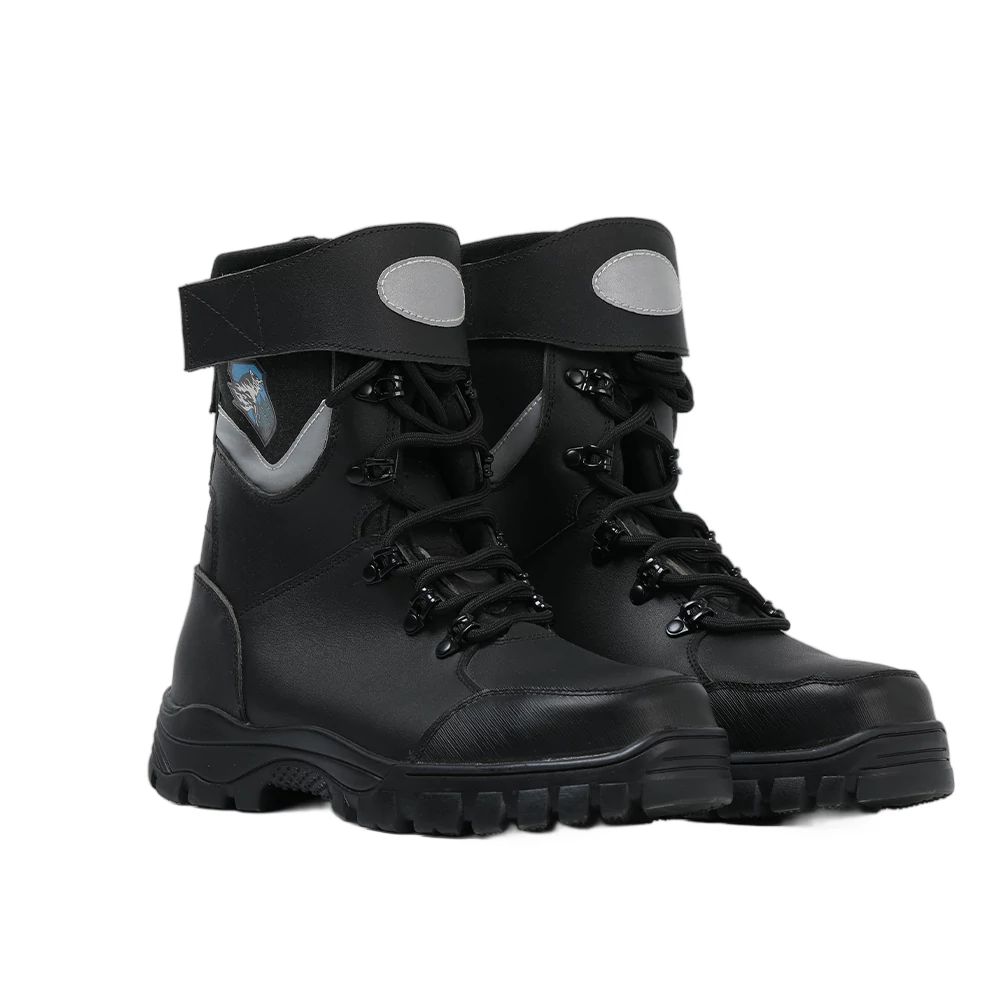
Optimized for miles on rugged terrain, wildland firefighting boots are lighter—often 3–5 lb per pair—and ≥8 in. tall per standard. They favor full-grain upper leather (commonly ≥2.0 mm thick) for support and field repairability, with stitched-down or welted construction to maximize forefoot flex and edge stability on slopes.
Outsoles emphasize heat and abrasion resistance with deep lugs for soil/rock/ash. Breathability and weight reduction take priority over heavy waterproof packages, making them the choice for extended line work, hiking, and saw operations where mobility and endurance matter more than liquid immersion.
Firefighter Station Boots
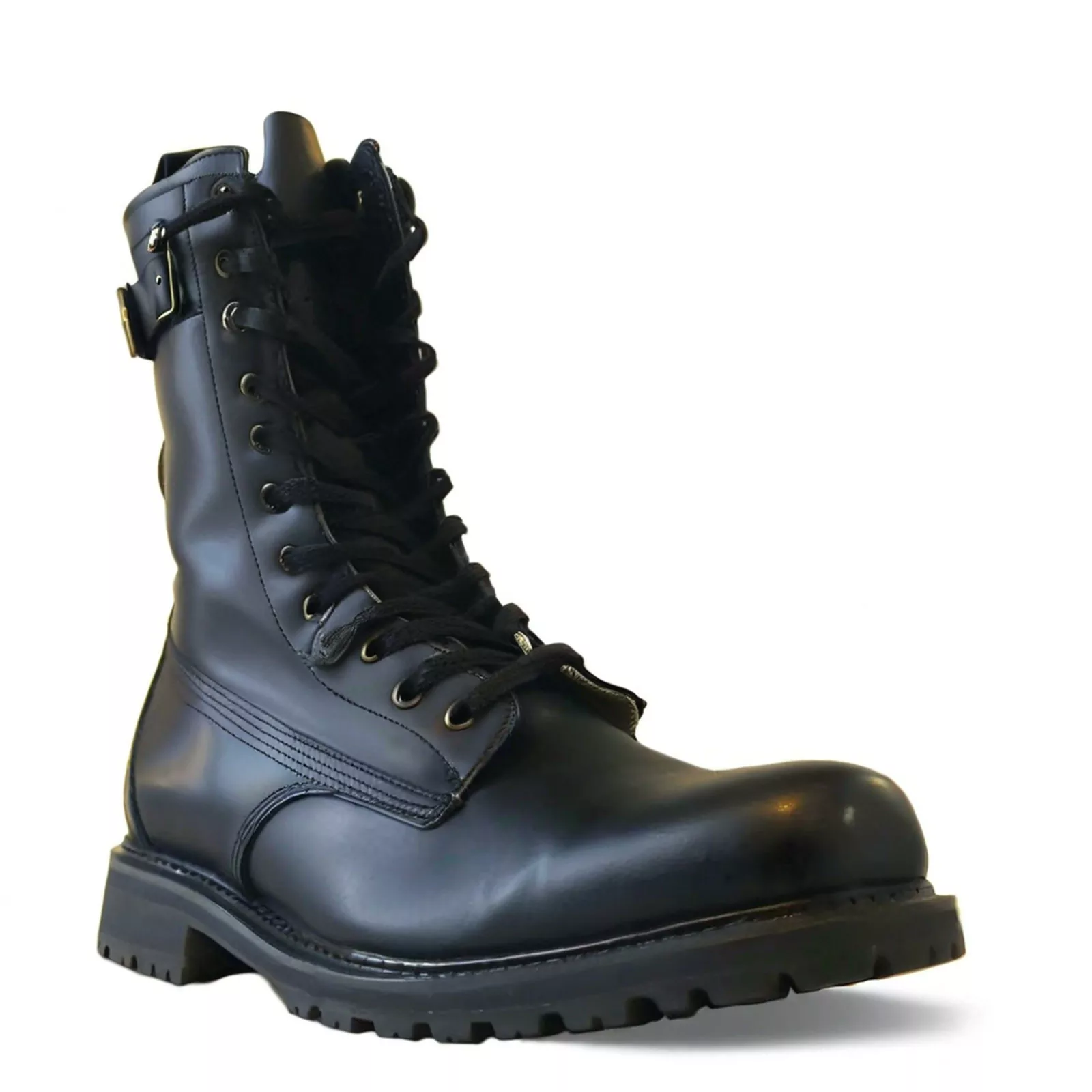
For daily station wear and non-IDLH calls, departments issue lighter, lower-cut firefighter station boots—typically 2.5–4 lb per pair—that still meet ASTM F2413 safety toe and slip resistant requirements. Construction skews to direct injection or cement for comfort and cost efficiency; features often include cushioned footbeds and arch support for long shifts.
Optional waterproof membranes address routine wet tasks, but these boots are not intended to substitute for certified structural or hazmat footwear. Their role is to deliver high quality comfort and protection, helping firefighters stay safe during long hours around the station.
Technical Rescue Boots
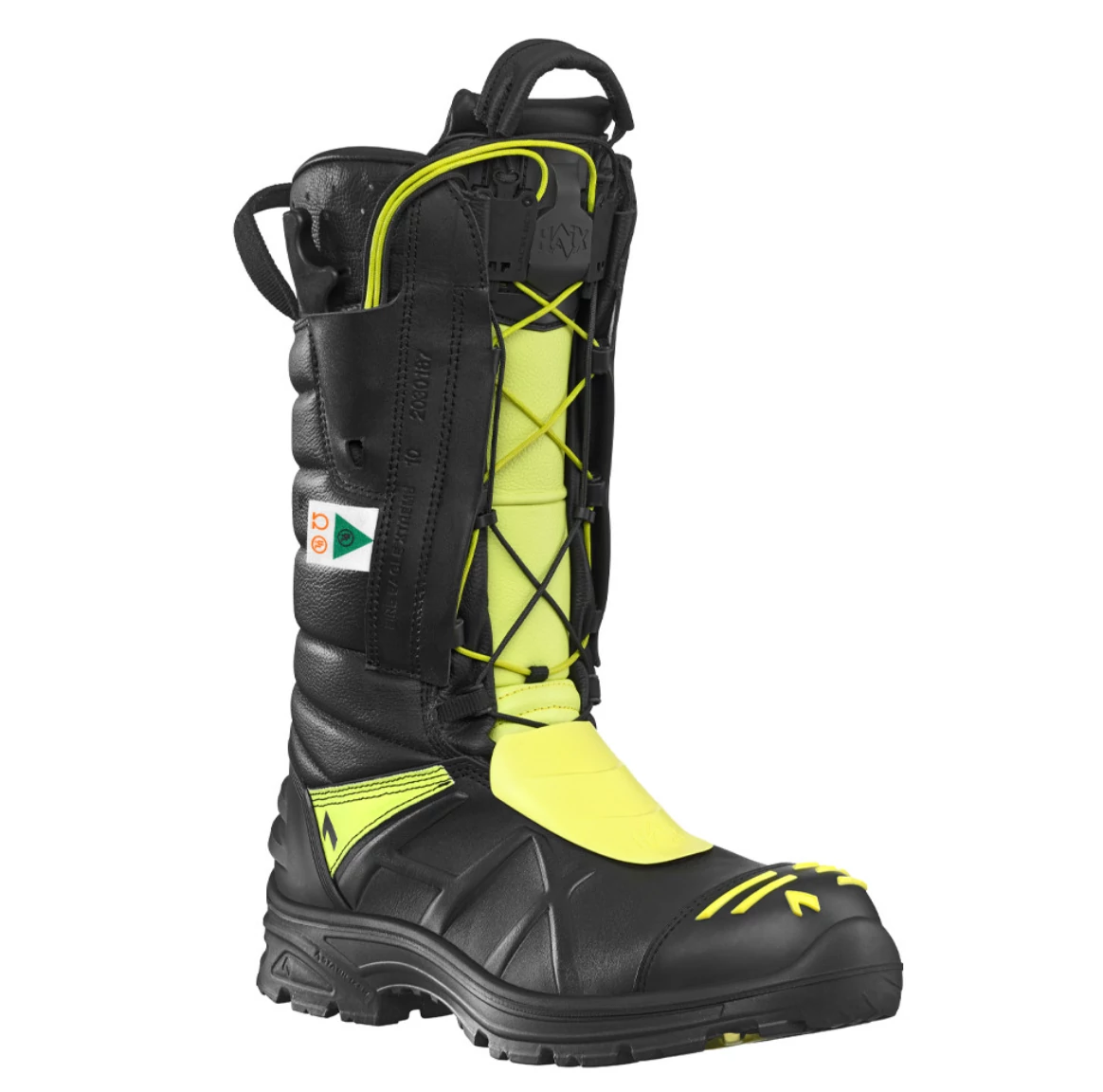
Purpose-built for chemical splash, decon lines, flood and rescue scenes, Technical rescue boots use liquid-tight uppers (e.g., vulcanized rubber, PVC, butyl, or CBRN laminates) with sealed seams and ASTM F903-type penetration/permeation performance.
Many employ direct injection or vulcanized bonds to create monolithic shells; protective toes are often composite rather than steel toe to reduce weight while meeting impact criteria. They’re deployed where chemical exposure and contaminated water present risks equal to—or greater than—flame.
| Boot Type | Standards | Key Build | Best For |
| Structural Boots | NFPA 1971 | Heavy, tall (~14 in.), steel toe, barriers, slip resistant sole | Interior structural fires, high heat & water |
| Wildland Boots | NFPA 1977 | Lightweight, ≥8 in. leather, stitched-down, breathable | Forest & wildland fires, long hikes |
| Station Boots (Duty Boots) | ASTM F2413 | Low-cut, light, safety toe, arch support, comfort | Daily wear, quick response, helps firefighters stay safe |
| Hazmat/Rescue Boots | NFPA 1992/1994 | Liquid-tight (rubber/PVC), composite toe, sealed seams | Chemical spills, decon, flood & rescue |
Station vs. Fireground Boots
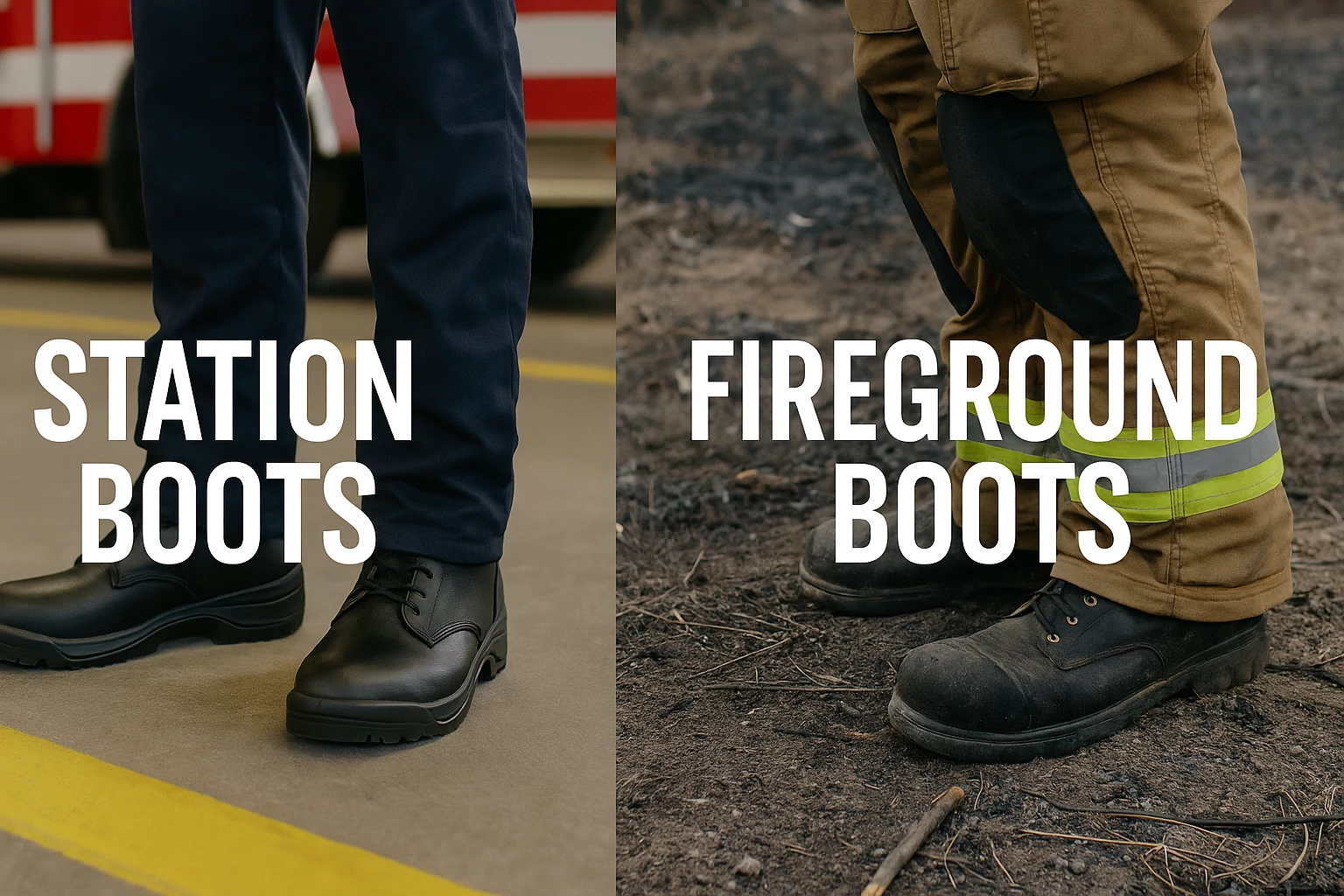
Not every boot a firefighter wears is designed for the fireground. Firefighter station boots (duty boots) are built for the long hours spent inside the station—lightweight, lower cut, and comfortable enough to walk or stand in for a full 12- or 24-hour shift. They meet ASTM F2413 requirements for steel toe or safety toe protection, puncture resistance, and slip resistant outsoles, but their purpose is limited to daily duties like equipment checks, training, or responding to EMS calls. With arch support, cushioned insoles, and easy donning, they provide the comfort needed for routine work, but they are not designed—or certified—for IDLH environments. A common mistake among new recruits is assuming they can take station boots into a live fire; in reality, they offer no defense against extreme heat or liquid hazards.
On the fireground, the footwear changes completely. Structural boots, certified to NFPA 1971, are heavier—often 5–7 pounds per pair—and feel bulky compared to station boots, but they include thermal insulation, moisture barriers, and chemical-resistant layers that make the difference between safety and severe injury. Many are built with Goodyear welt construction for long-term rebuildability or direct injection for a sealed, decontaminable bond. Firefighters often complain about the weight and heat buildup, but when you are pushing through flames, scalding water, or debris, that bulk is essential protection.
For wildland operations, NFPA 1977 wildland boots are the preferred choice. Taller than station boots and lighter than structural ones, they use full-grain leather and stitched-down or welted construction for breathability and flexibility. Their design allows firefighters to hike miles over rough terrain without the fatigue that would come from wearing structural boots.
At Poseidon Fire Defense, we engineer and manufacture firefighter station boots, structural boots, wildland boots, and hazmat boots, all built to meet NFPA, EN, and ASTM standards. Contact our team today to discuss tailored solutions that ensure compliance, durability, and performance—helping your department stay safe in every environment.