

Firefighter boots are protective footwear selected according to the hazards and operating environment of a firefighting or rescue mission. They are not one universal type of boot.
Structural and proximity firefighting footwear is addressed within NFPA 1970. Wildland and urban-interface footwear is addressed within NFPA 1950. Station boots serve routine duty and other non-IDLH activities and should not be treated as structural firefighting PPE.
Construction, barriers, toe and puncture protection, traction, height, fit, and certification requirements therefore depend on the job the boot is expected to perform.
Firefighter Boots

Firefighter boots are a broad category of protective footwear covering several different missions. Structural boots are designed as part of the structural or proximity firefighting ensemble, while wildland boots address long-duration operations on uneven outdoor terrain. Station boots are duty footwear and are not substitutes for structural firefighting boots.
Because these categories address different hazards, there is no single certification requirement that applies to every product sold as a firefighter boot. The applicable standard, construction, and protective features must be matched to the intended mission.
Types of Firefighter Boots
Firefighter Boots are generally classified into three operational categories: structural bunker boots, wildland fire boots, and station boots. Each type differs in height/fit, materials, and certification requirements to match its environment.
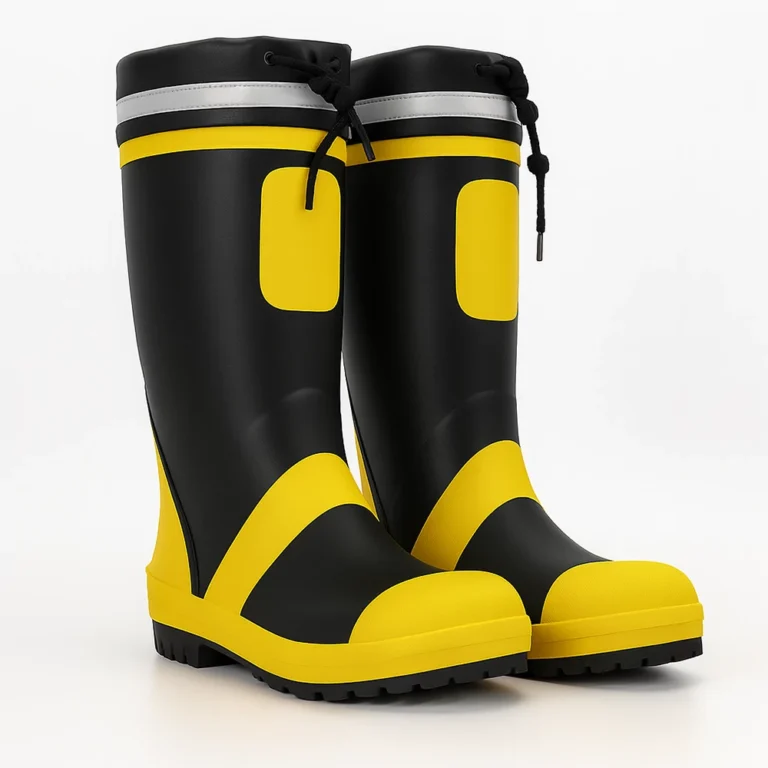
Structural Bunker Boots
Built for structural firefighting and interior attack, rubber firefighting boots typically meet NFPA 1970 and are third-party certified (e.g., SEI). They feature a full length shaft (≈14–15 in) that interfaces with bunker pants to create a sealed barrier. Constructions include fire resistant vulcanized rubber pull-ons and leather structural designs with zipper-lace systems protected by heat shields. Common elements: moisture barriers (e.g., CROSSTECH-type laminates) for blood-borne pathogen and water resistance, composite or steel safety toes, puncture plates, ladder shanks for rung stability, and heat- and slip-resistant lug outsoles. Example models include the Globe Supreme 14″ Structural Boot (premium full-grain leather with robust ladder support) and Thorogood 14″ Rubber Bunker (classic pull-on rubber with thermal and chemical resistance).

Wildland Fire Boots
Designed for extended hiking and line work under NFPA 1950, these emphasize mobility and heat management in grass/brush/forest fires. Typical heights run 8–10 in with a secure lace-up fit to control heel slip on uneven terrain. Uppers are full-grain leather boots with minimal seams to limit heat transfer and ember catch; soles are high-heat, aggressive-lug designs for scree, duff, and rock. Many agencies reference traction in “fire ice” conditions—periods when surfaces are both hot and slippery due to ash, fine dust, or melt—so outsoles favor deep lugs and heat-stable compounds. Representative wildland fire boots options include the Danner Wildland Tactical Firefighter (athletic last with NFPA compliance) and White’s Smokejumper (stitch-down leather with rebuildable construction for long service life).
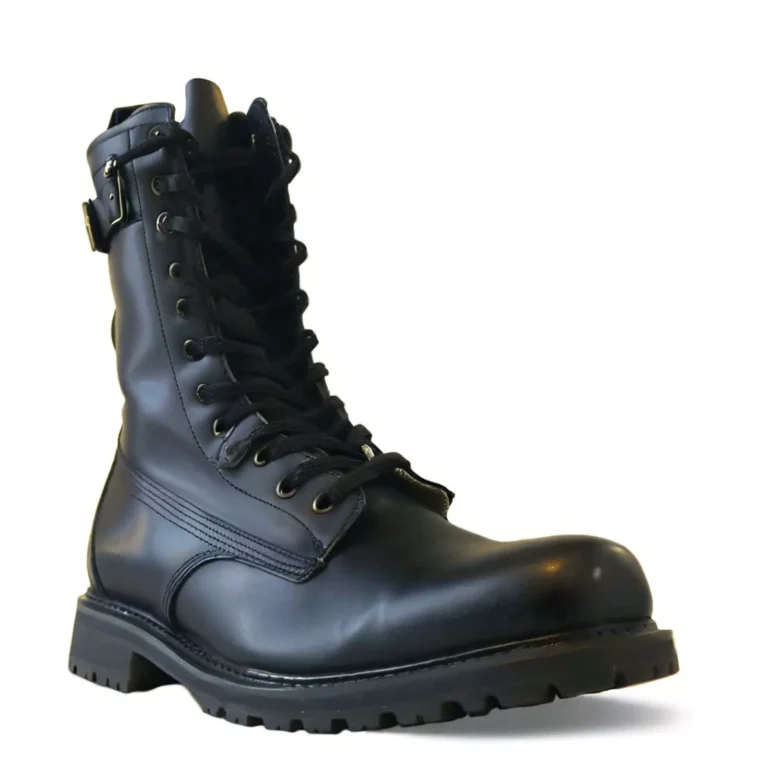
Station Boots
Intended for non-emergency duties, station wear, and training evolutions—not interior fire attack. They commonly feature 6–8 in shafts, polishable leather, side-zip convenience, and ASTM F2413 safety toes/plates. While certain models add water resistance and electrical-hazard ratings, station boots are not NFPA-certified for firefighting and should be swapped for certified bunker or wildland boots before response. Examples include Haix Airpower XR1 Pro (duty comfort with rescue-oriented features) and Redback USAF (slip-on duty boot with durable PU outsole).
Firefighter Boots Construction
Firefighting boots are not built in a single way. Depending on mission demands, manufacturers use different firefighting boots construction methods such as Goodyear welt, cemented bonding, direct injection, stitched-down, or vulcanized rubber. Each approach influences durability, waterproofing, weight, and comfort, shaping how boots perform under NFPA safety standards in structural, wildland, or station environments.
