
Home » CO2 Fire Suppression System
CO₂ Fire Suppression System
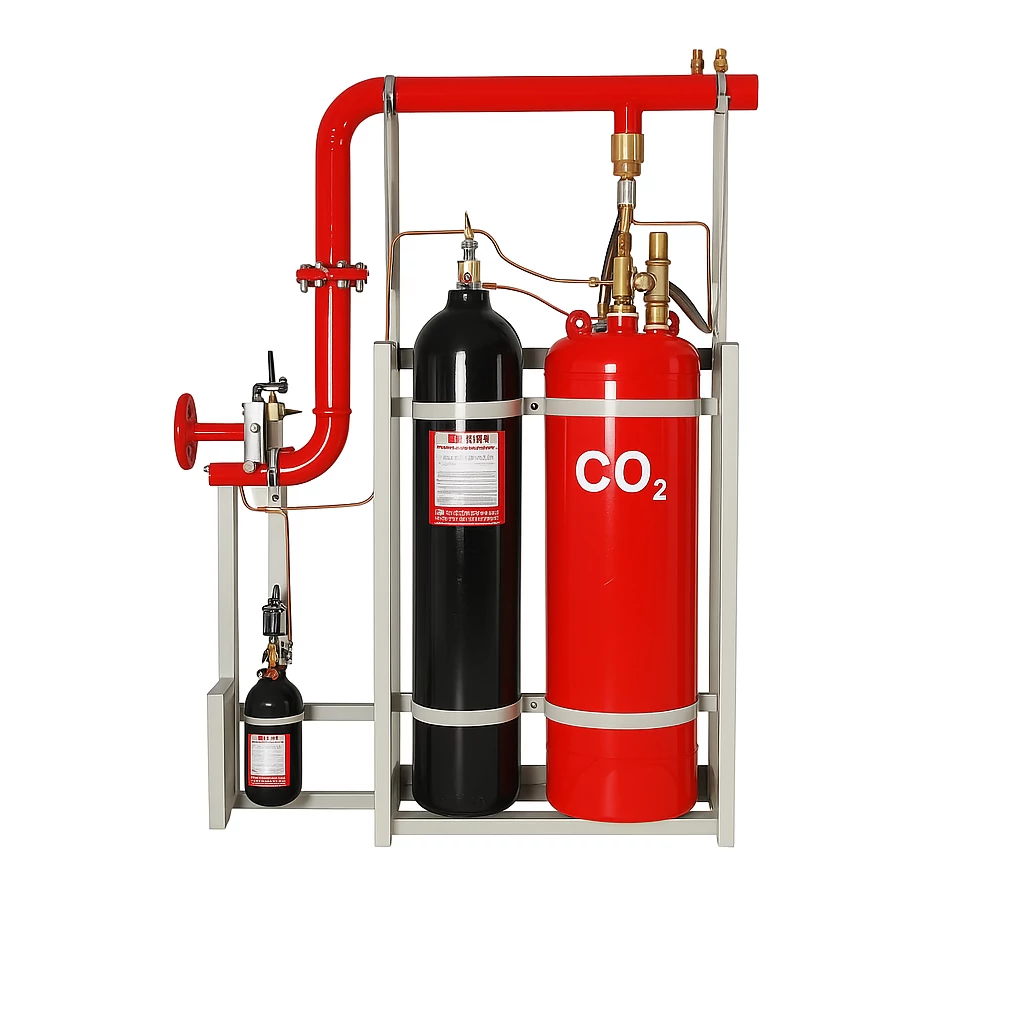
The Poseidon CO₂ Fire Suppression System is an engineered carbon dioxide system designed in accordance with NFPA 12 for total flooding and local application fire protection.
CO₂ is electrically non-conductive and leaves no extinguishing-agent residue after discharge. These properties make CO₂ systems suitable for consideration in selected machinery, process, electrical, and flammable-liquid hazards where the occupancy conditions allow their use.
CO₂ suppresses fire by reducing the oxygen available to sustain combustion. The concentrations required for fire suppression are dangerous to people, so personnel exposure and evacuation controls are fundamental parts of CO₂ system design.
In a total-flooding system, CO₂ is discharged into the protected enclosure until the design concentration required for the specific hazard is reached. Local-application systems instead direct the agent at a defined hazard.
The required concentration and discharge arrangement depend on the fire type, fuel, enclosure, equipment geometry, and application method.
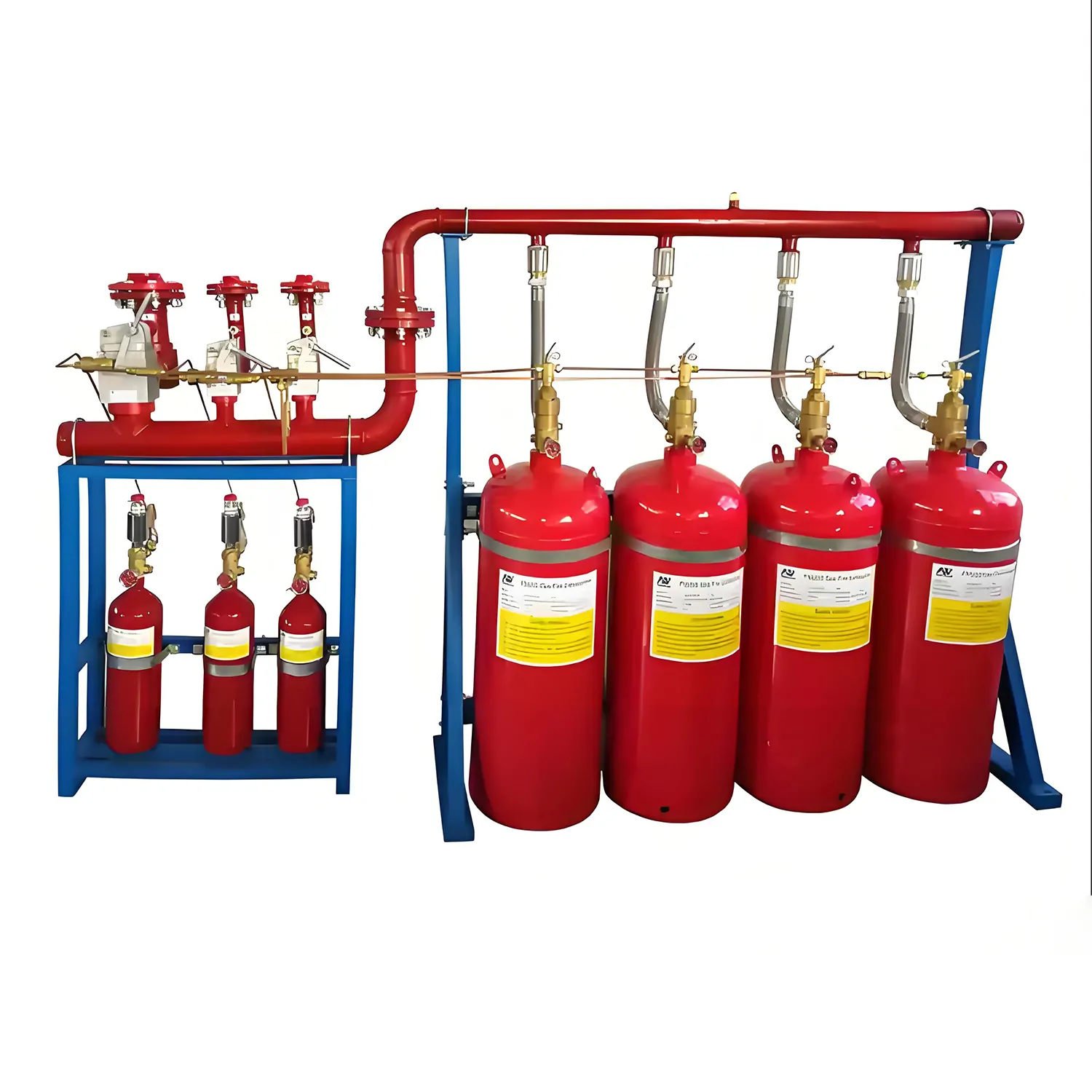
This pressure CO₂ system supports both high-pressure carbon dioxide systems and centralized piped configurations, enabling total flooding or local application coverage through selector valves.
CO₂ installations require the personnel-safety provisions applicable to the project. Depending on the system and occupancy, these can include pre-discharge alarms, discharge delays, lockout or abort provisions, signage, ventilation, and other safeguards required by NFPA 12 or the local authority.
Detection, releasing controls, cylinders, valves, and other system components should be specified according to the required system design and project approvals.
Where a project requires a particular UL listing, cylinder standard, marine approval, or other certification, verify that requirement against the exact component and system documentation.
Discharge Timing – The listed discharge range is 20–60 s; agent delivery and concentration requirements depend on the engineered hazard and application method.
Residue-Free Carbon Dioxide CO₂ System – No water or particulate cleanup required, preserving equipment.
Flexible Total Flooding or Local Application Design – Configurable as cylinder banks or multi-zone networks.
Detection and Release Controls – Control architecture depends on the selected system and project requirements.
Personnel-Safety Controls – CO₂ systems require personnel safeguards appropriate to the occupancy and installation.
High-Pressure System Components – Cylinder and component requirements should be verified against the exact system documentation.
The Poseidon CO₂ fire suppression system can be considered for selected, normally unoccupied areas requiring residue-free response:
Engine Rooms and Marine Vessels – IMO SOLAS-aligned protection for propulsion and auxiliary machinery spaces.
Power Generation & Turbines – For selected oil-based and electrical-equipment fire hazards in nacelles and generator enclosures.
Chemical & Process Industries – Handles flammable-liquid hazards where water-based systems are unsuitable.
Manufacturing Plants – For localized production cells using local application nozzles.
Utility & Transformer Rooms – For selected electrical-equipment fire hazards using carbon dioxide CO₂ total-flooding systems.
Occupancy Notice: This CO₂ fire suppression system is intended for unoccupied areas only.
For continuously staffed or electronic facilities, specify NFPA 2001 clean-agent or water-mist alternatives.
| Parameter | Specification |
| System Type | Carbon dioxide CO₂ fire suppression (total flooding / local application) |
| Agent | Carbon Dioxide (CO₂), residue-free, non-corrosive |
| Design Concentration | Hazard- and fuel-specific design concentration under NFPA 12; deep-seated hazards require separate design provisions |
| Cylinder Standard | By cylinder configuration: DOT-3AA / ISO 9809; ISO 11118 applies to non-refillable cylinders |
| Actuation Gas | N₂ 5.9 MPa (≈ 855 psi) pneumatic / electric |
| Discharge Time | 20–60 s (depending on hazard volume) |
| Operating Temperature | −10 to +50 °C (14 to 122 °F) |
| Humidity Resistance | Up to 95 % RH (IEC 60068-2-78) |
| Detection & Control | UL 864 releasing panel + UL 268/521 detection + manual abort/lockout |
| Safety Measures | Alarms, time delay, post-ventilation, gas monitoring, signage per NFPA 12 |
| Electrical Power | AC 120/230/400 V 50/60 Hz; DC 24 V control circuits |
| Documentation | Hydraulic calcs, as-builts, FAT/SAT, O&M manuals, signage kit |
For an engineered CO₂ system quotation, provide the fuel and fire hazards, total-flooding enclosure volume or local-application equipment layout, openings and ventilation, occupancy and access arrangements, cylinder-bank location, pipe routes, detection and releasing requirements, and available power. Include the destination market, required system and component documentation, quantities, and project schedule. These inputs define agent quantity, discharge design, personnel safeguards, and the installation package.
- NFPA 12 – Design, installation, and testing of carbon dioxide extinguishing systems.
- UL 864 / UL 268 / UL 521 – Applicable releasing-control, smoke-detection, and heat-detection component requirements. Specify listings for the selected components.
- DOT-3AA / ISO 9809 / ISO 11118 – Cylinder requirements depend on the selected construction and destination market. ISO 11118 covers non-refillable cylinders.
- IEC 60068 Series – Environmental testing for the specified components and test conditions.
- IMO SOLAS – Marine fire-protection requirements for the applicable vessel and machinery or cargo space; project approval depends on the selected installation and documentation.
Compare CO₂ with other fire suppression system types.