

Home » PSSJW-110 Swift Water Rescue Boots
PSSJW-110
Swift Water Rescue Boots
$ 43.90
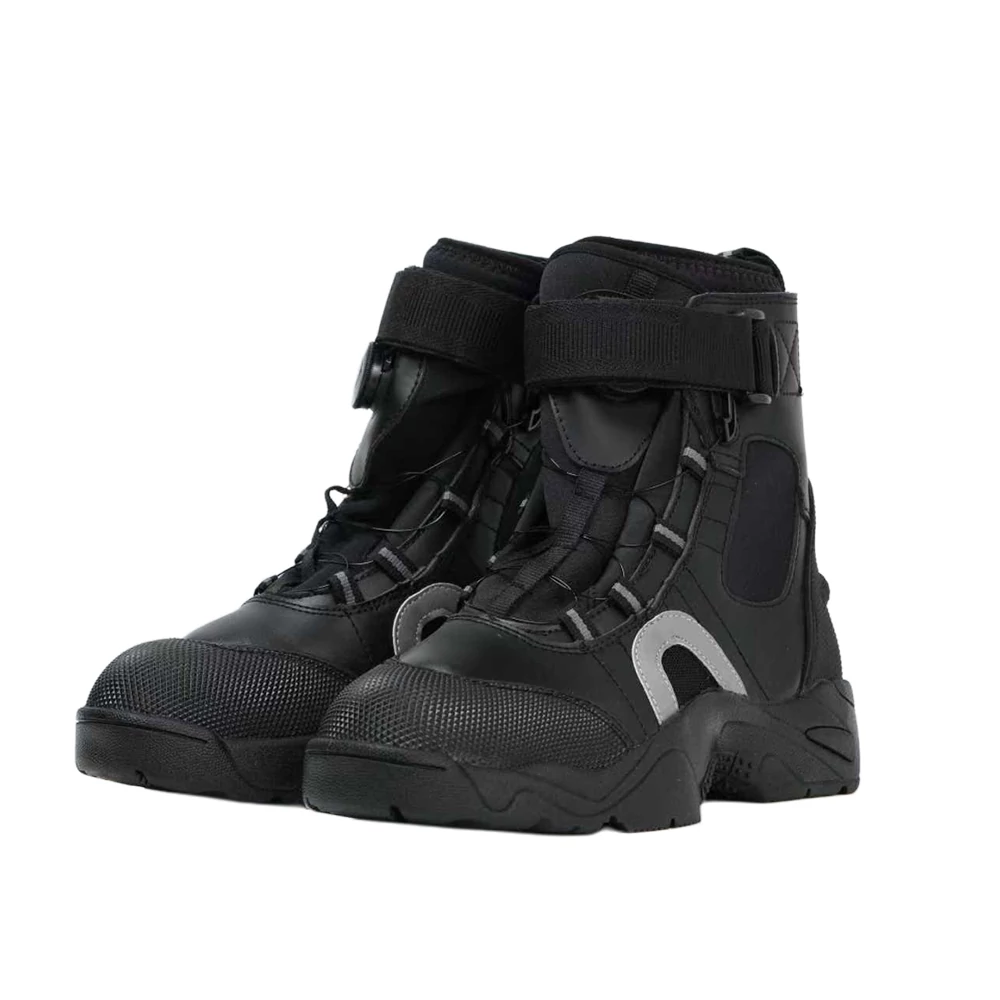
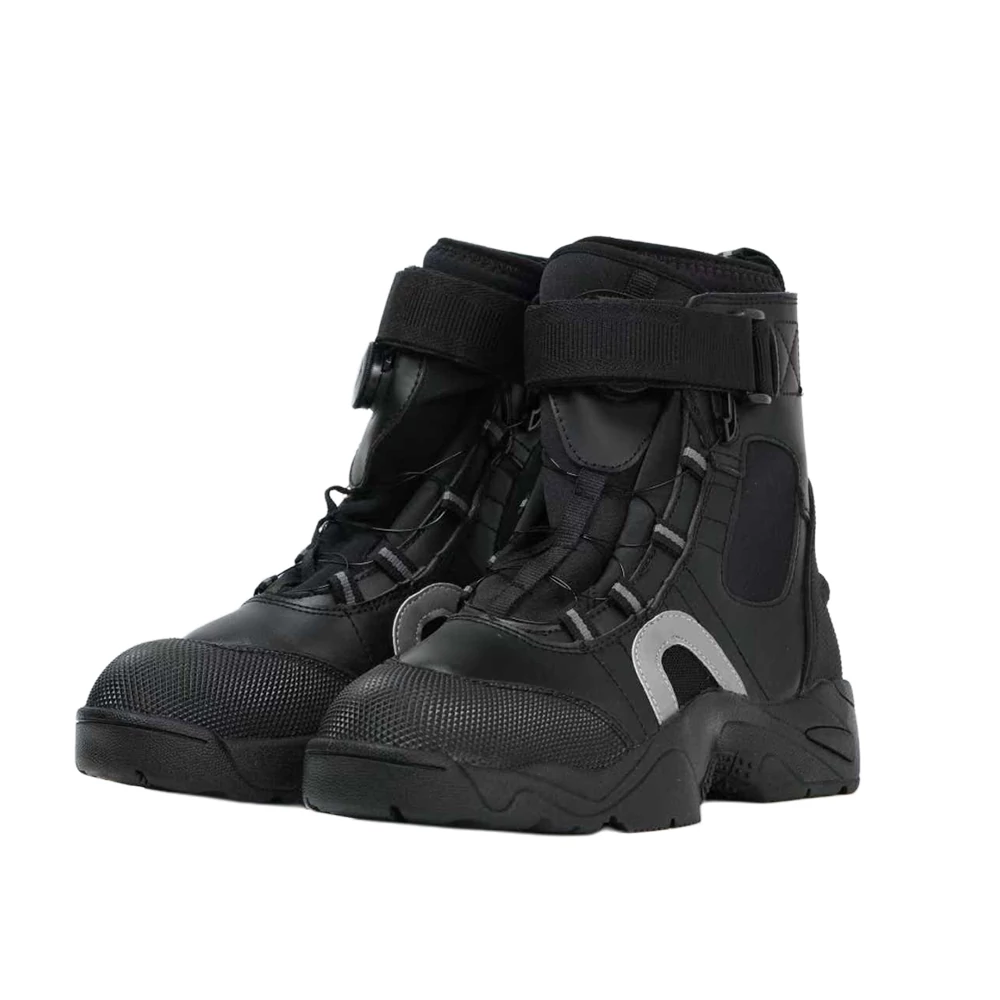
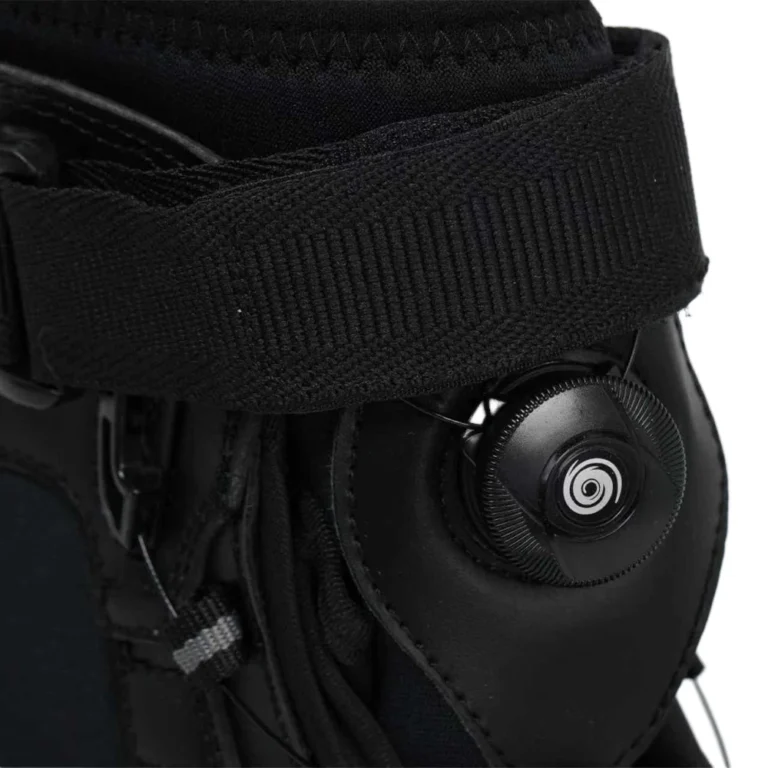
The PSSJW-110 Swift Water Rescue Boots are engineered for the realities of swift-water and flood rescue—unstable footing, shifting boat decks, blind steps through debris-filled water, and repeated entries with wet gloves and limited dexterity. Built on the proven 109 platform, the 110 upgrades to a precision dial closure that delivers single-hand don/doff in 3–5 seconds, with ±1 mm tension control that holds under water pressure, current, and ankle load.
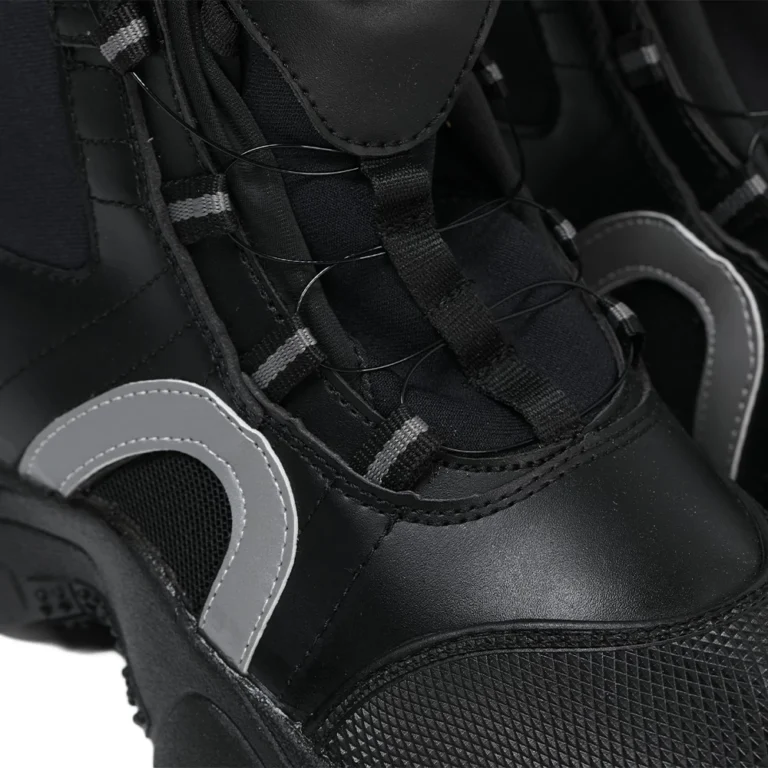
Unlike lace or side-zip systems that clog with grit or can tear dry-suit socks, the dial path maintains secure, uniform tension during full immersion and high-movement operations. The boot meets the functional performance expectations of NFPA 1952 surface water operations footwear and integrates elements of GA 628-2013 and ISO 20345 S5 for slip, puncture, and waterproof performance.
Swift-water responders step into environments they cannot see—nails, rebar, broken glass, jagged concrete, and shifting rocks hidden beneath moving water. The PSSJW-110 Swift Water Rescue Boots is built specifically for that uncertainty.
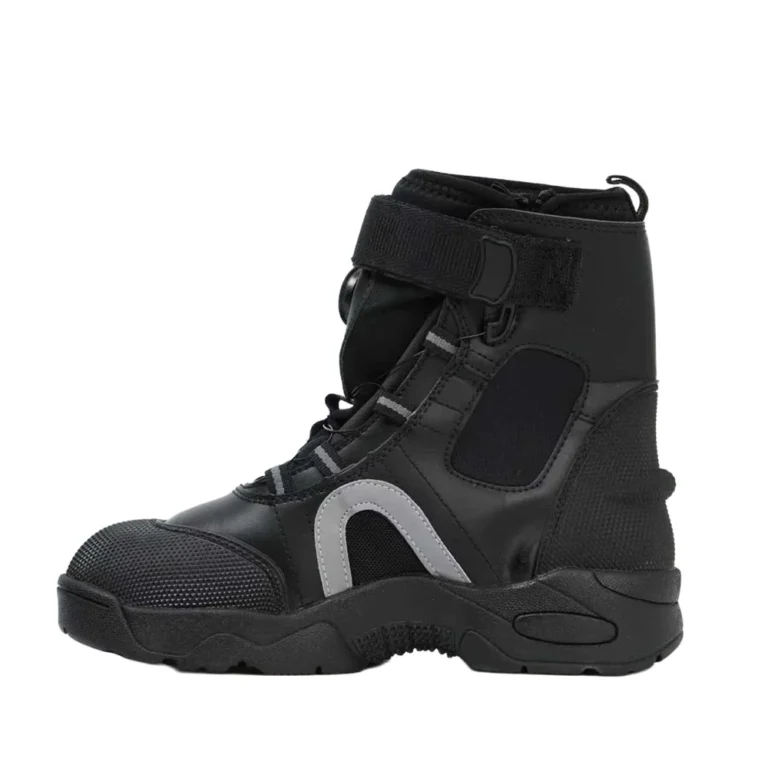
A reinforced synthetic-rubber upper resists abrasion from riverbeds, culverts, and urban flood debris, while a ≥ 5 mm dive-grade neoprene liner and ≥ 7 mm neoprene insole slow heat loss during extended cold-water operations.
Dial Closure Built for Rescue Work
Fit is critical in moving water. Loose boots twist, fill with water, or get pulled off by current pressure.
The dial system used here maintains micro-tension even:
- after repeated flex cycles,
- when fully immersed for long periods,
- during ladder climbs and boat-deck movements,
- and when hands are cold or gloves are wet.
Operators can tighten or release the boot single-handedly, preventing the common “wet-boot looseness” of lace systems and eliminating the dry-suit sock tearing associated with side zippers. The lock resists ≥ 35 kgf pull to stay secure during victim handling and wading in forceful currents.
Compared with lace-up and side-zip boots, the dial closure avoids grit jamming, lace drag, zipper fatigue, and water-induced loosening—key advantages in swift-water and flood zones.
Traction Underfoot Protection for Unpredictable Terrain
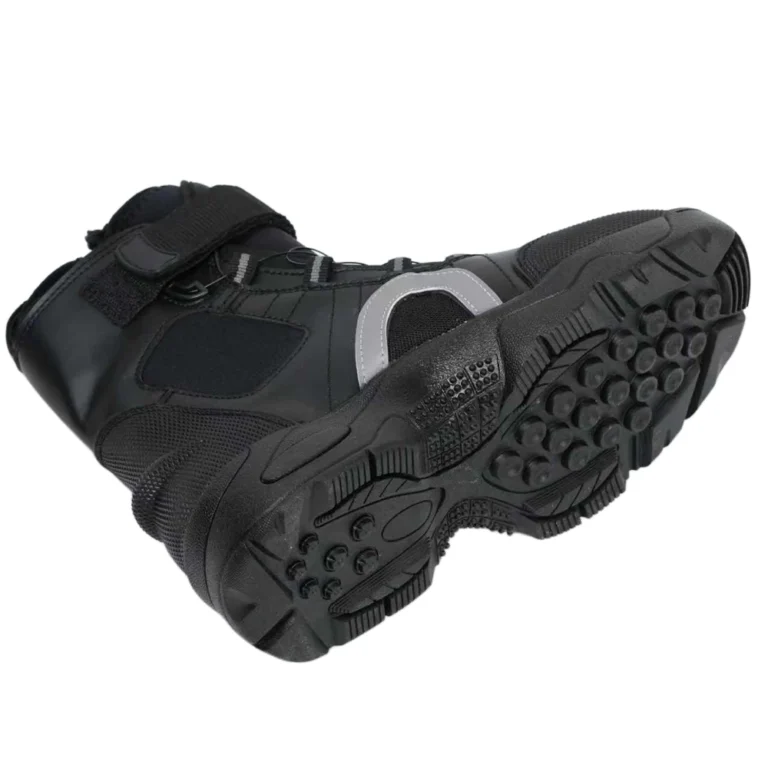
The outsole is validated for 100,000 flex cycles with crack ≤ 9 mm, ensuring reliability during kneeling, climbing, and repeated contact with sharp riverbed or urban debris.
Dual-zone puncture layers—≥ 1.9 kN in the outsole and ≥ 145 N in the shaft—protect against submerged nails, wires, and metal fragments that rescuers often encounter without warning.
Traction is tuned for unstable footing, achieving a start-to-slip angle ≥ 25° (wet inclined-plane)—critical for boat decks, ramps, flooded streets, culverts, and slippery rock formations.
Water Behavior and Fatigue Management
Traditional rubber boots trap water and rapidly gain weight, increasing fatigue after every step.
The PSSJW-110’s construction minimizes water retention, shedding bulk water with each stride to maintain predictable weight and reduce lower-limb fatigue during long-duration deployments.
A controlled total mass of ≤ 1.3 kg per pair (≈ 2.87 lb) supports repeated entries, victim carries, and long evolutions.
Ankle Stability for Turbulent Operations
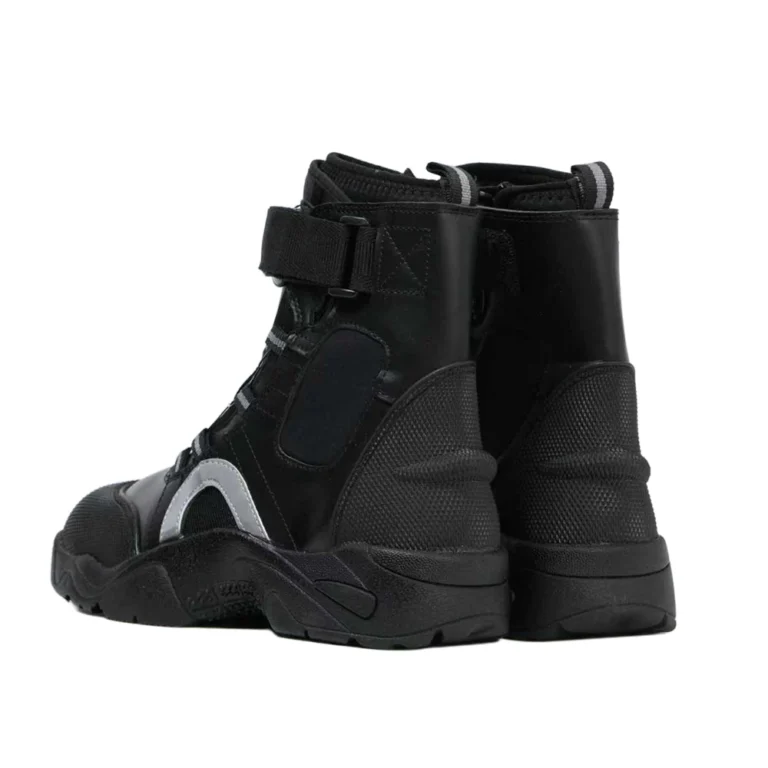
The structured ankle zone provides lateral stability and torsional control, reducing the risk of ankle roll when stepping into unseen gaps or stabilizing on shifting boat surfaces.
This improves responder confidence and maintains mobility under load.
Rapid Dial Fit: 3–5 s single-hand don/doff with ±1 mm tension control, even with wet gloves.
Secure Under Load: Lock strength ≥ 35 kgf maintains fit through immersion, climbing, and victim handling.
Cold-Water Protection: ≥ 5 mm neoprene liner + ≥ 7 mm insole reduce heat loss in extended exposure.
Rescue-Tuned Traction: ≥ 25° wet inclined-plane slip resistance for decks, rocks, ramps, and culverts.
High Durability: 100,000 flex cycles; dual-zone puncture protection (≥ 1.9 kN outsole / ≥ 145 N shaft).
Low Water-Weight Gain: Construction sheds water efficiently to minimize fatigue.
Ankle Stability: Structured ankle zone enhances lateral support in currents and uneven terrain.
Swift-water and flood-water rescue
Urban flood response & evacuation
Boat-deck, ramp, and dockside operations
Shallow-water search & recovery
Riverine, canal, and WUI flood scenarios
Multi-agency marine rescue training
| Specification | Requirement / Result | Method / Note |
| Closure System | Dial closure; 3–5 s operation; ±1 mm adjust; lock ≥ 35 kgf | Internal test |
| Donning/Doffing Aid | Rear webbing pull tab | Glove-compatible |
| Upper | Reinforced synthetic rubber | Abrasion-resistant |
| Liner | ≥ 5 mm neoprene (0.20 in) | Cold-water insulation |
| Insole | ≥ 7 mm neoprene (0.28 in) | Cushioning & thermal retention |
| Flex Resistance | 100,000 cycles; crack ≤ 9 mm | EN ISO 20344 / SATRA TM92 |
| Puncture – Outsole | ≥ 1.9 kN (≈ 427 lbf) | EN ISO 20344 |
| Puncture – Shaft | ≥ 145 N (≈ 32.6 lbf) | Internal (ISO-traceable) |
| Slip Resistance | Start-to-slip ≥ 25° | SATRA TM144 (wet) |
| Total Weight | ≤ 1.3 kg / pair (≈ 2.87 lb) | Size-dependent |
Intended Use: Swift-water response, flood operations, shallow-water wading, boat-deck work.
Testing: Designed and tested to meet the core performance requirements of NFPA 1952 (surface water operations footwear).
References: GA 628-2013; selected ISO 20345 S5 elements (waterproofing, slip, puncture; toecap not standard unless specified).